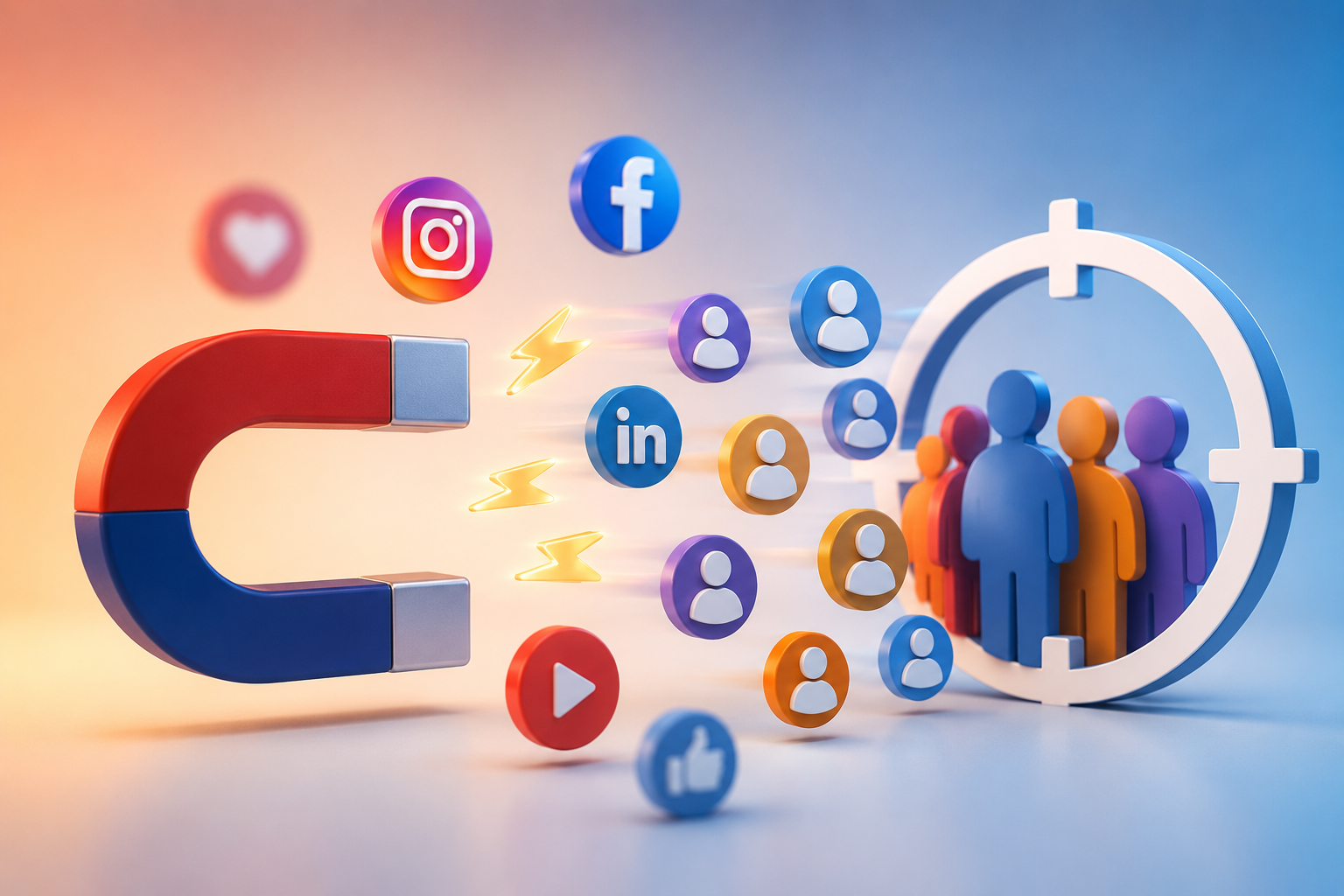

Why Businesses Need Content That Works Beyond Social Media

Businesses need content that works beyond social media — and in 2026, the ones that have not yet understood this are building on extraordinarily fragile foundations. The numbers look impressive on paper: thousands of followers, strong engagement rates, consistent reach across Instagram and Facebook. But underneath those numbers lies a dangerous dependency on platforms that your business does not own, cannot control, and could lose access to without warning.

Social media is a powerful and necessary part of any modern marketing strategy. This blog is not an argument against using it. It is an argument for not relying on it exclusively.

The businesses that are growing most sustainably in 2026 are the ones that use social media as one channel within a broader content ecosystem — an ecosystem that includes SEO-driven blog content, email marketing, video content on owned platforms, podcasts, case studies, and other formats that build lasting assets rather than temporary visibility.

In this blog, we explore 8 powerful reasons why businesses need content that works beyond social media  and what a smarter, more resilient content strategy looks like in practice.

The Fragility of Social Media Dependence

Before exploring why businesses need content that works beyond social media, it is worth being honest about exactly how vulnerable a social-media-only content strategy actually is.

In 2020, Facebook suffered a six-hour global outage that took Instagram, WhatsApp, and Facebook offline simultaneously. Businesses that relied exclusively on these platforms for customer communication, sales, and marketing had no way to reach their audience for the duration of the outage. In the same year, TikTok faced potential bans in multiple countries, creating enormous uncertainty for creators and brands that had built their entire audience on that single platform.

 Content That Works Beyond Social Media: 8 Powerful Reasons Every Business Needs a Smarter Content Strategy in 2026

These are not hypothetical risks. Algorithm changes have already reduced organic reach on Facebook and Instagram from 20-30% to single digit percentages over the past decade. Platform policies change without notice. Accounts get suspended. New platforms emerge and old ones decline. The businesses that built their entire digital presence on platforms they do not control have experienced  and will continue to experience the consequences of that dependency.

The Fundamental Risk: Everything you build on a social media platform belongs to the platform, not to you. Your followers, your content history, your engagement data — all of it can be taken away or made inaccessible by a policy change, an algorithm update, or a platform decision you had no part in making.

Reason 1: You Do Not Own Your Social Media Audience

The single most important reason businesses need content that works beyond social media is ownership. When someone follows your brand on Instagram or Facebook, they are not joining your audience  they are joining the platform’s audience and indicating an interest in your brand within that platform’s environment. The relationship between you and that follower is mediated entirely by the platform  and the platform controls how, when, and whether your content reaches them.

By contrast, an email subscriber is yours. A website visitor who found you through a Google search is yours. A customer who downloaded your guide and gave you their contact details is yours. These are owned relationships that exist independently of any platform and cannot be taken away by an algorithm change or a policy update.

The most resilient businesses in 2026 are aggressively converting their social media audiences into owned audiences  using social platforms to drive email sign-ups, website visits, and direct customer relationships that they control completely.

Ways to convert social followers into owned audience members:

•        Offer a genuinely valuable lead magnet  a guide, checklist, or tool in exchange for an email address

•        Drive social media traffic to SEO-optimised blog content on your owned website

•        Use Instagram Stories and LinkedIn posts to promote email newsletter sign-ups

•        Create members-only content or communities that exist on platforms you control

•        Build WhatsApp broadcast lists or SMS subscriber lists as direct communication channels

Reason 2: Organic Reach Is Declining and Paid Reach Costs More Every Year

Organic reach on social media has been declining consistently for years, and there is no credible evidence that this trend will reverse. The economics of social media platforms are straightforward: as more brands publish more content competing for the same user attention, organic reach for any individual brand inevitably falls. The platforms monetise this decline by making paid reach the primary way for brands to reach their audiences reliably.

The cost of paid social media advertising has risen significantly as competition for ad inventory has intensified. What a business could achieve with a modest paid social budget three years ago now requires substantially more investment to replicate. And because paid reach stops the moment the budget stops, it generates no lasting asset for the business  only temporary visibility.

This is a core reason businesses need content that works beyond social media. SEO blog content, for example, generates organic traffic that costs nothing per visit once the content ranks. An email list, once built, can be communicated with at near-zero marginal cost. These owned channels deliver reach that does not require continuous paid investment to maintain.

Cost Comparison: A blog post that ranks for a target keyword may cost a few hours of writing and optimisation time. Once it ranks, it delivers organic traffic indefinitely at zero additional cost per visit. A paid social ad delivers traffic only while the budget is running and stops the moment it does.

Reason 3: SEO Content Compounds in Value Over Time

One of the most compelling arguments for why businesses need content that works beyond social media is the compounding nature of SEO-driven content. Unlike social media posts  which have a lifespan measured in hours before they disappear from feeds  a well-written, well-optimised blog post continues to generate traffic, leads, and brand authority for months and years after it is published.

The compounding effect works like this: a blog post published today may rank modestly in its first few weeks. Over time, as it earns backlinks, accumulates engagement signals, and is reinforced by related content published on the same website, its ranking improves. A post that generates 100 visits in its first month might generate 1,000 visits per month a year later  without any additional investment beyond the initial writing effort.

Multiply this across a library of well-optimised content and the compounding effect becomes significant. Businesses with established content libraries are generating thousands of organic website visits per month from content published over several years  a sustainable, algorithm-independent traffic source that social media posts simply cannot replicate.

Content formats with strong compounding potential:

•        SEO-optimised blog posts targeting keywords with consistent search volume

•        In-depth guides and how-to content that earns backlinks naturally over time

•        FAQ pages that capture long-tail search queries across the full topic area

•        Case studies and success stories that rank for branded and category searches

•        Comparison and review content that captures commercial intent queries

Reason 4: Email Marketing Delivers the Highest ROI of Any Digital Channel

If there is one channel that exemplifies why businesses need content that works beyond social media, it is email marketing. Despite being one of the oldest digital marketing channels, email consistently delivers the highest return on investment of any digital marketing channel  outperforming social media, paid search, and display advertising in most business categories.

The reason is straightforward: email reaches people who have actively chosen to hear from your brand, in an environment they control, at a moment they choose to open it. There is no algorithm filtering your message before it reaches your subscriber. There is no competing content in the feed drowning out your communication. There is a direct, personal line between your brand and a reader who gave you their attention voluntarily.

An email list is also one of the most valuable owned assets a business can build. Unlike social media followers, email subscribers can be contacted directly, segmented by behaviour and interest, and communicated with in ways that feel personal and relevant. The list belongs entirely to the business and retains its value regardless of what happens on any social media platform.

Building an email marketing strategy that works:

•        Publish genuinely valuable content consistently to give people a compelling reason to subscribe

•        Segment your list from the beginning based on how subscribers joined and what they engage with

•        Write emails that feel personal and conversational rather than like broadcast announcements

•        Test subject lines, send times, and content formats regularly to improve open and click rates

•        Use email to drive traffic back to your SEO content, creating a reinforcing loop between owned channels

Reason 5: Long-Form Content Builds Authority That Social Posts Cannot

Social media is an excellent environment for building awareness and engagement. It is a poor environment for building deep expertise and authority. The format constraints of social platforms  short captions, brief videos, ephemeral Stories  make it extremely difficult to communicate the kind of depth and nuance that establishes genuine expertise in the minds of a sophisticated audience.

Long-form content  detailed blog posts, comprehensive guides, in-depth video content, white papers, and case studies  allows brands to demonstrate their knowledge at a level of depth that social posts simply cannot accommodate. This depth builds a qualitatively different kind of trust: not the familiarity of a brand you see in your feed regularly, but the confidence you place in a source that has genuinely taught you something or solved a real problem for you.

This is a fundamental reason businesses need content that works beyond social media. In categories where expertise and trust are primary purchase drivers  professional services, healthcare, financial services, education, and many B2B categories  long-form content is not optional. It is the primary way brands demonstrate that they are the right choice.

The Authority Gap: A competitor who publishes a 2,000-word comprehensive guide on a topic your audience cares about deeply will build more trust and authority with that audience in a single piece of content than you can build with 100 social media posts on the same subject.

Reason 6: Multi-Channel Presence Protects Against Platform Risk

Businesses that have built content assets across multiple channels  a website with strong SEO content, an active email list, a YouTube channel, a podcast, and social media presence  are dramatically more resilient to disruption than those concentrated on a single platform.

When one channel is affected by an algorithm change, a platform policy update, or a technical disruption, a multi-channel business can absorb the impact and continue reaching its audience through other channels. When a single-platform business faces the same disruption, it has nowhere to go.

Platform diversification is not about being everywhere at once. It is about building enough presence across a carefully chosen set of channels that your business is never entirely dependent on any single one. This is a strategic resilience consideration that is just as important as financial resilience for any business serious about long-term growth.

A resilient multi-channel content mix:

•        Owned website with consistently published SEO content as the primary long-term asset

•        Email newsletter as the primary owned direct communication channel

•        YouTube or video platform presence for educational and demonstration content

•        Social media on one or two primary platforms for discovery and community building

•        Podcast or audio content for audiences who prefer that format

Reason 7: Content Beyond Social Captures Buyers at Every Stage of the Journey

Social media content is most powerful at the top of the marketing funnel  creating awareness, generating interest, and building initial brand familiarity. But the customer journey extends well beyond that initial awareness, through consideration, evaluation, and finally decision. And the content formats that best serve customers at each of those later stages are not social media posts.

A consumer who first discovers a brand through an Instagram Reel and becomes genuinely interested will typically leave the platform to research further. They will search for the brand on Google, read blog content, look for reviews, perhaps watch a longer explanatory video on YouTube, and ultimately make their decision based on content they encountered outside of the social media environment where they first saw the brand.

Businesses need content that works beyond social media precisely because the most valuable stages of the purchase journey  the stages where decisions are actually made — largely happen off social platforms. A brand that exists only on social media is present for the introduction but absent for the decision.

Content matched to each stage of the buyer journey:

•        Awareness stage – short-form social content, educational posts, brand storytelling reels

•        Consideration stage – SEO blog posts, comparison guides, explainer videos, case studies

•        Decision stage – testimonials, detailed service pages, pricing transparency, free consultations

•        Retention stage – email newsletters, loyalty content, community access, exclusive insights

Reason 8: Owned Content Assets Increase the Long-Term Value of Your Business

A final and often overlooked reason businesses need content that works beyond social media is the direct impact that owned content assets have on the long-term commercial value of the business itself. A business with a large, engaged email list, a website generating significant organic traffic, and a library of high-ranking SEO content is worth measurably more than an identical business that has built its digital presence entirely on social media platforms it does not own.

When a business is valued for investment, acquisition, or sale, owned digital assets – email lists, organic search traffic, content libraries – are considered genuine business assets with quantifiable value. Social media followers, by contrast, are generally not considered owned assets in the same way, precisely because they belong to the platform rather than to the business.

Building content beyond social media is therefore not just a marketing strategy – it is a business-building strategy. Every piece of evergreen content published, every email subscriber added to the list, every percentage point of organic search traffic gained is a measurable contribution to the long-term value and resilience of the business.

What a Smarter Content Strategy Looks Like

A smarter content strategy – one built on the understanding that businesses need content that works beyond social media – looks fundamentally different from one built around social media as the primary channel.

It starts with owned channels at the centre: a well-structured website with consistent SEO content, and an email list that is actively grown and regularly engaged. Social media platforms sit around this core as distribution and discovery channels – amplifying the owned content, driving traffic back to the website, and converting new audiences into owned subscribers.

Content is planned around its long-term value rather than its immediate engagement potential. Each piece serves a specific purpose within the broader content architecture – building topical authority, capturing a specific stage of the buyer journey, or strengthening the connection with an existing audience segment.

Repurposing plays a central role in this smarter approach. A comprehensive blog post becomes the basis for a series of social media posts, an email newsletter edition, a short-form video script, and a section of a longer guide. One investment in content creation generates value across multiple channels rather than being created, consumed, and forgotten within 24 hours.

How to Start Building Content Beyond Social Media

If your current content strategy is primarily or exclusively social media focused, here is a practical starting point for building a more resilient and compound-value content ecosystem.

1. Start a blog on your owned website and commit to publishing at least one well-optimised post per week on topics your audience actively searches for

2. Build an email list starting today – add a sign-up form to your website, offer a genuinely useful lead magnet, and start sending a regular newsletter

3. Identify the 5 to 10 most common questions your customers ask and create comprehensive content that answers each one thoroughly

4. Repurpose your best-performing social content into longer blog posts or email newsletter editions to extend its lifespan and reach

5. Set up Google Search Console and Google Analytics to track organic search performance from the very beginning

6. Develop a simple content calendar that allocates time and resource to both social content and longer-form owned content each week

7. Build internal links between your blog posts to strengthen topical authority and improve SEO performance across your content library

8. Measure success not just through likes and follower counts but through organic traffic, email subscriber growth, and content-driven leads

Final Thoughts

Businesses need content that works beyond social media because the digital landscape is too unpredictable, too algorithm-dependent, and too platform-controlled to bet an entire marketing strategy on channels you do not own.

Social media will remain an important part of the marketing mix for the foreseeable future. But the businesses that will look back on 2026 as the year they made a decisive strategic shift are the ones that used social platforms for what they are genuinely excellent at – discovery, community, and distribution – while simultaneously building the owned content assets that will compound in value for years to come.

A blog post written today could be generating leads in three years. An email list built this year could be one of your most valuable business assets in five. A YouTube video published this month could be educating and converting new customers indefinitely. None of that is possible if your content strategy begins and ends with a social media feed.

At Upswing Digital, we help businesses build smarter content strategies – ones that use social media effectively while building the owned, compounding content assets that drive sustainable growth. If you are ready to build something that lasts, we are ready to help you build it.

Why Attention Is the Most Valuable Currency in Marketing

Attention in marketing is the scarcest resource in the modern economy — and the most valuable. In a world where every brand, every platform, and every piece of content is competing for the same finite pool of human attention, the brands that learn to earn, hold, and convert attention consistently are the brands that grow.

Money can be raised. Talent can be hired. Products can be improved. But attention — genuine, sustained, meaningful attention from the right audience — cannot be bought in the way it once could. It must be earned. And earning it requires a fundamentally different approach to marketing than most brands currently employ.

In this guide, we explore why attention in marketing has become the defining competitive currency of 2026, what is driving the attention economy, and 7 powerful reasons why every brand’s marketing strategy should be built around winning and holding audience attention.

Understanding the Attention Economy in Marketing

The term attention economy was coined to describe an economic system in which human attention is the scarce resource being competed for — much as money, land, or raw materials were the scarce resources of earlier economic systems.

In the digital age, this concept has become the defining reality of marketing. Every platform, every app, every piece of content, every notification, and every advertisement is competing for the same finite resource: the attention of individual human beings who have only 24 hours in a day and a cognitive capacity that can only process so much before it shuts down.

7 Powerful Reasons Attention in Marketing Is the Most Valuable Currency

The result is an environment of unprecedented competition for attention in marketing — one where the supply of content grows exponentially while the supply of human attention remains biologically fixed.

Key Facts About the Attention Economy in 2026

•        The average person is exposed to between 4,000 and 10,000 brand messages every single day

•        The average time spent on a web page before leaving has continued to decline — now measured in seconds for most content

•        Social media algorithms have trained audiences to make split-second attention decisions based on the first fraction of a second of exposure

•        The proliferation of AI-generated content has flooded every channel with more content than at any point in history — further intensifying competition for attention

•        Brands with the highest quality attention — not just the most impressions — consistently win more market share

1. Attention Is the Gateway to Every Marketing Outcome

Why Nothing in Marketing Works Without Attention First

Attention in marketing is not one of many important factors. It is the prerequisite for every other marketing outcome. Without attention, nothing else is possible.

A brilliant brand message never delivered. A compelling offer never considered. A perfectly designed product page never visited. A trust-building piece of content never read. Every single marketing outcome — awareness, consideration, conversion, loyalty — begins with a moment of attention. Without that moment, the entire chain of marketing impact never begins.

The Attention-to-Outcome Chain

•        Attention creates awareness — the audience knows the brand exists

•        Sustained attention builds familiarity — the audience begins to recognise the brand

•        Repeated attentive exposure builds trust — the audience develops confidence in the brand

•        Trust converts into consideration — the audience includes the brand in its decision-making process

•        Consideration converts into purchase — the audience chooses the brand over alternatives

•        Positive post-purchase attention converts into loyalty — the audience returns and recommends

The Zero-Attention Problem:

A brand that cannot earn attention cannot generate any of the outcomes above. This is why brands with larger budgets but less attention-worthy content consistently lose to brands with smaller budgets but more compelling, relevant, and genuinely engaging communication. Money amplifies attention — but it cannot substitute for it. 

2. Attention Is Finite — Making It Exponentially More Valuable

The Supply and Demand of Attention in Marketing

The fundamental economics of attention in marketing are straightforward and powerful. The supply of content competing for audience attention grows every day — accelerated by AI generation tools, lower production costs, and the global democratisation of publishing. But the supply of human attention is absolutely fixed.

Every human being has the same 24 hours. Every human brain has the same cognitive processing limits. As content supply increases without a corresponding increase in attention supply, the value of any individual moment of genuine audience attention increases proportionally.

What Finite Attention Means for Marketing Strategy

•        The cost of winning attention through paid advertising has increased significantly as more brands compete for the same finite inventory

•        Organic attention — earned through genuinely compelling content — has become proportionally more valuable as paid attention becomes more expensive

•        The quality of attention matters increasingly — brief, passive impressions are worth less than sustained, active engagement

•        Brands that build genuine audience relationships — where the audience actively seeks out the brand’s content — have a significant and growing advantage

The Attention Scarcity Opportunity:

In an attention-scarce environment, the brands that consistently deliver genuine value in exchange for audience attention build a compounding advantage. Each positive attention exchange reinforces the audience’s willingness to give attention again — creating a virtuous cycle that becomes progressively harder for competitors to disrupt.

3. Winning Attention Requires a Fundamentally Different Approach

How to Earn Attention in Marketing in 2026

The traditional approach to winning attention in marketing — interruption — is becoming progressively less effective. Display advertisements that interrupt browsing, pre-roll videos that delay desired content, pop-ups that obstruct the reading experience — all of these rely on capturing attention by force rather than earning it through genuine appeal.

Audiences in 2026 have developed sophisticated filtering mechanisms for interruptive content — ad blockers, skip buttons, scrolling past anything that feels like advertising. Earning attention in the modern marketing environment requires a fundamentally different approach: providing genuine value in exchange for attention, rather than demanding it through interruption.

Approaches That Genuinely Win Attention in Marketing

•        Content that answers a question or solves a problem the audience is actively trying to resolve

•        Storytelling that triggers genuine emotional engagement — curiosity, empathy, inspiration, or surprise

•        Personalised communication that feels genuinely relevant to the specific individual receiving it

•        Distinctive brand identity that stands out from the visual and verbal noise of a saturated category

•        Timing that places the brand’s message at moments when the audience is most receptive

The Value Exchange Principle:

Every moment of audience attention is a micro-transaction. The audience gives their attention; the brand must give genuine value in return. The moment the value exchange feels unfair — the moment the audience feels that their attention has been wasted — the brand loses that audience’s trust and willingness to engage again. 

4. Held Attention Converts Into Trust and Brand Preference

Why the Quality of Attention Matters More Than the Quantity

Not all attention in marketing is equal. A three-second impression of a brand’s logo in a social media feed has fundamentally different value from five minutes of engaged reading of a brand’s content, or two years of regular exposure to consistent, high-quality brand communications.

The quality of attention — how deeply it is held, how long it is sustained, and how emotionally engaged the audience is during the interaction — determines how effectively that attention converts into the marketing outcomes that actually matter: trust, preference, and purchase intent.

How Held Attention Builds Trust and Preference

•        Deep engagement with long-form content creates stronger brand associations than passive exposure to short-form advertising

•        Time spent with a brand’s content correlates directly with the strength of the trust and preference that develops

•        Audiences who actively choose to give a brand their sustained attention are demonstrating existing interest and receptiveness

•        Content that holds attention long enough to deliver a complete, valuable experience is far more likely to influence behaviour than content that is skipped or scrolled past

The Engagement Depth Metric:

In 2026, the most sophisticated brands have moved beyond tracking impressions and reach — and are measuring engagement depth instead. Time on page, video completion rates, scroll depth, return visit frequency — these metrics tell a brand how much genuine attention it is earning and how effectively that attention is being converted into meaningful brand relationships.

5. Attention in Marketing Drives Algorithmic Amplification

How Earned Attention Creates Organic Marketing Advantages

Every major digital platform in 2026 uses attention signals as the primary mechanism for determining which content gets amplified and which gets suppressed. Content that earns genuine audience attention — measured through watch time, completion rates, saves, shares, and comment engagement — is rewarded with significantly greater organic distribution.

This creates a powerful virtuous cycle for brands that successfully earn attention in marketing: their attention-worthy content gets amplified by the algorithm, reaching more people, earning more attention, generating more algorithmic reward — and so on. Conversely, content that fails to earn genuine attention is suppressed, limiting its reach regardless of how much money was spent producing it.

How Attention Signals Drive Algorithmic Amplification

•        Video watch time and completion rate — the primary signal for short-form and long-form video distribution

•        Save rate — the proportion of viewers who save content for later signals genuinely valuable content to most algorithms

•        Share rate — content shared to personal networks signals exceptionally high perceived value

•        Comment engagement — substantive comments signal that content has generated genuine thought and reaction

•        Click-through rate — audiences motivated to take action demonstrate active rather than passive attention

The Algorithm-Attention Alignment:

The goals of platform algorithms and the goals of brands are more closely aligned than most marketers realise. Both benefit when content is genuinely attention-worthy — the platform retains its audience, and the brand earns amplified distribution. Creating content that truly deserves attention is therefore simultaneously good marketing and good platform strategy.

6. Deep Attention Creates Emotional Memory and Brand Loyalty

Why Sustained Attention in Marketing Builds Lasting Brand Relationships

The neuroscience of memory tells us that emotional engagement during attention is the primary determinant of how strongly an experience is encoded in long-term memory. Experiences that capture deep attention — that engage the audience emotionally, intellectually, or imaginatively — are remembered with far greater clarity and durability than experiences that receive only superficial, passive attention.

This has profound implications for attention in marketing. Brands that create content experiences deep enough to hold genuine attention — long enough, engaging enough, valuable enough — are creating the neural conditions for strong brand memories. And strong brand memories are the foundation of the loyalty and preference that drives long-term commercial success.

How Deep Attention Creates Brand Loyalty

•        Deeply attended content creates stronger and more durable brand associations than passively encountered content

•        Emotional engagement during attention — curiosity, inspiration, delight, or empathy — amplifies memory encoding significantly

•        Audiences who give deep attention to a brand’s content develop a sense of relationship with the brand that passive exposure cannot create

•        Regular deep attention exchanges build the kind of cumulative familiarity and trust that converts into genuine brand loyalty over time

The Memory-Attention Connection:

Every second of genuine, engaged attention a brand earns from its audience is a second during which brand associations, emotional connections, and trust signals are being formed. The brands that earn the most genuine attention — not just the most impressions — are building the most durable brand equity in their market.

7. Brands That Win Attention Win the Market

The Ultimate Competitive Advantage of Superior Attention in Marketing

At its most fundamental level, the competition for market share in any category is a competition for attention in marketing. The brand that occupies the most mental real estate — that comes to mind most readily, most favourably, and most reliably when a consumer has a relevant need — is the brand that wins the most customers.

This is why attention is not just a marketing metric — it is the most direct predictor of commercial success available. The brands that consistently earn more and better attention than their competitors are building a compounding advantage that manifests as market share, pricing power, customer loyalty, and sustainable growth.

How Attention Leadership Translates to Market Leadership

•        Brands with higher mental availability — built through consistent, quality attention — capture significantly more market share than lower-attention competitors

•        Attention-leading brands command premium pricing because their perceived value is higher in the minds of consumers who have given them sustained positive attention

•        Brands that win attention attract better talent, better partners, and better investment — because attention signals credibility and market relevance

•        Attention leadership creates a compounding moat — as a brand becomes more associated with a category in consumers’ minds, competitors find it progressively harder to displace them

The Attention Leadership Imperative:

In every category, there are a small number of brands that win a disproportionate share of audience attention — and a disproportionate share of the resulting commercial rewards. The defining question for every brand is not whether attention matters, but whether they are doing enough to become one of the attention leaders in their category.

How to Win and Hold Audience Attention in Marketing

Understanding why attention in marketing is the most valuable currency is only the beginning. Here is a practical framework for earning and holding it:

Step 1 — Lead Every Piece of Content With a Powerful Hook

The first three seconds of any piece of content determine whether the audience stays or scrolls. Invest disproportionate creative effort in the opening line, the opening frame, the opening question. The hook is everything — without it, nothing that follows will ever be seen.

Step 2 — Create Content That Genuinely Earns Attention

Ask honestly before creating any piece of content: does this deserve the audience’s attention? Does it teach them something, show them something, make them feel something, or help them with something? If the answer is no — invest more effort before publishing, not less.

Step 3 — Optimise for Deep Engagement, Not Just Reach

Prioritise content formats and lengths that generate deep engagement over content optimised purely for reach. A piece of content that 1,000 people engage with deeply is worth more than one that 100,000 people scroll past in two seconds.

Step 4 — Build Consistent Attention-Earning Systems

Attention in marketing cannot be earned through occasional brilliant content alone. Build consistent, repeatable content systems that earn audience attention regularly — establishing the brand as a reliable, trusted source worth returning to.

Step 5 — Measure Attention Quality, Not Just Quantity

Shift your primary content metrics from impressions and reach to engagement depth metrics — time on page, video completion rates, save rates, return visitor rates. These metrics tell you how much genuine attention your content is earning — and how effectively that attention is being converted into lasting brand relationships.

Final Thoughts

Attention in marketing is not simply a metric — it is the fundamental currency of the entire digital economy. Every brand impression, every content view, every advertising exposure, every word-of-mouth recommendation begins with a moment of attention. Without it, marketing does not exist.

In a world where content supply grows infinitely but human attention remains fixed, the brands that learn to earn, hold, and convert genuine audience attention will build advantages that compound over time — in brand recognition, in trust, in loyalty, and ultimately in commercial success.

The question every brand should be asking is not how to reach more people — but how to genuinely earn the attention of the right people. How to create content so valuable, so relevant, so emotionally resonant that audiences choose to give it their scarce, precious attention — and come back for more.

Earn attention honestly. Hold it through genuine value. Convert it through consistent trust-building. And build a brand that your audience chooses to pay attention to — not because they have to, but because you have genuinely earned the right to their most valuable and limited resource.

How Customer Expectations Are Reshaping Digital Experiences

Digital experiences have become one of the defining factors in how customers perceive, interact with, and ultimately choose a brand. Whether someone is browsing a website, shopping through a mobile app, contacting customer support, or engaging with a business on social media, every digital interaction contributes to their overall impression of the brand.

In today’s connected world, customers expect far more than a functional website or an attractive interface. They want speed, convenience, personalization, transparency, and consistency across every digital touchpoint. Businesses that fail to meet these expectations risk losing customers to competitors who can deliver smoother and more satisfying experiences.

This shift is transforming the way organizations design and deliver digital services. Companies are no longer competing solely on product quality or pricing—they are competing on the quality of the customer experience they provide online.

As technology continues to evolve, so do customer expectations. Understanding these changing expectations is essential for businesses that want to build trust, strengthen loyalty, and remain competitive in an increasingly digital marketplace.

In this guide, we’ll explore how customer expectations are reshaping digital experiences, why these changes matter, and how businesses can adapt to create experiences that meet the needs of modern consumers.

How Customer Expectations Are Reshaping Digital Experiences

Understanding Modern Customer Expectations

Customer expectations refer to what people anticipate when interacting with a business. These expectations are shaped by previous experiences, industry standards, technological advancements, and interactions with other brands.

Today, customers compare every digital experience not just within the same industry, but across all industries.

If a banking app provides instant support and seamless navigation, customers may begin expecting a similar level of convenience from healthcare providers, retailers, educational platforms, and other digital services.

This means businesses are no longer judged only against their direct competitors. They are measured against the best digital experiences customers encounter every day.

Characteristics of Modern Customer Expectations

Today’s customers expect:

  • Fast-loading websites and applications
  • Simple and intuitive navigation
  • Personalized recommendations
  • Secure digital transactions
  • Consistent experiences across devices
  • Quick responses to questions and concerns
  • Transparent communication
  • Easy access to information

These expectations have become the foundation of successful digital experiences.

Why Digital Experiences Matter More Than Ever

The digital experience is often the first interaction a customer has with a business.

Before speaking to a sales representative or visiting a physical location, customers typically research online, compare options, read reviews, and explore company websites.

Every interaction influences perception.

A confusing navigation menu, slow website, or difficult checkout process can create frustration before a customer has even evaluated the product or service itself.

Conversely, a seamless and enjoyable experience can build confidence and encourage deeper engagement.

The Growing Importance of Digital Experiences

Strong digital experiences help businesses:

  • Build positive first impressions
  • Increase customer confidence
  • Encourage longer engagement
  • Improve customer satisfaction
  • Support purchasing decisions
  • Strengthen long-term relationships

In many cases, the experience itself becomes a competitive advantage.

Speed Has Become a Customer Expectation

Modern consumers expect information and services to be available almost instantly.

Whether loading a webpage, completing an online payment, or receiving customer support, delays can quickly lead to frustration.

As internet speeds and digital technologies improve, patience for slow experiences continues to decline.

Why Speed Influences Customer Satisfaction

Fast digital experiences help:

  • Reduce user frustration
  • Improve website engagement
  • Increase conversion opportunities
  • Encourage repeat visits
  • Create smoother customer journeys

Businesses should optimize every stage of the digital experience to minimize unnecessary waiting and simplify interactions.

For many customers, speed is no longer considered a bonus it is an expectation.

Personalization Is Becoming the Standard

Customers increasingly expect businesses to understand their preferences and deliver relevant experiences.

Personalization can take many forms, including:

  • Product recommendations
  • Personalized email campaigns
  • Relevant content suggestions
  • Location-based services
  • Customized user dashboards
  • Remembering previous interactions

When used thoughtfully, personalization helps customers feel understood rather than treated as anonymous users.

The Value of Personalized Experiences

Personalized digital experiences can:

  • Increase engagement
  • Improve customer satisfaction
  • Strengthen loyalty
  • Simplify decision-making
  • Deliver more relevant information

However, personalization should always be balanced with transparency and responsible data practices.

Customers appreciate relevant experiences, but they also expect businesses to respect their privacy.

Consistency Builds Customer Confidence

Customers interact with businesses through multiple channels.

They may:

  • Visit a website
  • Use a mobile app
  • Contact customer support
  • Read emails
  • Engage on social media

Each interaction should feel connected.

Inconsistent messaging, branding, or functionality can create confusion and reduce trust.

Why Consistency Matters

Consistent digital experiences help customers:

  • Navigate more easily
  • Recognize the brand
  • Build familiarity
  • Feel confident in their interactions
  • Move smoothly between different channels

Consistency is not about making every interaction identical.

It is about ensuring that every touchpoint reflects the same level of quality, reliability, and customer focus.

Simplicity Improves the Customer Experience

One of the biggest mistakes businesses make is adding unnecessary complexity to digital experiences.

Customers generally want to complete tasks quickly and easily.

Complicated forms, unclear navigation, excessive pop-ups, or confusing interfaces create friction.

Characteristics of Simple Digital Experiences

Effective digital experiences often feature:

  • Clear navigation
  • Easy-to-read content
  • Straightforward forms
  • Logical page layouts
  • Simple checkout processes
  • Accessible design

Removing unnecessary barriers helps customers achieve their goals with less effort.

The simpler the experience, the more likely customers are to complete their journey successfully.

Trust Has Become a Critical Part of Digital Experiences

As more interactions move online, trust becomes increasingly important.

Customers want confidence that:

  • Their personal information is protected
  • Payments are secure
  • Businesses communicate honestly
  • Products and services meet expectations
  • Support is available when needed

Trust influences every stage of the customer journey.

A business may have an excellent product, but if customers question its credibility or security, they may hesitate to engage.

How Businesses Build Digital Trust

Businesses can strengthen trust by:

  • Providing clear privacy policies
  • Using secure payment systems
  • Communicating transparently
  • Responding promptly to customer concerns
  • Delivering consistent experiences

Trust is earned through reliable actions over time.

Artificial Intelligence Is Raising Customer Expectations

Artificial intelligence is becoming an increasingly visible part of digital experiences.

Customers now encounter AI through:

  • Chatbots
  • Personalized recommendations
  • Search assistants
  • Customer support
  • Content suggestions
  • Predictive services

As AI becomes more capable, customers begin expecting faster responses, smarter recommendations, and more efficient digital interactions.

However, technology should enhance not replace the human experience.

Businesses should use AI to improve convenience while ensuring customers can still access human support when needed.

The Role of AI in Modern Experiences

AI can help businesses:

  • Respond more quickly
  • Personalize customer interactions
  • Automate repetitive tasks
  • Improve service availability
  • Analyze customer behavior

When implemented thoughtfully, AI supports better customer experiences rather than creating additional complexity.

How Businesses Can Meet Changing Customer Expectations

Customer expectations will continue evolving as technology advances.

Businesses should adopt a continuous improvement mindset rather than treating digital transformation as a one-time project.

Listen to Customer Feedback

Regularly collect feedback through:

  • Surveys
  • Customer reviews
  • Support interactions
  • Website analytics
  • User testing

Understanding customer experiences helps identify opportunities for improvement.

Prioritize User Experience

Every digital decision should consider the customer perspective.

Ask:

  • Is this easy to use?
  • Does it solve a real problem?
  • Can customers complete tasks quickly?
  • Is important information easy to find?

User-centered design leads to better outcomes for both customers and businesses.

Invest in Performance

Fast, reliable digital experiences are essential.

Optimize:

  • Website speed
  • Mobile responsiveness
  • Application performance
  • Page loading times
  • System reliability

Performance directly influences satisfaction and engagement.

Create Consistent Experiences Across Channels

Customers should experience the same quality whether they interact through:

  • Websites
  • Mobile apps
  • Email
  • Social media
  • Live chat
  • Customer support

Consistency strengthens recognition and builds confidence.

Continue Adapting to Customer Needs

Customer expectations are never static.

Businesses should regularly evaluate:

  • Emerging technologies
  • Customer feedback
  • Industry trends
  • User behavior
  • Digital performance

Organizations that continuously improve are better positioned to meet changing expectations over time.

The Future of Digital Experiences

Digital experiences will continue becoming more intelligent, connected, and personalized.

Customers will expect businesses to anticipate their needs while maintaining transparency and respecting privacy.

Advances in artificial intelligence, automation, voice interfaces, and immersive technologies will create new opportunities to improve customer interactions.

However, the fundamental principle will remain unchanged.

Technology should make experiences easier not more complicated.

Businesses that combine innovation with genuine customer understanding will be best positioned to succeed in the future.

Final Thoughts

Conclusion

Customer expectations are reshaping digital experiences in ways that extend far beyond website design or mobile applications.

Today’s consumers expect fast, intuitive, personalized, secure, and consistent interactions at every stage of their journey.

Meeting these expectations requires more than adopting the latest technology.

It requires understanding customer needs, simplifying digital interactions, building trust, and continuously improving every touchpoint.

Businesses that embrace this customer-first approach will create experiences that not only satisfy users but also strengthen loyalty, improve engagement, and support long-term growth.

At Upswing, we believe that exceptional digital experiences are built by putting customers at the center of every strategy. From user-focused websites to personalized marketing and seamless customer journeys, Upswing helps businesses create meaningful digital experiences that drive engagement, build trust, and deliver measurable results.

The future of digital success belongs to organizations that recognize one important truth:

Digital experiences are no longer just part of the customer journey—they are the customer journey.

Every interaction matters.

Every touchpoint shapes perception.

And every improvement creates another opportunity to build stronger relationships with the people your business serves.

Why Digital Communities Are Replacing Traditional Audiences

Digital communities are replacing traditional audiences at a pace that most brands are only beginning to understand. For decades, the marketing playbook was simple: build an audience, broadcast your message, and convert. Audiences were passive. Brands spoke, and people listened.

That model is broken.

Today, consumers do not want to be spoken at  they want to belong somewhere. They want conversations, shared identities, and genuine connections with both brands and fellow customers. The shift from audience to community is one of the most significant transformations in modern marketing.

In this blog, we explore what this shift really means, why digital communities are replacing traditional audiences, and most importantly, what your brand needs to do to stay relevant and competitive in 2026.

What Is the Difference Between an Audience and a Community?

Before exploring why digital communities are replacing traditional audiences, it is important to understand what separates the two.

An audience is a group of people who receive information from a single source  a brand, a broadcaster, a publisher. The relationship is one-directional. The brand speaks. The audience listens. There is no meaningful interaction between members of the audience themselves.

A community, on the other hand, is a group of people united by shared values, interests, or goals  who actively interact with each other, not just with the brand. The relationship is multi-directional. Members contribute, discuss, support one another, and collectively shape the identity of the group.

Key Distinction: An audience follows you. A community belongs with you. One is built on reach. The other is built on relationships.

This distinction matters enormously for marketing. Audiences can be rented through paid ads or built through follower counts. Communities must be earned through genuine value, consistency, and trust over time.

Why Digital Communities Are Replacing Traditional Audiences: 7 Powerful Reasons Brands Must Adapt in 2026

Why Traditional Audiences Are Losing Their Power

The traditional audience model  built around TV, radio, print, and even early social media  relied on reach and repetition. If you could get your message in front of enough people enough times, some percentage would convert.

Several forces have combined to erode this model significantly.

Declining organic reach on social platforms

Facebook and Instagram have dramatically reduced organic reach for brand pages over the past several years. What once reached 20–30% of your followers now reaches 2–5%. Brands that built audiences purely through follower counts are finding those audiences increasingly inaccessible without paid spend.

Ad fatigue and banner blindness

The average consumer is exposed to thousands of advertisements every day. As a result, people have become extraordinarily skilled at ignoring branded content. Click-through rates on display advertising have dropped to fractions of a percentage point. Traditional broadcast-style marketing is fighting a losing battle for attention.

Rising consumer scepticism

Trust in advertising has reached an all-time low. Consumers are increasingly sceptical of brand-generated content and far more influenced by peer recommendations, community conversations, and authentic user-generated content. This is precisely why digital communities are replacing traditional audiences  communities generate the kind of peer-to-peer trust that brands simply cannot manufacture.

The 7 Powerful Reasons Digital Communities Are Taking Over

Reason 1: Communities Create Two-Way Relationships

Unlike audiences, communities allow brands to have genuine conversations with their customers. Members can ask questions, share feedback, report problems, and celebrate wins — and the brand can respond in real time. This two-way dynamic builds trust and loyalty at a speed and depth that broadcast marketing cannot achieve.

Reason 2: Community Members Become Brand Advocates

When someone feels genuinely connected to a brand community, they naturally become an advocate. They recommend the brand to friends and family, defend it in public conversations, and share content without being asked. This word-of-mouth amplification is exponentially more credible than any paid advertisement.

Reason 3: Digital Communities Provide Invaluable Market Research

A thriving community is a real-time focus group. Brands can observe conversations, identify pain points, spot emerging trends, and gather product feedback directly from their most engaged customers  all without spending a rupee on formal research.

Reason 4: Communities Dramatically Reduce Customer Churn

When a customer belongs to a community, switching to a competitor becomes emotionally costly  not just financially. They would be leaving behind relationships, shared experiences, and a sense of belonging. Community membership is one of the most effective retention strategies available to brands in 2026.

Reason 5: Organic Content Generation at Scale

Community members create content. They post reviews, share experiences, make recommendations, and generate discussions  all of which provide the brand with a continuous stream of authentic, user-generated content. This content is both free and far more trusted by other consumers than brand-produced material.

Reason 6: Communities Insulate Brands From Algorithm Changes

One of the most dangerous vulnerabilities in traditional audience-building is algorithm dependency. When platforms change their algorithms  as they do constantly  brands can lose access to their audience overnight. A strong community, especially one built across owned channels like email lists and WhatsApp groups, is far more resilient to these changes.

Reason 7: Community Drives Higher Customer Lifetime Value

Research consistently shows that customers who are active members of a brand community spend more, buy more frequently, and remain loyal for significantly longer than non-community customers. The emotional investment in the community translates directly into commercial value for the brand.

What Makes a Digital Community Thrive

Not every brand that creates a Facebook Group or Discord server successfully builds a community. The difference between a thriving community and a ghost town comes down to a few critical factors.

Shared purpose and identity

The most powerful communities are built around something bigger than a product. Members need to feel that they share a common identity, set of values, or goal. The brand is the facilitator of that connection, not the centre of it.

Consistent value delivery

Communities die when brands stop showing up. Members must receive consistent value whether that is exclusive content, early access, expert advice, peer support, or entertainment. The moment a community stops delivering value, engagement drops and members drift away.

Active moderation and facilitation

Healthy communities require active management. This means welcoming new members, sparking conversations, celebrating contributions, enforcing community guidelines, and ensuring the space remains safe, positive, and relevant.

Important Reminder: Building a community is a long-term investment, not a quick-win campaign. The brands that commit to it consistently over months and years are the ones that reap transformational results.

Platforms Where Digital Communities Are Growing Fastest

Different platforms serve different community types. Here is where the most significant community growth is happening in 2026.

•        WhatsApp Communities: Ideal for local businesses, service providers, and brands with a loyal customer base. High open rates and intimate, personal feel.

•        Facebook Groups: Still the largest community platform globally. Best for interest-based communities and brands with an older demographic.

•        Discord Servers: Rapidly growing beyond gaming into lifestyle, creator, and brand communities. Strong with younger, tech-savvy audiences.

•        Instagram Broadcast Channels: One-to-many communication with high engagement. Good for creators and brands wanting to maintain close contact with followers.

•        LinkedIn Groups: Best for B2B brands, professional services, and thought leadership communities.

•        Telegram Channels and Groups: High privacy, minimal algorithm interference. Excellent for communities that value direct, unfiltered communication.

How Brands Are Successfully Building Communities in 2026

The brands winning the community game in 2026 share several common approaches.

They start with a clear reason for the community to exist  not just to promote products, but to bring people together around a shared interest or challenge. They invest in community management as a dedicated function, not an afterthought. They create exclusive value that members cannot get anywhere else. And they treat their most active community members as VIPs, giving them recognition, early access, and genuine influence over brand decisions.

Importantly, the brands building the strongest communities are the ones that listen more than they broadcast. They use community insights to shape product development, content strategy, and customer experience  creating a virtuous cycle where the community feels heard and the brand continuously improves.

How to Start Building Your Own Digital Community

If you are ready to move beyond audiences and start building a genuine digital community, here is a practical starting framework.

Define your community’s purpose — What brings these people together beyond your brand?

Choose the right platform — Where does your target audience already spend time?

Start small and focused — A small, highly engaged community is more valuable than a large, inactive one

Seed the community with founding members — Invite your most loyal customers first

Create a content and conversation calendar — Plan what you will post and discuss each week

Establish community guidelines — Set clear expectations for behaviour and participation

Show up consistently — Respond to every comment and question, especially in the early stages

Recognise and reward active members — Public acknowledgement drives ongoing participation

Gather feedback regularly — Ask members what they want more of and act on their answers

Measuring the Success of Your Digital Community

Unlike follower counts or reach metrics, community success is measured differently. The metrics that matter most are indicators of engagement, connection, and commercial impact.

Key community metrics to track:

•        Active member rate — What percentage of members are actively participating each month?

•        Engagement rate — Likes, comments, shares, and reactions per post

•        New member growth rate — How quickly is the community growing organically?

•        Content contribution rate — How many members are posting, not just consuming?

•        Customer retention rate — Are community members churning at a lower rate than non-members?

•        Referral rate — How many new customers are coming through community member recommendations?

•        Revenue from community members — Are community members spending more than average customers?

Track these metrics monthly and use them to identify what is working and where the community needs more attention or investment.

Final Thoughts

Digital communities are replacing traditional audiences because they offer something that broadcast marketing fundamentally cannot: belonging. And in a world where consumers are overwhelmed with content, bombarded with advertisements, and skeptical of brand messaging, belonging is extraordinarily powerful.

The brands that understand this shift and invest in building genuine communities will not just survive the changes in digital marketing  they will thrive because of them. Their customers will become their advocates. Their community will become their competitive moat. And their marketing costs will decrease as organic word-of-mouth replaces paid acquisition.

The question is not whether to build a digital community. The question is how quickly you can start.

At Upswing Digital, we help brands make this transition strategically — from defining community purpose to choosing the right platform, creating content that sparks engagement, and measuring what truly matters.

Why Retention Marketing Is the Future of Growth

For years, marketing strategies have focused heavily on one goal: acquiring new customers.

Businesses invested significant budgets into advertisements, SEO, social media campaigns, and lead generation activities designed to attract fresh audiences. While customer acquisition remains important, a growing number of brands are realizing that sustainable growth doesn’t come solely from finding new customers—it comes from keeping the ones they already have.

In 2026, retention marketing is becoming one of the most powerful growth strategies available to businesses.

Why?

Because acquiring a new customer is often far more expensive than retaining an existing one. More importantly, loyal customers tend to spend more, purchase more frequently, recommend brands to others, and contribute significantly to long-term profitability.

Retention marketing strategy for sustainable business growth

The brands growing fastest today are not necessarily the ones attracting the most customers—they are the ones creating experiences that keep customers coming back.

The Growth Model Is Changing

For a long time, growth was measured primarily by acquisition metrics.

Businesses focused on:

  • Website traffic
  • New leads
  • New customer signups
  • Reach and impressions
  • Cost per acquisition

While these metrics remain valuable, many organizations discovered a major challenge.

Growth becomes increasingly expensive when businesses constantly rely on attracting new customers while neglecting existing ones.

Eventually, rising advertising costs, increased competition, and changing consumer behavior make acquisition harder and less predictable.

Retention marketing solves this problem by focusing on maximizing the value of customers who already know and trust the brand.

Instead of constantly filling a leaky bucket, retention marketing helps businesses keep more customers engaged over time.

What Is Retention Marketing?

Retention marketing refers to the strategies and activities designed to encourage existing customers to continue engaging with a brand after their initial purchase.

Rather than focusing solely on generating new sales, retention marketing aims to:

  • Increase repeat purchases
  • Improve customer satisfaction
  • Build loyalty
  • Strengthen relationships
  • Encourage advocacy
  • Increase customer lifetime value

It shifts the focus from transactions to relationships.

And in today’s market, relationships are becoming one of the strongest competitive advantages a business can have.

1. Loyal Customers Generate More Revenue

One of the biggest reasons retention marketing is gaining attention is simple: loyal customers spend more.

As customers become familiar with a brand, trust increases. That trust often leads to:

  • More frequent purchases
  • Larger order values
  • Higher product adoption
  • Greater willingness to try new offerings

Unlike first-time buyers who may still have doubts, returning customers already understand the value of the brand.

This makes future purchasing decisions much easier.

For many businesses, a relatively small group of loyal customers often contributes a significant percentage of total revenue.

2. Retention Reduces Marketing Costs

Customer acquisition costs continue rising across most industries.

As more businesses compete for attention online, advertising becomes more expensive and audiences become harder to reach.

Retention marketing helps offset these challenges.

When brands focus on nurturing existing customers, they often generate additional revenue without spending heavily on acquiring new audiences.

Email marketing, loyalty programs, personalized recommendations, customer communities, and post-purchase engagement can often deliver strong returns at a fraction of acquisition costs.

This creates a more efficient and sustainable growth model.

3. Customer Experience Becomes a Competitive Advantage

In many markets today, products and services are becoming increasingly similar.

As a result, customer experience often becomes the key differentiator.

Retention marketing encourages businesses to focus on:

  • Customer support
  • Personalization
  • Convenience
  • Communication
  • Value delivery

When customers consistently have positive experiences, they are more likely to remain loyal even when competitors offer similar alternatives.

Exceptional customer experiences create emotional loyalty that goes beyond price comparisons.

4. Retained Customers Become Brand Advocates

One of the most valuable outcomes of retention marketing is advocacy.

Satisfied customers naturally share experiences with:

  • Friends
  • Family
  • Colleagues
  • Online communities
  • Social media audiences

These recommendations often carry more influence than traditional advertising.

People trust recommendations from other consumers because they feel authentic and unbiased.

As a result, retention marketing not only increases customer value but can also contribute to organic customer acquisition.

5. Personalization Drives Long-Term Engagement

Modern consumers expect experiences tailored to their preferences.

Retention marketing increasingly relies on personalization to strengthen customer relationships.

Brands now use customer insights to provide:

  • Relevant recommendations
  • Personalized offers
  • Customized content
  • Behavioral triggers
  • Targeted communication

When customers feel understood, they are more likely to remain engaged.

Personalization helps brands stay relevant without becoming intrusive.

6. Retention Creates More Predictable Growth

One of the biggest challenges businesses face is forecasting future revenue.

Customer retention helps improve predictability because repeat customers often create more stable purchasing patterns.

Businesses with strong retention strategies can:

  • Forecast revenue more accurately
  • Reduce dependency on advertising
  • Improve customer lifetime value
  • Strengthen profitability

This stability becomes increasingly valuable during economic uncertainty or market shifts.

Retention provides resilience that acquisition alone cannot always deliver.

7. The Future of Marketing Is Relationship-Driven

Marketing is evolving from transaction-focused strategies toward relationship-focused strategies.

Consumers no longer want brands that only communicate when they want to sell something.

Instead, people expect ongoing value through:

  • Helpful content
  • Personalized experiences
  • Community engagement
  • Customer support
  • Loyalty programs

Retention marketing aligns perfectly with these expectations.

The businesses that invest in relationships today are building stronger foundations for future growth.

Common Retention Marketing Mistakes

While many businesses understand the value of retention, they often make avoidable mistakes.

Some of the most common include:

• Focusing only on acquisition metrics
• Ignoring post-purchase customer experience
• Sending generic communication to all customers
• Failing to gather customer feedback
• Treating loyalty programs as afterthoughts
• Prioritizing short-term sales over long-term relationships

Retention marketing requires consistency, customer understanding, and ongoing value creation.

It is not a single campaign—it is an ongoing business strategy.

Why Retention Will Define the Next Era of Growth

As customer acquisition becomes more competitive and expensive, businesses are beginning to realize that sustainable growth depends on more than attracting attention.

Future growth will increasingly come from:

  • Customer loyalty
  • Repeat engagement
  • Community building
  • Customer experience
  • Long-term relationships

The brands that succeed will be those that understand customers are not simply transactions—they are ongoing relationships.

Retention marketing helps transform one-time buyers into loyal supporters, advocates, and long-term growth drivers.

Final Thoughts & Conclusion

Final Thoughts

Retention marketing is no longer just a supporting strategy—it is becoming a primary driver of business growth.

While acquiring new customers will always remain important, the most successful brands are realizing that long-term profitability comes from building stronger relationships with existing customers.

Loyal customers spend more, stay longer, refer others, and provide stability that acquisition alone cannot deliver.

In 2026, the future of growth is shifting away from constantly chasing new audiences and toward creating experiences people want to return to.

Because sustainable growth is not built solely on how many customers you gain.

It is built on how many customers choose to stay.

At Upswing Digital, we help brands create customer experiences that encourage loyalty, strengthen engagement, and drive long-term business growth. From personalized content strategies to customer retention campaigns, Upswing Digital focuses on building relationships that last beyond the first purchase.

The brands that thrive in the years ahead will not be those that simply attract attention—they will be the ones that earn trust, deliver value consistently, and give customers compelling reasons to come back again and again.

The Role of Social Media in Customer Acquisition

Social Media in Customer Acquisition

Social media has emerged as one of the most effective strategies for attracting new customers in today’s digital-first world. Platforms like Instagram, Facebook, LinkedIn, and YouTube provide direct access to your target audience, regardless of whether you’re a local company, startup, or well-known brand. Social media marketing is now necessary for long-term company growth, as billions of active users spend hours online each day.

How Social Media Helps Acquire New Customers

The process of attracting prospective consumers and turning them into paying customers is known as customer acquisition. This process is made easier by social media, which enables companies to engage with customers where they already spend their time.

1. Increases Brand Visibility

Getting noticed is the first step in acquiring new customers. Through influencer partnerships, reels, stories, targeted advertising, and captivating content, social media platforms assist brands in reaching a wider audience. Regular posting keeps your brand prominent and at the forefront of prospective buyers’ minds. Companies that keep up an active social media presence frequently increase trust and brand recognition.

2. Builds Trust and Credibility

Before making a purchase, modern customers investigate brands online. Credibility is established by a polished social media presence with insightful content, customer testimonials, reviews, and consistent interaction. When prospects see an active community interacting with your brand, they are more likely to trust your products or services.

3. Targets the Right Audience

Businesses can target particular demographics, interests, regions, and behaviors via social media marketing, in contrast to traditional advertising. This accuracy guarantees that your marketing budget is allocated to individuals who are actually interested in what you have to offer, which improves lead quality and boosts conversion rates.

4. Encourages Direct Engagement

Social media facilitates a two-way connection between consumers and brands. Businesses may respond to inquiries, resolve issues, and establish deep connections through comments, messages, surveys, and live sessions. This interaction frequently increases conversion rates and shortens the consumer journey.

5. Drives Website Traffic and Leads

You can direct them to your website, landing sites, or contact forms with every social media post. Calls to action that are strategically placed encourage consumers to find out more, get quotations, schedule consultations, or make purchases. Social media can become a reliable source of quality leads with the correct content strategy.

Why Social Media Marketing Matters for Local Businesses

Social media presents a special benefit for companies operating in the UAE and other regional marketplaces. With GEO-targeted ads, marketers can connect with local consumers who are looking for products and services. Businesses may interact with audiences who are most likely to convert by using location-based content, local hashtags, and tailored ads. Within particular locations, this localized strategy boosts visibility and consumer acquisition.

Why Choose Upswing Digital for Social Media Promotion?

At Upswing Digital, we think social media should produce more than just likes—it should produce consumers. To assist businesses in expanding online, our team creates platform-specific strategies that include creativity, audience data, and performance-driven advertising. In order to maximize return on investment, we manage advertising campaigns, develop brand profiles, produce interesting content, and regularly monitor performance. We prioritize quantifiable growth over vanity metrics and have expertise in social media marketing in UAE.

Conclusion

Social media has transformed the way businesses acquire customers. It offers a highly targeted, scalable, and reasonably priced way to raise brand awareness, generate leads, and boost sales. Businesses that invest in a strategic social media presence today are positioning themselves for long-term success tomorrow.

Upswing Digital can help in developing a personalized social media strategy that produces tangible business outcomes if you’re prepared to convert followers into devoted clients.

Frequently Asked Questions 

1. Which social media platform is most effective for gaining new clients?

The ideal platform will depend on your target market and type of business. LinkedIn is a great tool for acquiring B2B clients, but Instagram and Facebook are great for B2C companies. Finding the ideal platform combination for your objectives might be aided by an experienced social media marketing company.

2. How does social media help generate leads?

By boosting brand awareness, increasing website traffic, advertising deals, and promoting direct connections through messages, forms, and call-to-action buttons, social media helps produce leads.

3. Is social media marketing cost-effective for small businesses?

Yes, one of the most economical ways to do digital marketing is social media marketing. While engagement and visibility can improve within a few weeks, consistent lead generation and customer acquisition typically require a long-term approach of three to six months. 

4. How does Upswing Digital help businesses acquire customers through social media?

Upswing Digital creates customized social media strategies, engaging content, targeted advertising campaigns, and performance-driven marketing solutions designed to attract qualified leads and convert them into loyal customers.

The Psychology Behind Why People Ignore Marketing Content

If you have ever wondered why people ignore marketing content — even when you have worked hard on it — the answer is not simply bad luck or poor timing.

There is deep psychology at work. The human brain is designed to filter out information it considers irrelevant, repetitive, or untrustworthy. And most marketing content triggers exactly those filters.

In this guide, we explore the 7 most powerful psychological reasons why people ignore marketing content — and what you can do to break through and actually get noticed.

The Psychology Behind Ignoring Marketing Content

The human brain processes an estimated 100,000 words of information every single day. To cope with this overwhelming volume, the brain has developed highly efficient filtering systems that decide — in milliseconds — what deserves attention and what gets discarded.

Marketing content competes in this environment constantly. And the brain is not neutral. It is actively biased against content that feels promotional, irrelevant, or untrustworthy.

Understanding why people ignore marketing content is not just an academic exercise. It is the most practical thing a marketer can do — because once you understand the filter, you can learn to bypass it.

The Brain’s Three Key Filters

•        Relevance filter — Is this information useful to me right now?

•        Trust filter — Is this source credible and reliable?

•        Novelty filter — Is this something new or just more of the same?

Marketing content that fails any one of these three filters gets ignored. Most marketing content fails all three simultaneously.

7 Shocking Reasons Why People Ignore Marketing Content (And How to Fix It)
1. Banner Blindness and Ad Fatigue
Why People Ignore Marketing Content They Have Seen Before

Banner blindness is a well-documented psychological phenomenon where internet users unconsciously learn to ignore content that looks like advertising — regardless of whether it actually is advertising.

After years of exposure to display ads, pop-ups, and sponsored posts, the brain has trained itself to skip anything that resembles a marketing message. This happens automatically, below the level of conscious awareness.

The Scale of Ad Fatigue

•        The average person is exposed to between 4,000 and 10,000 marketing messages every day

•        Most are ignored within milliseconds — before the conscious mind even registers them

•        Even genuinely useful content gets ignored if it visually resembles an ad

•        Ad blocker usage continues to rise as audiences actively work to filter out marketing

The Fix:

Make your content look and feel less like advertising. Invest in native content formats that blend naturally into the platform. Lead with genuine value — a useful tip, an interesting insight, a relatable story — before any brand message appears.

2. The Content Feels Irrelevant
Relevance Is the Most Powerful Driver of Attention

The most common reason why people ignore marketing content is simple: it does not feel relevant to them. The brain will not invest attention in information it cannot immediately connect to a personal need, interest, or goal.

Most brands make the mistake of creating content about themselves — their products, their achievements, their story. But audiences are fundamentally self-interested. They pay attention to content that is about them and their problems.

Why Irrelevant Marketing Content Gets Ignored

•        Generic messaging tries to appeal to everyone and ends up resonating with no one

•        Product-focused content ignores the customer’s perspective entirely

•        Untargeted distribution puts content in front of the wrong audience

•        Lack of audience research means brands guess at what their audience cares about

The Fix:

Build deeply specific audience personas. Understand the exact problems, fears, and goals of the people you are trying to reach. Then create content that speaks directly to those specific concerns — not to a vague, generalised audience.

The Relevance Test

Before publishing any piece of content, ask: would my ideal customer stop scrolling for this? If the honest answer is no — rewrite it until it is.

3. Lack of Trust and Credibility
Why People Ignore Marketing Content From Brands They Don’t Know

Trust is the foundation of all human attention. The brain is hardwired to ignore — and actively avoid — sources it does not recognise or trust. In marketing, this creates a fundamental challenge: how do you earn attention from someone who has no reason to trust you yet?

This is why why people ignore marketing content from unfamiliar brands so consistently — the brain treats unknown sources as potential threats and filters them out automatically.

Trust Signals That Overcome the Credibility Filter

•        Social proof — testimonials, case studies, reviews from real customers

•        Consistency — showing up regularly over a long period of time

•        Expertise — demonstrating genuine knowledge through helpful, accurate content

•        Transparency — being honest about what you do, who you are, and what you stand for

•        Third-party validation — press mentions, awards, certifications, and endorsements

The Fix:

Build trust before you ask for anything. Invest in content that demonstrates your expertise, showcases real customer results, and shows the human side of your brand. Trust is built through repeated positive interactions over time — not a single impressive ad.

4. Information Overload
The Psychology of Cognitive Overwhelm

The modern internet has created an unprecedented level of information abundance. There is more content published every day than any human being could consume in a lifetime — and the brain responds to this overload by becoming increasingly selective about what it allows in.

When audiences feel cognitively overwhelmed, they do not make more careful choices about what to read. They make fewer choices. They disengage entirely and default to the familiar and the comfortable.

How Information Overload Causes People to Ignore Marketing Content

•        Cluttered, text-heavy content feels exhausting before the reader even begins

•        Too many messages at once trigger shutdown rather than engagement

•        Complex or jargon-heavy content requires too much cognitive effort to process

•        Long-form content with no visual breaks loses readers within the first paragraph

The Fix:

Simplify ruthlessly. Break content into short, digestible sections. Use subheadings, bullet points, and visuals to reduce cognitive load. Lead with the most important point — never bury your value at the bottom of a long introduction. Respect your audience’s time and attention by making your content as easy to consume as possible.

5. The Content Is Too Salesy
Why Promotional Marketing Content Gets Tuned Out

There is a deeply ingrained psychological resistance to being sold to. Humans are naturally suspicious of persuasion attempts — a response that psychologists call psychological reactance. When people feel that someone is trying to manipulate their decisions, they instinctively push back.

Marketing content that leads with a sales pitch, uses aggressive calls to action, or frames everything in terms of what the brand wants the audience to do — triggers this resistance immediately.

Signs Your Content Is Too Salesy

•        Every post ends with a hard sell or an aggressive call to action

•        The content talks about product features rather than customer benefits

•        There is no educational, entertaining, or emotional value for the reader

•        The tone feels pushy, urgent, or manipulative rather than helpful

•        The brand talks about itself more than it talks about the customer

The Fix:

Follow the 80/20 rule. Eighty percent of your content should provide genuine value — education, entertainment, inspiration, or insight — with no sales message attached. The remaining twenty percent can include a promotional element. Audiences who trust you for the value you provide will be far more receptive to your occasional promotional messages.

6. Poor Timing and Wrong Platform
Context Determines Whether Marketing Content Gets Noticed

Even the best content will be ignored if it appears at the wrong time or on the wrong platform. Timing and context are powerful psychological triggers. The brain evaluates the relevance of content not just based on the content itself — but based on where it appears and when.

A LinkedIn post about professional development resonates on a Monday morning. The same content posted on Instagram at 11pm on a Friday is entirely out of context and will be ignored.

Common Timing and Platform Mistakes

•        Posting at times when your audience is least active on that platform

•        Using a professional tone on platforms designed for casual, entertaining content

•        Publishing long-form written content on visual platforms like Instagram

•        Running promotional content during periods when audiences are not in buying mode

•        Ignoring platform-specific content formats and defaulting to one-size-fits-all content

The Fix:

Research the optimal posting times for your specific audience on each platform. Create platform-native content that matches the format, tone, and expectation of each channel. Test different times and formats systematically, and use performance data to continuously refine your approach.

7. No Emotional Connection
The Most Overlooked Reason Why People Ignore Marketing Content

Human beings are fundamentally emotional decision-makers. Neuroscience research consistently shows that emotions drive decisions — and logic is used afterwards to justify those decisions. Content that fails to trigger an emotional response is content that will be forgotten.

Most marketing content is emotionally flat. It is factually accurate, professionally designed, and strategically positioned — and completely forgettable because it makes the audience feel nothing.

Emotions That Drive Engagement With Marketing Content

•        Curiosity — content that makes people want to know more

•        Relatability — content that makes people feel seen and understood

•        Inspiration — content that makes people believe something better is possible

•        Surprise — content that subverts expectations and delivers something unexpected

•        Humour — content that makes people smile or laugh and want to share

•        Fear of missing out — content that highlights what people stand to lose by not acting

The Fix:

Lead with emotion before logic. Start your content with a story, a provocative question, a surprising statistic, or a relatable observation that triggers an emotional response. Make your audience feel something before you ask them to think about anything. Content that connects emotionally is content that gets remembered — and shared.

How to Create Marketing Content People Cannot Ignore

Understanding why people ignore marketing content is only half the battle. Here is a practical framework for creating content that consistently breaks through:

Step 1 — Start With Deep Audience Understanding

Before writing a single word, know exactly who you are writing for. What keeps them awake at night? What do they aspire to? What language do they use? The more precisely you understand your audience, the more relevant and resonant your content will be.

Step 2 — Lead With Value, Not With the Brand

The first thing your audience should receive from your content is genuine value — a useful insight, a practical tip, an entertaining story, or an emotionally resonant observation. The brand message comes after trust has been established.

Step 3 — Trigger Emotion Before Logic

Open with something that makes your audience feel something — curiosity, surprise, empathy, or excitement. An emotional hook at the beginning dramatically increases the likelihood that the audience will continue engaging with the content.

Step 4 — Make It Effortless to Consume

Short sentences. Short paragraphs. Clear subheadings. Meaningful visuals. Your content should require zero effort to read and understand. Every unnecessary word or visual element is a reason for your audience to stop reading.

Step 5 — Build Trust Consistently Over Time

No single piece of content can build the trust needed to overcome the brain’s marketing filter. Consistent, high-quality content published over months and years is what builds the kind of trust that makes an audience actively seek out your content — rather than ignore it.

Final Thoughts & Conclusion

Why people ignore marketing content is not a mystery — it is a matter of psychology. The brain is doing exactly what it is designed to do: protecting attention, filtering irrelevance, and resisting manipulation.

The brands that break through are not the ones with the biggest budgets or the loudest voices. They are the ones that understand how the human mind works and create content that respects it. At Upswing Digital, we believe meaningful engagement starts with understanding audience behavior, not simply increasing content volume.

Relevant, trustworthy, and emotionally resonant content that appears at the right time and in the right place does not get ignored. It gets remembered, shared, and acted upon. That is the standard every piece of content should be held to.

As digital competition continues to grow, businesses that focus on psychology-driven content strategies will build stronger connections, deeper trust, and long-term loyalty. Through audience-first storytelling and strategic content creation, Upswing Digital helps brands create content that people genuinely want to engage with — not content they scroll past.

Because the goal is not just to be seen.
The goal is to be remembered.

The Rise of Community-Led Marketing: Why Audiences Want Belonging

People are tired of being sold to. They are scrolling past ads, skipping promotions, and ignoring cold emails more than ever before.

What they actually want is simple: they want to feel like they belong somewhere. They want to be part of something bigger than a product or a service.

This is why the community-led marketing strategy is growing so fast in 2026. Brands that build real communities around their business are seeing stronger loyalty, more word-of-mouth, and better long-term growth. And it all starts with one idea  belonging.

What is community-led marketing?

Community-led marketing is when a brand builds a group of loyal people around it  not just customers, but fans, supporters, and advocates.

Instead of a brand always pushing messages out to people, the community talks to each other. They share experiences, give advice, support new members, and organically promote the brand.

Think of it like a club. The brand is the host, but the members make it feel alive. And when people feel connected, they stay longer, spend more, and bring others in.

Community-Led Marketing Strategy: Why Belonging Drives Growth in 2026 | Upswing Digital

Why people want to belong to a brand

Humans are social by nature. We want to be part of groups that share our values and interests. And in a digital world that often feels lonely and noisy, brands that create a sense of belonging stand out.

Younger audiences especially  Gen Z and Millennials  choose brands based on identity and values, not just price or quality. They want brands that “get them” and bring them together with like-minded people.

This is a huge shift from traditional marketing. It is no longer enough to just have a good product. People want a brand that feels like home.

How a community-led marketing strategy works

A strong community-led marketing strategy is built around a few core ideas:

Give people a shared identity

The best brand communities have a clear sense of who they are. Members feel proud to be part of the group. This could be a shared interest, a shared goal, or a shared set of values.

Create a space for connection

Whether it is a Facebook group, a WhatsApp community, a Discord server, or a branded forum  give your audience a dedicated place to meet, talk, and connect with each other.

Let your audience lead

The brand sets the tone, but the community takes over. Encourage members to share their stories, post reviews, ask questions, and support each other. This kind of user-generated content is far more trusted than any ad.

Reward loyalty and participation

Acknowledge your most active members. Give them early access, exclusive content, or a shoutout. When people feel seen and valued, they become your biggest advocates.

Be consistent and present

Communities do not grow on their own. Show up regularly, respond to comments, start conversations, and keep the energy alive. Consistency builds trust over time.

Real ways to build a brand community

Here are some practical steps any brand can take to start a community-led marketing strategy today:

•  Start a private Facebook or WhatsApp group for your customers

•  Create a hashtag and encourage people to use it on social media

•  Host regular live sessions, Q&As, or webinars

•  Feature real customer stories on your website and social channels

•  Build a loyalty or referral programme that rewards sharing

•  Collaborate with micro-influencers who are already part of your niche community

You do not need a huge budget to do this. What you need is consistency, genuine care for your audience, and a clear reason for people to come together.

What this means for your digital marketing

If you are running paid ads, creating content, or managing social media, a community-led marketing strategy can make all of it work better.

When you have an active community, your content gets shared more. Your ads get more trust because people have heard about you from friends. Your website gets more organic traffic because loyal members talk about you online.

A strong community-led marketing strategy also reduces your dependence on paid advertising. Word-of-mouth from a trusted community is free  and far more powerful than any sponsored post.

How Upswing Digital can help

At Upswing Digital, we help brands build more than just an online presence. We help you build a community that genuinely cares about your business.

From social media management to content strategy and community engagement planning, our team gives you everything you need to grow a loyal audience in 2026.

We understand that great marketing is not just about reaching people. It is about connecting with them in a way that keeps them coming back.

Final thoughts

The rules of marketing have changed. People do not just want to buy from brands — they want to belong to them.

A community-led marketing strategy is one of the most powerful investments a brand can make today. It builds trust, strengthens loyalty, and creates a network of genuine advocates who willingly share and support your brand.

As audiences increasingly seek connection over promotion, businesses that focus on building communities will be better positioned for sustainable growth. Whether you’re nurturing an existing audience or building a community from the ground up, creating spaces where people feel heard, valued, and connected can drive long-term success. Upswing Digital helps brands turn audiences into communities and communities into lasting growth.

Because in 2026, the brands that thrive will not simply be the ones with the loudest message — they will be the ones that make people feel like they truly belong.

Dark Social: The Traffic Your Analytics May Not Be Showing

Not all website traffic can be tracked clearly.

In fact, some of the most valuable traffic sources today may never appear properly inside your analytics dashboard. This hidden layer of sharing is known as Dark Social — and it is becoming one of the most important concepts in modern digital marketing.

Most marketers rely heavily on tools like Google Analytics to understand where visitors come from. But what happens when people share links privately through WhatsApp, Slack, Instagram DMs, Messenger, email, or copied URLs?

Those visits often appear as:

  • Direct traffic
  • Unknown sources
  • Unattributed visits

This creates a major blind spot in marketing data.

In 2026, Dark Social traffic is growing rapidly because consumers increasingly prefer private sharing over public posting. People are moving away from broadcasting everything publicly and instead sharing content directly within smaller, trusted communities and conversations.

And for brands, this changes everything.

Dark Social traffic hidden from analytics platforms

What Exactly Is Dark Social?

Dark Social refers to website traffic generated through private sharing channels that traditional analytics platforms struggle to track accurately.

For example:

  • Someone copies a blog link and sends it on WhatsApp
  • A user shares a product page through Instagram DMs
  • A Slack community shares an article internally
  • A customer forwards a link through email

When the recipient clicks that link, analytics tools often cannot identify the original source correctly.

As a result, the traffic may incorrectly appear as “Direct Traffic” even though it actually came from social sharing.

This hidden traffic is called Dark Social because the referral source remains invisible to standard analytics tracking systems.

Why Dark Social Is Growing So Fast

Consumer behavior online has changed dramatically.

Years ago, social media interactions were mostly public. People openly shared links, posts, and opinions on public timelines.

Today, digital communication has become far more private.

Consumers now prefer:

  • Group chats
  • Private communities
  • Direct messages
  • Closed networks
  • Messaging apps

People trust recommendations more when they come from friends, colleagues, or private communities instead of public advertisements.

This shift toward private sharing is one of the biggest reasons Dark Social traffic continues growing rapidly across industries.

The Rise of Private Digital Communities

One major reason Dark Social is expanding is the growth of private digital spaces.

Modern consumers increasingly engage in:

  • WhatsApp groups
  • Discord servers
  • Slack communities
  • Telegram channels
  • LinkedIn DMs
  • Instagram close friends
  • Facebook Messenger conversations

These spaces create highly engaged conversations, but most of that sharing remains invisible inside traditional analytics tools.

For marketers, this means customer journeys are becoming harder to track using standard attribution models.

Why Dark Social Matters for Brands

Many businesses underestimate the impact of Dark Social because they cannot measure it clearly.

But hidden sharing often represents highly valuable engagement.

When someone privately shares content, it usually carries stronger trust and intent compared to public sharing. Recommendations shared directly between friends, coworkers, or communities often influence decisions more effectively than advertisements.

This means Dark Social traffic frequently includes:

  • Higher trust audiences
  • More engaged visitors
  • Better conversion potential
  • Stronger purchase intent

In many cases, Dark Social may actually drive more meaningful traffic than visible social media channels.

The Analytics Problem Brands Are Facing

Most analytics tools were originally designed around visible referral sources.

But Dark Social creates attribution gaps because platforms cannot always detect where users originally came from.

This causes several problems:

  • Traffic sources appear inaccurate
  • Campaign performance becomes harder to measure
  • Social sharing impact gets underestimated
  • Customer journeys look incomplete

For example, a blog article might go viral inside WhatsApp groups without showing significant social referral traffic in analytics.

To marketers, it may look like “Direct Traffic” suddenly increased without explanation.

But behind that traffic could be thousands of private shares happening invisibly.

Why “Direct Traffic” Can Be Misleading

Not all Direct Traffic is truly direct.

Some visitors genuinely type a URL manually. However, a large portion of Direct Traffic often comes from untracked private sharing.

This is why many marketers now believe Dark Social makes up a significant percentage of total website traffic — especially for:

  • Blogs
  • Media companies
  • E-commerce brands
  • B2B businesses
  • Content-driven websites

Understanding this changes how brands interpret analytics performance.

How Brands Can Better Track Dark Social

Although Dark Social cannot be tracked perfectly, brands can reduce blind spots significantly.

Many companies now use:

  • UTM tracking links
  • Share buttons with tracking parameters
  • Shortened branded URLs
  • Advanced attribution tools
  • First-party data strategies

These methods help marketers better understand how content spreads through private channels.

Brands are also paying closer attention to:

  • Sudden spikes in direct traffic
  • Time-on-page metrics
  • Returning visitors
  • Conversion behavior
  • Community engagement trends

Instead of relying only on visible social metrics, modern marketers are learning to interpret hidden behavioral signals.

Dark Social Is Changing Content Strategy

The rise of Dark Social is also changing how brands create content.

Content designed for private sharing tends to perform differently from content designed for public feeds.

People are more likely to privately share content that feels:

  • Helpful
  • Insightful
  • Emotional
  • Exclusive
  • Relatable
  • Highly relevant

This is why educational content, industry insights, niche humor, and emotionally driven storytelling often spread strongly through Dark Social channels.

In many cases, the most shared content online is not necessarily the most publicly visible content.

The Future of Marketing Attribution

As privacy continues becoming a larger priority, tracking user behavior will become even more challenging.

Third-party cookies are disappearing. Private messaging continues growing. Consumers are becoming more selective about public sharing.

Because of this, marketers are entering a new era where:

  • Attribution becomes less perfect
  • Community matters more
  • First-party data becomes critical
  • Engagement quality matters more than vanity metrics

Brands that adapt early will have a major advantage.

The future of digital marketing is moving from fully trackable public behavior toward partially invisible but highly valuable private engagement.

Final Thoughts & Conclusion

Dark Social is no longer a hidden side concept in marketing — it is becoming a major part of how people share information online.

Consumers today trust private conversations more than public broadcasting. They share links, recommendations, and content inside communities, group chats, and direct messages that traditional analytics tools often cannot fully track.

For brands, this means one important thing:
Not all valuable traffic is visible.

The businesses that succeed in 2026 will not only focus on public engagement metrics. They will also understand the growing importance of private sharing, community-driven discovery, and trust-based digital behavior.

At Upswing, we help brands look beyond surface-level analytics to uncover the deeper audience behaviors that drive meaningful growth. By understanding how people discover, share, and trust content, Upswing helps businesses build stronger digital strategies for the evolving marketing landscape.

Because sometimes the most powerful marketing conversations are the ones happening quietly behind the scenes.

And that hidden influence may be driving far more growth than analytics dashboards can currently show.

Why Attention Spans Aren’t Shrinking — Content Expectations Are Changing

For years, marketers have repeated the same statement: “People’s attention spans are getting shorter.” It has become one of the most common explanations for why short-form videos, fast-paced editing, and bite-sized content dominate digital platforms.

But the reality is more complex.

Attention spans are not necessarily shrinking — people are simply becoming more selective about what deserves their attention. Audiences today are consuming hours of content every day. They binge-watch long podcasts, spend hours on YouTube, follow detailed documentaries, and engage deeply with content they truly care about.

What has changed is not human attention itself, but audience expectations.

In 2026, people expect content to deliver value faster, feel more relevant, and create emotional or intellectual engagement almost immediately. Consumers are no longer willing to waste time on content that feels repetitive, generic, or overly promotional.

This shift is forcing brands, creators, and marketers to rethink how they approach storytelling, engagement, and digital experiences.

Today’s audiences are not avoiding content because they cannot focus — they are avoiding content that feels repetitive, irrelevant, or low value. Research continues to show that consumers engage deeply with content when it feels meaningful, personalized, and emotionally engaging. In fact, highly engaging long-form content often achieves significantly longer watch times compared to generic short-form posts. At the same time, audiences are increasingly choosing creators and brands that deliver authentic storytelling rather than content designed only to chase trends or quick clicks. 

Why Attention Spans Aren’t Shrinking — Content Is Changing

The Myth of Shrinking Attention Spans

The idea that humans can no longer focus for long periods is often misunderstood.

If attention spans were truly collapsing, people would not spend hours watching sports, gaming streams, podcasts, or multi-part video series. The success of long-form creators, educational channels, and streaming platforms proves that people are still willing to invest time when the experience feels rewarding.

The problem is not duration — it is quality and relevance.

Modern audiences are exposed to thousands of pieces of content every single day. Because of this overload, people have become faster at deciding whether something is worth their time.

Within seconds, audiences ask themselves:

• Is this interesting?
• Does this feel authentic?
• Am I learning something useful?
• Is this entertaining or emotionally engaging?

If the answer is no, they move on quickly.

This behavior is not a lack of attention — it is a filtering mechanism.

Why Content Expectations Are Changing

The digital landscape has completely transformed how people consume information.

Years ago, audiences had fewer choices. Today, endless content is available instantly across social media, streaming platforms, podcasts, newsletters, and AI-driven recommendations.

As competition for attention increases, audience expectations naturally evolve.

People now expect content to:

• Deliver value immediately
• Feel personalized and relatable
• Respect their time
• Be visually engaging
• Offer entertainment, education, or emotional connection

Consumers are also becoming more aware of low-quality or overly sales-driven content. Generic marketing messages no longer hold attention because audiences can instantly recognize when content lacks authenticity.

This is why many brands are shifting toward storytelling, educational formats, creator-led content, and community-driven engagement strategies.

How Brands Are Adapting to Changing Content Expectations

1. Focusing on Stronger Storytelling

Storytelling has become one of the most important parts of modern marketing.

Audiences connect more deeply with stories than direct advertisements because stories create emotion and relatability. Brands are now focusing on narratives, experiences, and customer journeys instead of simply promoting products.

Whether it’s a short-form reel or a long-form documentary campaign, storytelling keeps people emotionally invested.

2. Creating Value Earlier in the Content

In today’s fast-moving digital environment, audiences decide very quickly whether content deserves their attention.

Because of this, creators and brands are delivering key information earlier instead of making audiences wait too long for value.

This doesn’t mean reducing quality — it means respecting the audience’s time and creating stronger openings that immediately create interest.

3. Prioritizing Authentic and Humanized Content

Polished advertising is becoming less effective compared to authentic communication.

Consumers today connect more with creators, employees, customers, and real experiences than perfectly scripted campaigns. Human-centered content feels more trustworthy and relatable.

This is one reason why behind-the-scenes videos, founder stories, customer experiences, and User Generated Content continue growing rapidly.

4. Mixing Short-Form and Long-Form Content Together

Short-form content is not replacing long-form content — both formats now work together.

Short videos help capture initial attention, while long-form content builds deeper engagement and trust. Many successful brands use short-form content to attract audiences and then guide them toward podcasts, blogs, webinars, or YouTube videos for deeper value.

The goal is not simply to make content shorter. The goal is to make it more engaging at every stage.

5. Designing Content for Emotional Engagement

People remember content that makes them feel something.

Whether it’s inspiration, humor, curiosity, excitement, or empathy, emotional engagement keeps audiences connected for longer periods. Brands that understand emotional storytelling are creating stronger brand recall and deeper audience loyalty than those relying only on informational messaging.

6. Personalization Is Becoming the New Standard

Modern audiences expect content that feels relevant to their interests and behaviors.

Platforms powered by AI algorithms now deliver highly personalized feeds, which means generic content struggles to compete. Consumers want experiences tailored to their preferences, industries, or problems.

Brands using audience insights, behavior tracking, and community engagement are creating content that feels more valuable and meaningful.

7. Building Experiences Instead of Just Publishing Content

The most successful brands today are not simply posting content — they are creating experiences.

Interactive campaigns, live sessions, community discussions, immersive storytelling, and creator collaborations are becoming increasingly important because audiences want participation, not passive consumption.

People no longer want to simply watch content. They want to feel involved in it.

The Rise of Intentional Content Consumption

Another major shift happening in 2026 is intentional consumption.

Audiences are becoming more selective about the content they consume. Instead of endlessly scrolling low-value posts, many users are actively choosing creators, podcasts, newsletters, and communities that provide meaningful value.

This means brands can no longer rely only on attention-grabbing tactics. Retention now matters more than clicks.

A creator who keeps audiences engaged for 20 minutes often creates stronger impact than content that receives millions of quick impressions but no meaningful engagement.

Common Mistakes Brands Still Make

Many brands still misunderstand audience behavior and continue focusing only on shortening content instead of improving it.

Some common mistakes include:

• Creating fast content without meaningful value
• Prioritizing trends over audience relevance
• Overusing clickbait headlines
• Focusing only on views instead of engagement quality
• Ignoring storytelling and emotional connection

Shorter content alone does not guarantee better performance. Audiences stay engaged when content feels useful, entertaining, or emotionally rewarding.

Final Thoughts & Conclusion

Attention spans are not disappearing — audience standards are simply becoming higher.

People still spend hours consuming content every day, but they are becoming more intentional about where they invest their time and attention. Modern consumers expect content to be engaging, relevant, authentic, and valuable from the very beginning.

This shift is pushing brands and creators to move beyond traditional marketing approaches and focus on experiences that genuinely connect with audiences. At Upswing, we believe meaningful engagement comes from delivering value, not simply competing for attention.

In 2026, the brands that succeed will not necessarily be the ones creating the shortest content. They will be the ones creating the most meaningful content. Upswing understands that audiences reward brands that educate, inspire, and build genuine connections over time.

Because attention is no longer earned by simply being loud — it is earned by being valuable.