
Why Businesses Need Content That Works Beyond Social Media

Businesses need content that works beyond social media — and in 2026, the ones that have not yet understood this are building on extraordinarily fragile foundations. The numbers look impressive on paper: thousands of followers, strong engagement rates, consistent reach across Instagram and Facebook. But underneath those numbers lies a dangerous dependency on platforms that your business does not own, cannot control, and could lose access to without warning.

Social media is a powerful and necessary part of any modern marketing strategy. This blog is not an argument against using it. It is an argument for not relying on it exclusively.

The businesses that are growing most sustainably in 2026 are the ones that use social media as one channel within a broader content ecosystem — an ecosystem that includes SEO-driven blog content, email marketing, video content on owned platforms, podcasts, case studies, and other formats that build lasting assets rather than temporary visibility.

In this blog, we explore 8 powerful reasons why businesses need content that works beyond social media  and what a smarter, more resilient content strategy looks like in practice.

The Fragility of Social Media Dependence

Before exploring why businesses need content that works beyond social media, it is worth being honest about exactly how vulnerable a social-media-only content strategy actually is.

In 2020, Facebook suffered a six-hour global outage that took Instagram, WhatsApp, and Facebook offline simultaneously. Businesses that relied exclusively on these platforms for customer communication, sales, and marketing had no way to reach their audience for the duration of the outage. In the same year, TikTok faced potential bans in multiple countries, creating enormous uncertainty for creators and brands that had built their entire audience on that single platform.

 Content That Works Beyond Social Media: 8 Powerful Reasons Every Business Needs a Smarter Content Strategy in 2026

These are not hypothetical risks. Algorithm changes have already reduced organic reach on Facebook and Instagram from 20-30% to single digit percentages over the past decade. Platform policies change without notice. Accounts get suspended. New platforms emerge and old ones decline. The businesses that built their entire digital presence on platforms they do not control have experienced  and will continue to experience the consequences of that dependency.

The Fundamental Risk: Everything you build on a social media platform belongs to the platform, not to you. Your followers, your content history, your engagement data — all of it can be taken away or made inaccessible by a policy change, an algorithm update, or a platform decision you had no part in making.

Reason 1: You Do Not Own Your Social Media Audience

The single most important reason businesses need content that works beyond social media is ownership. When someone follows your brand on Instagram or Facebook, they are not joining your audience  they are joining the platform’s audience and indicating an interest in your brand within that platform’s environment. The relationship between you and that follower is mediated entirely by the platform  and the platform controls how, when, and whether your content reaches them.

By contrast, an email subscriber is yours. A website visitor who found you through a Google search is yours. A customer who downloaded your guide and gave you their contact details is yours. These are owned relationships that exist independently of any platform and cannot be taken away by an algorithm change or a policy update.

The most resilient businesses in 2026 are aggressively converting their social media audiences into owned audiences  using social platforms to drive email sign-ups, website visits, and direct customer relationships that they control completely.

Ways to convert social followers into owned audience members:

•        Offer a genuinely valuable lead magnet  a guide, checklist, or tool in exchange for an email address

•        Drive social media traffic to SEO-optimised blog content on your owned website

•        Use Instagram Stories and LinkedIn posts to promote email newsletter sign-ups

•        Create members-only content or communities that exist on platforms you control

•        Build WhatsApp broadcast lists or SMS subscriber lists as direct communication channels

Reason 2: Organic Reach Is Declining and Paid Reach Costs More Every Year

Organic reach on social media has been declining consistently for years, and there is no credible evidence that this trend will reverse. The economics of social media platforms are straightforward: as more brands publish more content competing for the same user attention, organic reach for any individual brand inevitably falls. The platforms monetise this decline by making paid reach the primary way for brands to reach their audiences reliably.

The cost of paid social media advertising has risen significantly as competition for ad inventory has intensified. What a business could achieve with a modest paid social budget three years ago now requires substantially more investment to replicate. And because paid reach stops the moment the budget stops, it generates no lasting asset for the business  only temporary visibility.

This is a core reason businesses need content that works beyond social media. SEO blog content, for example, generates organic traffic that costs nothing per visit once the content ranks. An email list, once built, can be communicated with at near-zero marginal cost. These owned channels deliver reach that does not require continuous paid investment to maintain.

Cost Comparison: A blog post that ranks for a target keyword may cost a few hours of writing and optimisation time. Once it ranks, it delivers organic traffic indefinitely at zero additional cost per visit. A paid social ad delivers traffic only while the budget is running and stops the moment it does.

Reason 3: SEO Content Compounds in Value Over Time

One of the most compelling arguments for why businesses need content that works beyond social media is the compounding nature of SEO-driven content. Unlike social media posts  which have a lifespan measured in hours before they disappear from feeds  a well-written, well-optimised blog post continues to generate traffic, leads, and brand authority for months and years after it is published.

The compounding effect works like this: a blog post published today may rank modestly in its first few weeks. Over time, as it earns backlinks, accumulates engagement signals, and is reinforced by related content published on the same website, its ranking improves. A post that generates 100 visits in its first month might generate 1,000 visits per month a year later  without any additional investment beyond the initial writing effort.

Multiply this across a library of well-optimised content and the compounding effect becomes significant. Businesses with established content libraries are generating thousands of organic website visits per month from content published over several years  a sustainable, algorithm-independent traffic source that social media posts simply cannot replicate.

Content formats with strong compounding potential:

•        SEO-optimised blog posts targeting keywords with consistent search volume

•        In-depth guides and how-to content that earns backlinks naturally over time

•        FAQ pages that capture long-tail search queries across the full topic area

•        Case studies and success stories that rank for branded and category searches

•        Comparison and review content that captures commercial intent queries

Reason 4: Email Marketing Delivers the Highest ROI of Any Digital Channel

If there is one channel that exemplifies why businesses need content that works beyond social media, it is email marketing. Despite being one of the oldest digital marketing channels, email consistently delivers the highest return on investment of any digital marketing channel  outperforming social media, paid search, and display advertising in most business categories.

The reason is straightforward: email reaches people who have actively chosen to hear from your brand, in an environment they control, at a moment they choose to open it. There is no algorithm filtering your message before it reaches your subscriber. There is no competing content in the feed drowning out your communication. There is a direct, personal line between your brand and a reader who gave you their attention voluntarily.

An email list is also one of the most valuable owned assets a business can build. Unlike social media followers, email subscribers can be contacted directly, segmented by behaviour and interest, and communicated with in ways that feel personal and relevant. The list belongs entirely to the business and retains its value regardless of what happens on any social media platform.

Building an email marketing strategy that works:

•        Publish genuinely valuable content consistently to give people a compelling reason to subscribe

•        Segment your list from the beginning based on how subscribers joined and what they engage with

•        Write emails that feel personal and conversational rather than like broadcast announcements

•        Test subject lines, send times, and content formats regularly to improve open and click rates

•        Use email to drive traffic back to your SEO content, creating a reinforcing loop between owned channels

Reason 5: Long-Form Content Builds Authority That Social Posts Cannot

Social media is an excellent environment for building awareness and engagement. It is a poor environment for building deep expertise and authority. The format constraints of social platforms  short captions, brief videos, ephemeral Stories  make it extremely difficult to communicate the kind of depth and nuance that establishes genuine expertise in the minds of a sophisticated audience.

Long-form content  detailed blog posts, comprehensive guides, in-depth video content, white papers, and case studies  allows brands to demonstrate their knowledge at a level of depth that social posts simply cannot accommodate. This depth builds a qualitatively different kind of trust: not the familiarity of a brand you see in your feed regularly, but the confidence you place in a source that has genuinely taught you something or solved a real problem for you.

This is a fundamental reason businesses need content that works beyond social media. In categories where expertise and trust are primary purchase drivers  professional services, healthcare, financial services, education, and many B2B categories  long-form content is not optional. It is the primary way brands demonstrate that they are the right choice.

The Authority Gap: A competitor who publishes a 2,000-word comprehensive guide on a topic your audience cares about deeply will build more trust and authority with that audience in a single piece of content than you can build with 100 social media posts on the same subject.

Reason 6: Multi-Channel Presence Protects Against Platform Risk

Businesses that have built content assets across multiple channels  a website with strong SEO content, an active email list, a YouTube channel, a podcast, and social media presence  are dramatically more resilient to disruption than those concentrated on a single platform.

When one channel is affected by an algorithm change, a platform policy update, or a technical disruption, a multi-channel business can absorb the impact and continue reaching its audience through other channels. When a single-platform business faces the same disruption, it has nowhere to go.

Platform diversification is not about being everywhere at once. It is about building enough presence across a carefully chosen set of channels that your business is never entirely dependent on any single one. This is a strategic resilience consideration that is just as important as financial resilience for any business serious about long-term growth.

A resilient multi-channel content mix:

•        Owned website with consistently published SEO content as the primary long-term asset

•        Email newsletter as the primary owned direct communication channel

•        YouTube or video platform presence for educational and demonstration content

•        Social media on one or two primary platforms for discovery and community building

•        Podcast or audio content for audiences who prefer that format

Reason 7: Content Beyond Social Captures Buyers at Every Stage of the Journey

Social media content is most powerful at the top of the marketing funnel  creating awareness, generating interest, and building initial brand familiarity. But the customer journey extends well beyond that initial awareness, through consideration, evaluation, and finally decision. And the content formats that best serve customers at each of those later stages are not social media posts.

A consumer who first discovers a brand through an Instagram Reel and becomes genuinely interested will typically leave the platform to research further. They will search for the brand on Google, read blog content, look for reviews, perhaps watch a longer explanatory video on YouTube, and ultimately make their decision based on content they encountered outside of the social media environment where they first saw the brand.

Businesses need content that works beyond social media precisely because the most valuable stages of the purchase journey  the stages where decisions are actually made — largely happen off social platforms. A brand that exists only on social media is present for the introduction but absent for the decision.

Content matched to each stage of the buyer journey:

•        Awareness stage – short-form social content, educational posts, brand storytelling reels

•        Consideration stage – SEO blog posts, comparison guides, explainer videos, case studies

•        Decision stage – testimonials, detailed service pages, pricing transparency, free consultations

•        Retention stage – email newsletters, loyalty content, community access, exclusive insights

Reason 8: Owned Content Assets Increase the Long-Term Value of Your Business

A final and often overlooked reason businesses need content that works beyond social media is the direct impact that owned content assets have on the long-term commercial value of the business itself. A business with a large, engaged email list, a website generating significant organic traffic, and a library of high-ranking SEO content is worth measurably more than an identical business that has built its digital presence entirely on social media platforms it does not own.

When a business is valued for investment, acquisition, or sale, owned digital assets – email lists, organic search traffic, content libraries – are considered genuine business assets with quantifiable value. Social media followers, by contrast, are generally not considered owned assets in the same way, precisely because they belong to the platform rather than to the business.

Building content beyond social media is therefore not just a marketing strategy – it is a business-building strategy. Every piece of evergreen content published, every email subscriber added to the list, every percentage point of organic search traffic gained is a measurable contribution to the long-term value and resilience of the business.

What a Smarter Content Strategy Looks Like

A smarter content strategy – one built on the understanding that businesses need content that works beyond social media – looks fundamentally different from one built around social media as the primary channel.

It starts with owned channels at the centre: a well-structured website with consistent SEO content, and an email list that is actively grown and regularly engaged. Social media platforms sit around this core as distribution and discovery channels – amplifying the owned content, driving traffic back to the website, and converting new audiences into owned subscribers.

Content is planned around its long-term value rather than its immediate engagement potential. Each piece serves a specific purpose within the broader content architecture – building topical authority, capturing a specific stage of the buyer journey, or strengthening the connection with an existing audience segment.

Repurposing plays a central role in this smarter approach. A comprehensive blog post becomes the basis for a series of social media posts, an email newsletter edition, a short-form video script, and a section of a longer guide. One investment in content creation generates value across multiple channels rather than being created, consumed, and forgotten within 24 hours.

How to Start Building Content Beyond Social Media

If your current content strategy is primarily or exclusively social media focused, here is a practical starting point for building a more resilient and compound-value content ecosystem.

1. Start a blog on your owned website and commit to publishing at least one well-optimised post per week on topics your audience actively searches for

2. Build an email list starting today – add a sign-up form to your website, offer a genuinely useful lead magnet, and start sending a regular newsletter

3. Identify the 5 to 10 most common questions your customers ask and create comprehensive content that answers each one thoroughly

4. Repurpose your best-performing social content into longer blog posts or email newsletter editions to extend its lifespan and reach

5. Set up Google Search Console and Google Analytics to track organic search performance from the very beginning

6. Develop a simple content calendar that allocates time and resource to both social content and longer-form owned content each week

7. Build internal links between your blog posts to strengthen topical authority and improve SEO performance across your content library

8. Measure success not just through likes and follower counts but through organic traffic, email subscriber growth, and content-driven leads

Final Thoughts

Businesses need content that works beyond social media because the digital landscape is too unpredictable, too algorithm-dependent, and too platform-controlled to bet an entire marketing strategy on channels you do not own.

Social media will remain an important part of the marketing mix for the foreseeable future. But the businesses that will look back on 2026 as the year they made a decisive strategic shift are the ones that used social platforms for what they are genuinely excellent at – discovery, community, and distribution – while simultaneously building the owned content assets that will compound in value for years to come.

A blog post written today could be generating leads in three years. An email list built this year could be one of your most valuable business assets in five. A YouTube video published this month could be educating and converting new customers indefinitely. None of that is possible if your content strategy begins and ends with a social media feed.

At Upswing Digital, we help businesses build smarter content strategies – ones that use social media effectively while building the owned, compounding content assets that drive sustainable growth. If you are ready to build something that lasts, we are ready to help you build it.

Why Digital Communities Are Replacing Traditional Audiences

Digital communities are replacing traditional audiences at a pace that most brands are only beginning to understand. For decades, the marketing playbook was simple: build an audience, broadcast your message, and convert. Audiences were passive. Brands spoke, and people listened.

That model is broken.
Today, consumers do not want to be spoken at  they want to belong somewhere. They want conversations, shared identities, and genuine connections with both brands and fellow customers. The shift from audience to community is one of the most significant transformations in modern marketing.

In this blog, we explore what this shift really means, why digital communities are replacing traditional audiences, and most importantly, what your brand needs to do to stay relevant and competitive in 2026.

What Is the Difference Between an Audience and a Community?

Before exploring why digital communities are replacing traditional audiences, it is important to understand what separates the two.

An audience is a group of people who receive information from a single source  a brand, a broadcaster, a publisher. The relationship is one-directional. The brand speaks. The audience listens. There is no meaningful interaction between members of the audience themselves.

A community, on the other hand, is a group of people united by shared values, interests, or goals  who actively interact with each other, not just with the brand. The relationship is multi-directional. Members contribute, discuss, support one another, and collectively shape the identity of the group.

Key Distinction: An audience follows you. A community belongs with you. One is built on reach. The other is built on relationships.

This distinction matters enormously for marketing. Audiences can be rented through paid ads or built through follower counts. Communities must be earned through genuine value, consistency, and trust over time.

Why Digital Communities Are Replacing Traditional Audiences: 7 Powerful Reasons Brands Must Adapt in 2026

Why Traditional Audiences Are Losing Their Power

The traditional audience model  built around TV, radio, print, and even early social media  relied on reach and repetition. If you could get your message in front of enough people enough times, some percentage would convert.

Several forces have combined to erode this model significantly.

Declining organic reach on social platforms

Facebook and Instagram have dramatically reduced organic reach for brand pages over the past several years. What once reached 20–30% of your followers now reaches 2–5%. Brands that built audiences purely through follower counts are finding those audiences increasingly inaccessible without paid spend.

Ad fatigue and banner blindness

The average consumer is exposed to thousands of advertisements every day. As a result, people have become extraordinarily skilled at ignoring branded content. Click-through rates on display advertising have dropped to fractions of a percentage point. Traditional broadcast-style marketing is fighting a losing battle for attention.

Rising consumer scepticism

Trust in advertising has reached an all-time low. Consumers are increasingly sceptical of brand-generated content and far more influenced by peer recommendations, community conversations, and authentic user-generated content. This is precisely why digital communities are replacing traditional audiences  communities generate the kind of peer-to-peer trust that brands simply cannot manufacture.

The 7 Powerful Reasons Digital Communities Are Taking Over

Reason 1: Communities Create Two-Way Relationships

Unlike audiences, communities allow brands to have genuine conversations with their customers. Members can ask questions, share feedback, report problems, and celebrate wins — and the brand can respond in real time. This two-way dynamic builds trust and loyalty at a speed and depth that broadcast marketing cannot achieve.

Reason 2: Community Members Become Brand Advocates

When someone feels genuinely connected to a brand community, they naturally become an advocate. They recommend the brand to friends and family, defend it in public conversations, and share content without being asked. This word-of-mouth amplification is exponentially more credible than any paid advertisement.

Reason 3: Digital Communities Provide Invaluable Market Research

A thriving community is a real-time focus group. Brands can observe conversations, identify pain points, spot emerging trends, and gather product feedback directly from their most engaged customers  all without spending a rupee on formal research.

Reason 4: Communities Dramatically Reduce Customer Churn

When a customer belongs to a community, switching to a competitor becomes emotionally costly  not just financially. They would be leaving behind relationships, shared experiences, and a sense of belonging. Community membership is one of the most effective retention strategies available to brands in 2026.

Reason 5: Organic Content Generation at Scale

Community members create content. They post reviews, share experiences, make recommendations, and generate discussions  all of which provide the brand with a continuous stream of authentic, user-generated content. This content is both free and far more trusted by other consumers than brand-produced material.

Reason 6: Communities Insulate Brands From Algorithm Changes

One of the most dangerous vulnerabilities in traditional audience-building is algorithm dependency. When platforms change their algorithms  as they do constantly  brands can lose access to their audience overnight. A strong community, especially one built across owned channels like email lists and WhatsApp groups, is far more resilient to these changes.

Reason 7: Community Drives Higher Customer Lifetime Value

Research consistently shows that customers who are active members of a brand community spend more, buy more frequently, and remain loyal for significantly longer than non-community customers. The emotional investment in the community translates directly into commercial value for the brand.

What Makes a Digital Community Thrive

Not every brand that creates a Facebook Group or Discord server successfully builds a community. The difference between a thriving community and a ghost town comes down to a few critical factors.

Shared purpose and identity

The most powerful communities are built around something bigger than a product. Members need to feel that they share a common identity, set of values, or goal. The brand is the facilitator of that connection, not the centre of it.

Consistent value delivery

Communities die when brands stop showing up. Members must receive consistent value whether that is exclusive content, early access, expert advice, peer support, or entertainment. The moment a community stops delivering value, engagement drops and members drift away.

Active moderation and facilitation

Healthy communities require active management. This means welcoming new members, sparking conversations, celebrating contributions, enforcing community guidelines, and ensuring the space remains safe, positive, and relevant.

Important Reminder: Building a community is a long-term investment, not a quick-win campaign. The brands that commit to it consistently over months and years are the ones that reap transformational results.

Platforms Where Digital Communities Are Growing Fastest

Different platforms serve different community types. Here is where the most significant community growth is happening in 2026.

•        WhatsApp Communities: Ideal for local businesses, service providers, and brands with a loyal customer base. High open rates and intimate, personal feel.

•        Facebook Groups: Still the largest community platform globally. Best for interest-based communities and brands with an older demographic.

•        Discord Servers: Rapidly growing beyond gaming into lifestyle, creator, and brand communities. Strong with younger, tech-savvy audiences.

•        Instagram Broadcast Channels: One-to-many communication with high engagement. Good for creators and brands wanting to maintain close contact with followers.

•        LinkedIn Groups: Best for B2B brands, professional services, and thought leadership communities.

•        Telegram Channels and Groups: High privacy, minimal algorithm interference. Excellent for communities that value direct, unfiltered communication.

How Brands Are Successfully Building Communities in 2026

The brands winning the community game in 2026 share several common approaches.

They start with a clear reason for the community to exist  not just to promote products, but to bring people together around a shared interest or challenge. They invest in community management as a dedicated function, not an afterthought. They create exclusive value that members cannot get anywhere else. And they treat their most active community members as VIPs, giving them recognition, early access, and genuine influence over brand decisions.

Importantly, the brands building the strongest communities are the ones that listen more than they broadcast. They use community insights to shape product development, content strategy, and customer experience  creating a virtuous cycle where the community feels heard and the brand continuously improves.

How to Start Building Your Own Digital Community

If you are ready to move beyond audiences and start building a genuine digital community, here is a practical starting framework.

Define your community’s purpose — What brings these people together beyond your brand?

Choose the right platform — Where does your target audience already spend time?

Start small and focused — A small, highly engaged community is more valuable than a large, inactive one

Seed the community with founding members — Invite your most loyal customers first

Create a content and conversation calendar — Plan what you will post and discuss each week

Establish community guidelines — Set clear expectations for behaviour and participation

Show up consistently — Respond to every comment and question, especially in the early stages

Recognise and reward active members — Public acknowledgement drives ongoing participation

Gather feedback regularly — Ask members what they want more of and act on their answers

Measuring the Success of Your Digital Community

Unlike follower counts or reach metrics, community success is measured differently. The metrics that matter most are indicators of engagement, connection, and commercial impact.

Key community metrics to track:

•        Active member rate — What percentage of members are actively participating each month?

•        Engagement rate — Likes, comments, shares, and reactions per post

•        New member growth rate — How quickly is the community growing organically?

•        Content contribution rate — How many members are posting, not just consuming?

•        Customer retention rate — Are community members churning at a lower rate than non-members?

•        Referral rate — How many new customers are coming through community member recommendations?

•        Revenue from community members — Are community members spending more than average customers?

Track these metrics monthly and use them to identify what is working and where the community needs more attention or investment.

Final Thoughts

Digital communities are replacing traditional audiences because they offer something that broadcast marketing fundamentally cannot: belonging. And in a world where consumers are overwhelmed with content, bombarded with advertisements, and skeptical of brand messaging, belonging is extraordinarily powerful.

The brands that understand this shift and invest in building genuine communities will not just survive the changes in digital marketing  they will thrive because of them. Their customers will become their advocates. Their community will become their competitive moat. And their marketing costs will decrease as organic word-of-mouth replaces paid acquisition.

The question is not whether to build a digital community. The question is how quickly you can start.

At Upswing Digital, we help brands make this transition strategically — from defining community purpose to choosing the right platform, creating content that sparks engagement, and measuring what truly matters.

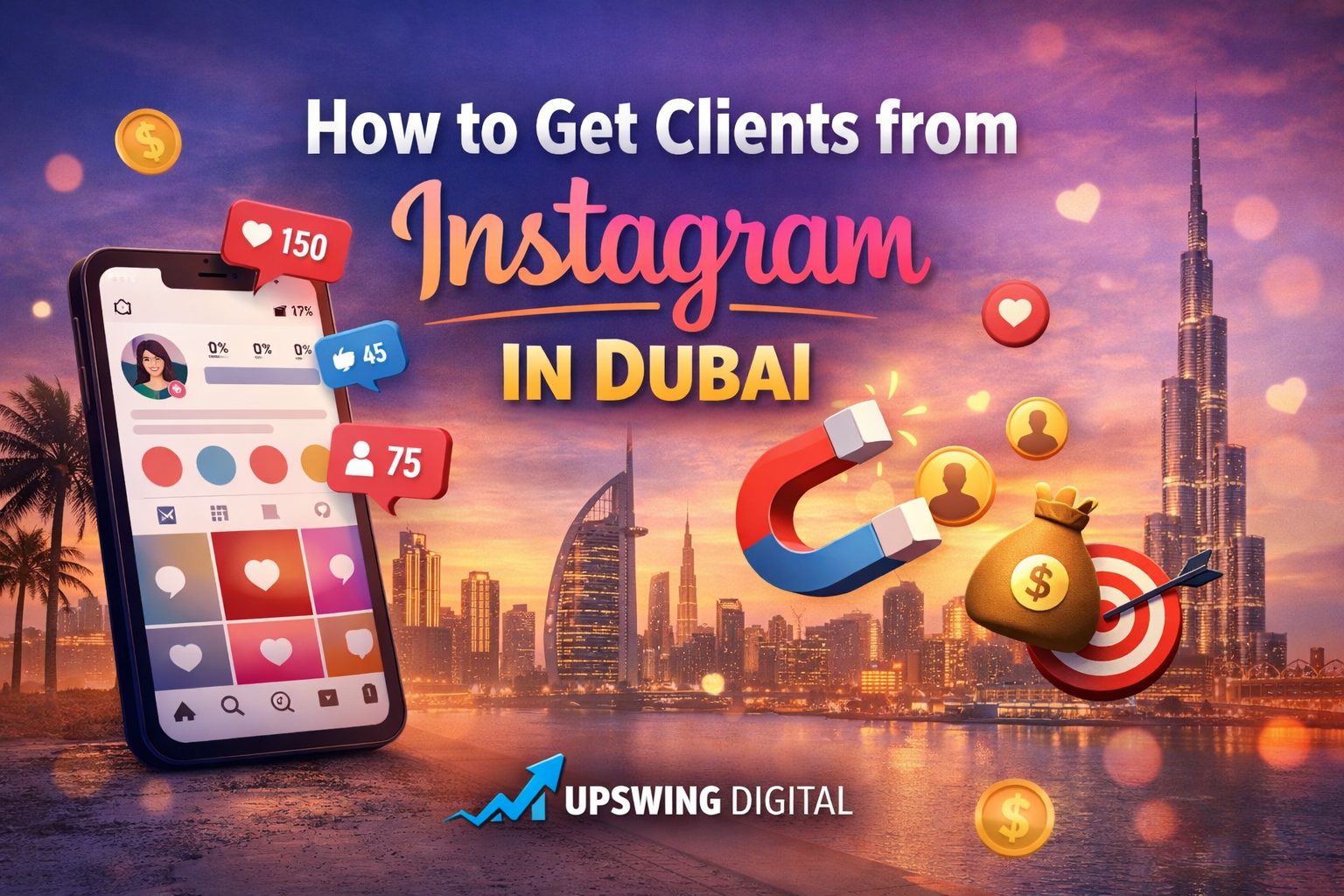
How to Get Clients from Instagram in Dubai

How to Get Clients from Instagram in Dubai | Upswing Digital

Instagram is a platform that gives businesses in Dubai incredible power when it comes to attracting and converting new clients. With a huge community and visually-driven marketing, Instagram has immense potential that can be leveraged for business growth.

In case you are having trouble getting clients via Instagram, the following information will provide you with some valuable insights into how to proceed.

Why Instagram is Powerful for Business in Dubai

Dubai is a rapidly growing market when it comes to the digital world. Social media is extensively used by consumers in this city for learning about brands and services. What makes Instagram particularly useful is:

  • High user engagement
  • Strong visual appeal
  • Direct communication through DMs
  • Advanced advertising options

When used right, Instagram allows a business to bring in leads on a regular basis.

Optimize Your Instagram Profile

The first step that any business should take if it wants to succeed with Instagram is optimizing its profile.

Key Elements:

  • Professional profile picture (logo or brand image)
  • Clear bio with keywords
  • Call-to-action (CTA) like “DM us” or “Book now”
  • Clickable link (website or WhatsApp)

Make sure your profile clearly communicates what you offer and who you serve.

Create High-Quality Content

Content is the backbone of your Instagram strategy. Without engaging content, you cannot attract clients.

Content Types That Work in Dubai:

  • Educational posts (tips, guides)
  • Before & after results
  • Client testimonials
  • Reels with trending audio
  • Service showcase videos

Consistency is key. Post at least 4–5 times per week to stay visible.

Use Instagram Reels for Maximum Reach

Reels are currently the best way to maximize reach on the platform.

Tips for Reels:

  • Keep videos short (7–15 seconds)
  • Use trending sounds
  • Add subtitles
  • Create a good hook in the first 3 seconds

Reels can help your content go viral and attract potential clients organically.

Leverage Instagram Stories

Stories will help you build a trusting relationship with your audience and keep it active daily.

What to Post:

  • Behind-the-scenes content
  • Daily updates
  • Polls and Q&A
  • Testimonials from your clients

Using Stories ensures a personal touch, which is vital for converting followers into client.

Use Hashtags Strategically

Hashtags help your content reach the right audience.

Best Practices:

  • Use 10–15 relevant hashtags
  • Include location-based hashtags (Dubai-related)

Run Targeted Instagram Ads

If you want faster results, Instagram ads are essential.

Ad Strategies:

  • Target specific locations in Dubai
  • Use interest-based targeting
  • Lead generation campaigns
  • Retarget people who visited your profile or website

An optimally run ad will generate daily leads.

Engage with Your Audience

Engagement is crucial for building trust and relationships.

Actions to Take:

  • Reply to all comments and messages
  • Engage with followers’ content
  • Use interactive story features

The more you engage, the more Instagram promotes your content.

Use Direct Messages (DMs) to Convert Leads

Most clients in Dubai prefer direct communication.

DM Strategy:

  • Respond quickly
  • Use a friendly and professional tone
  • Ask qualifying questions
  • Direct them towards the service

Quick responses can significantly increase your conversion rate.

Collaborate with Influencers

Influencer marketing works very well in Dubai.

Benefits:

  • Reach a larger audience
  • Build trust instantly
  • Gather immediate leads

Choose influencers relevant to your niche for better results.

Track and Improve Your Strategy

You cannot grow without analysing your performance.

Metrics to Monitor:

  • Engagement rate
  • Reach and impressions
  • Click-through rate
  • Leads generated

Use Instagram Insights to refine your strategy regularly.

Conclusion

It’s not chance but strategic moves that ensure you get clients on Instagram in Dubai. From tailoring your profile to advertising and connecting with your followers, every tactic counts when it comes to your success.

Upswing Digital has the expertise to help your business in Dubai get clients from Instagram by implementing an optimal Instagram marketing strategy. Contact us today and take the next step towards growth.