

How to Position Your Brand in a Competitive Market

Competing today feels noisy. Every category has lookalikes, price wars, and endless ads. The brands that win don’t just shout louder; they occupy a clear space in the customer’s mind. Here’s how to position your brand so people choose you, not just notice you.

Many brands make the mistake of trying to reach everyone or attempting to compete on every front. They focus on being louder, posting more content, or offering lower prices, believing that increased activity will automatically create growth. But when every competitor is doing the same thing, brands begin to blend together instead of standing apart.

How to Position Your Brand in a Competitive Market

Understand the Landscape Before You Claim Space

Positioning starts with reality, not slogans.

Map the Competition Honestly

-List direct and indirect competitors. Note their messaging, price points, visual style, and customer promises. Look for patterns — if everyone claims “fastest” or “cheapest,” that space is crowded.

-Identify Gaps and Tensions

-Talk to customers. What frustrates them about current options? Where do they compromise? Gaps often hide in trade-offs (e.g., quality vs. convenience, premium vs. approachable).

-Define Your Audience With Precision

-“Everyone” is not a target. Build 1-2 core personas based on motivations, not just demographics. What job are they hiring your product to do? What risk are they trying to avoid?

Craft a Distinctive Brand Position

Choose One Clear Value Anchor

-Successful brands own one idea: Volvo = safety, Apple = design simplicity, Costco = value. Pick a single anchor you can credibly defend — expertise, speed, transparency, design, community, sustainability, etc.

 -Build a Positioning Statement (Internal Tool)

-Use a simple frame: _For [target customer] who, is the that [key benefit] because [reason to believe]._ This isn’t a tagline; it’s your compass for decisions.

-Differentiate, Don’t Just Describe

-Features are table stakes. Translate them into outcomes: “AI editing” becomes “publish 3x more Reels without hiring an editor.” Focus on what changes for the customer.

Communicate the Position Consistently

 Align Messaging Across Touchpoints

–Website, ads, sales calls, packaging, support  all should reinforce the same core idea. Inconsistency dilutes positioning faster than competitors do.

-Show Proof, Not Just Claims

-Use case studies, before/after results, testimonials, certifications, or data. “Reason to believe” beats adjectives every time.

-Design as a Signal

-Visual identity should reflect the position. A premium expert brand shouldn’t look generic; a playful challenger shouldn’t look corporate. Consistency in tone, imagery, and UX builds recognition.

Pricing and Offer Structure Support Position

Price is communication. Premium positioning with discount pricing creates confusion. Align:

– *Premium: Higher price + white-glove service, guarantees, exclusivity

– Value: Transparent pricing, bundles, efficiency messaging

– Challenger: Simple pricing, no hidden fees, bold guarantees

Your offer architecture (packages, tiers, add-ons) should make the positioning obvious at a glance.

Win Attention in Crowded Channels

Own a Content Angle

-Don’t just post “tips.” Own a perspective: contrarian takes, deep teardowns, founder stories, customer transformations. Consistency beats virality.

-Feature customers who represent your ideal position. A luxury brand showing bargain hunters sends mixed signals.

Partner With Aligned Voices

-Influencers, creators, and communities should embody your positioning, not just have reach. Relevance > follower count.

-Test, Measure, Refine

Positioning is a hypothesis until the market validates it.

-Track Perception, Not Just Clicks

-Monitor branded search, share of voice, message recall in surveys, and qualitative feedback. Are people describing you the way you want?

Run Small Experiments

-Test headlines, landing page angles, and offer framing with ads or email splits. Double down on what resonates.

Evolve Without Drifting

-Markets change, so adjust. But don’t chase every trend — refine the expression of your core position rather than replacing it quarterly.

Common Positioning Mistakes to Avoid

– Trying to be “best at everything” — you end up being memorable for nothing.

– Copying the leader  you validate their position and look like the cheaper alternative.

– Changing positioning with every campaign  consistency builds mental availability.

– Ignoring internal alignment  if your team can’t explain the position in one sentence, customers won’t get it.

Conclusion

Positioning is ultimately about making deliberate choices and creating clarity. It is about deciding who you serve, what your brand stands for, and what unique value you bring to the market. Strong brands understand that trying to appeal to everyone often leads to being remembered by no one. Instead, they focus on owning a distinct space that customers can easily recognize and connect with.

At Upswing, we help brands create meaningful positioning strategies that turn attention into trust and visibility into long-term growth. Because success is not about being seen everywhere — it is about being remembered for the right reasons.

Why Your Leads Aren’t Converting (And What to Do)

Generating leads is important, but converting them is where the real challenge begins. Many businesses invest heavily in marketing, run ads, and bring in traffic with the expectation that more leads will naturally lead to more sales. While attracting attention is an essential part of growth, it is only the first step in the journey.

The real challenge starts after a lead enters your pipeline. Businesses often assume that a high volume of leads guarantees results, but numbers alone do not drive conversions. Without the right strategy, communication, and customer experience, even the most promising leads can lose interest before taking action.

Why Your Leads Aren’t Converting (And What to Do)

Understanding why leads drop off and fixing those gaps can significantly improve your conversion rate without increasing your marketing budget.

1. Your Targeting Is Too Broad

One of the most common reasons for low conversions is attracting the wrong audience. When your targeting is too broad, you may generate a high volume of leads, but many of them may not be interested in your offer.

This leads to poor engagement and low conversion rates. Focusing on a more defined audience helps bring in people who are more likely to take action, improving both lead quality and results.

2. Your Messaging Is Not Clear

If your messaging does not clearly communicate what you offer and why it matters, potential customers will lose interest quickly. Confusing or generic communication makes it difficult for leads to understand the value of your product or service.

Clear and simple messaging that highlights benefits, not just features, helps users connect with your brand and move forward in the decision-making process.

3. You Are Not Building Enough Trust

Leads rarely convert instantly. People need to trust your brand before they make a decision. If your website or content lacks credibility, users may hesitate to take the next step.

Trust can be built through testimonials, case studies, reviews, and consistent communication. Showing real results and experiences helps reduce doubt and increases confidence.

4. Your Follow-Up Process Is Weak

Many businesses lose leads simply because they do not follow up effectively. If you wait too long to respond or fail to stay connected, leads may lose interest or choose a competitor.

Timely and consistent follow-ups through email, calls, or messages keep your brand top of mind and increase the chances of conversion.

5. Your Offer Is Not Strong Enough

Even with the right audience and good messaging, leads will not convert if the offer is not compelling. A weak or unclear offer fails to motivate action.

Your offer should clearly show the value and provide a reason to act now. Adding incentives such as limited-time deals, free consultations, or exclusive benefits can improve conversion rates.

6. Your Website or Landing Page Is Not Optimized

A poorly designed website can create friction in the user journey. Slow loading speed, complicated navigation, or unclear call-to-actions can discourage users from completing the process.

A simple, fast, and user-friendly experience makes it easier for leads to take action and improves overall conversion performance.

7. You Are Ignoring Lead Nurturing

Not all leads are ready to buy immediately. Some need more time and information before making a decision. If you do not nurture these leads, you risk losing them.

Providing valuable content, staying in touch through email marketing, and educating your audience helps move leads closer to conversion over time.

8. You Are Not Tracking the Right Metrics

Without proper tracking, it is difficult to understand where the problem lies. Focusing only on lead volume can be misleading if those leads are not converting.

Tracking metrics such as conversion rate, cost per acquisition, and customer journey behavior helps identify gaps and optimize your strategy effectively.

Conclusion

If your leads are not converting, the issue is not always your marketing, it is often your strategy. From targeting and messaging to follow-ups and user experience, every step plays a role in turning leads into customers.

By identifying weak points and improving each stage of the process, businesses can increase conversions without spending more on lead generation.

At Upswing, we help brands build conversion-focused strategies that turn leads into real results. Because in today’s competitive digital landscape, success is not about getting more leads, it is about converting the right ones.

How to Build Emotional Connection with Your Audience

People connect with emotions before they connect with products or services. In a world filled with endless choices and constant content, audiences are more likely to engage with brands that make them feel understood and valued. Emotional connections create stronger relationships, influence decision-making, and encourage long-term loyalty. Brands that resonate emotionally with their audience often stand out and build deeper trust over time. Let’s explore how to create meaningful emotional connections that inspire engagement and growth.

Building Emotional Connections: Engage Your Audience
Understand Your Audience Deeply

Strong emotional connections begin with understanding the people you want to reach. The better you understand your audience’s needs, values, and challenges, the easier it becomes to create experiences that feel meaningful and personal.

1. Know Their Values

Understanding what matters most to your audience helps create messaging and experiences that feel more relevant and emotionally impactful.

2. Listen Actively

Engage with comments, feedback, and conversations. Show you care.

3. Empathize Genuinely

Acknowledge feelings and challenges. Validate their experiences.

Craft Resonant Messaging

Your messaging should do more than deliver information; it should create feelings and spark connections. Emotionally driven communication helps audiences relate to your brand and remember it more easily.

1. Storytelling

Share authentic stories that reflect your audience’s experiences.

2. Emotional Triggers

Use triggers like joy, nostalgia, or inspiration to connect.

3. Authentic Voice

Speak in a tone that feels human and relatable.

Create Value Beyond Products

Strong emotional relationships are built by providing value beyond direct transactions. When brands focus on helping, educating, or supporting audiences, they create stronger long-term connections.

1. Educate and Inspire

Provide value through content, workshops, or resources.

2. Community Building

Foster communities around shared interests or values.

3. Support and Care

Show genuine care through customer support and engagement.

Leverage Emotional Marketing

Emotional marketing helps brands create meaningful experiences that audiences remember. Campaigns that create feelings often generate stronger engagement and stronger audience connections.

1. Visual Storytelling

Use visuals that evoke emotions and tell stories.

2. Personalization

Tailor messages and experiences to individual needs.

3. User-Generated Content

Encourage and feature user content that showcases emotions.

Measure Emotional Engagement

Understanding audience reactions helps brands evaluate emotional impact. Tracking engagement and audience sentiment provides insights for building stronger relationships.

1. Engagement Metrics

Monitor likes, shares, comments, and other engagement signals.

2. Sentiment Analysis

Analyze feedback and sentiment to gauge emotional response.

3. Loyalty and Advocacy

Measure loyalty and advocacy as indicators of emotional connection.

Strategies for Emotional Connection

Building emotional relationships requires intentional actions and consistent experiences across every customer touchpoint.

1. Be Authentic

Authenticity builds trust and emotional bonds.

2. Show Vulnerability

Share challenges and learnings to humanize your brand.

3. Celebrate Milestones

Acknowledge and celebrate audience milestones and successes.

Common Pitfalls to Avoid

While building emotional connections, certain mistakes can weaken audience trust and reduce authenticity. Recognizing and avoiding these issues helps maintain stronger relationships.

– Inauthenticity: Don’t fake emotions or connections.

– Ignoring Feedback: Listen and respond to audience needs.

– Over-Promotion: Balance promotion with value and care.

Conclusion

Building emotional connections with your audience requires empathy, authenticity, and a commitment to delivering value beyond products or services. When brands focus on understanding their audience, communicating with genuine intent, and creating meaningful experiences, they can foster stronger relationships that lead to long-term loyalty and advocacy. Emotional connections are not built overnight, but consistent efforts can create lasting impact and stronger brand perception.

At Upswing Digital, we help brands create meaningful strategies that build deeper audience relationships and drive sustainable growth. With Upswing’s approach to understanding consumer behavior and creating authentic experiences, businesses can develop stronger emotional bonds that turn audiences into loyal communities.

Importance of Brand Consistency Across Platforms

Consistency builds trust. When brands present themselves uniformly across platforms, they reinforce recognition and credibility. A consistent brand presence is essential for creating meaningful audience connections and long-term growth. Every interaction with your audience should reflect the same values, voice, and visual identity. A well-maintained brand image not only strengthens trust but also helps businesses stand out in a competitive market.

Brand Consistency Across Platforms: Why It Matters in 2026
Why Brand Consistency Matters

Consistent branding creates a reliable and recognizable identity that helps customers connect with and trust your business over time. When audiences encounter the same visuals, messaging, and experience across platforms, they develop stronger familiarity and confidence in your brand.

1. Recognition

Consistent branding increases familiarity, making it easier for audiences to instantly recognize and remember your brand.

2. Trust and Credibility

When your visuals and messaging remain consistent, customers see your brand as more professional, dependable, and trustworthy.

3. Unified Message

A consistent approach ensures your audience receives a clear message that reflects your brand values and purpose.

Key Elements of Brand Consistency

Being consistent requires aligning every aspect of your brand across platforms and customer touchpoints. From visuals to communication style, every element should work together to create a seamless brand experience.

1. Visual Identity

– Logo: Use the same logo across platforms.

– Colors: Stick to defined color palettes.

– Typography: Consistent fonts and typography.

2. Tone and Voice

– Messaging: Align tone with brand personality.

– Language: Use consistent language and terminology.

3. Content Style

– Imagery: Use consistent visual styles and themes.

– Format: Maintain consistent content formats.

Benefits of Consistent Branding

A strong and consistent brand presence delivers long-term benefits for both recognition and customer relationships. It creates a stronger identity while improving trust and engagement.

1. Increased Recognition

Familiar branding helps customers identify your business quickly across different platforms.

2. Enhanced Trust

Consistency reassures customers and builds stronger confidence in your brand.

3. Stronger Brand Identity

A unified brand presence reinforces your values and helps create a lasting impression.

Strategies for Achieving Consistency

Creating a consistent brand experience requires structured processes and clear guidelines. Establishing systems helps teams maintain alignment across all communication channels.

1. Brand Guidelines

Detailed brand guidelines help teams maintain consistency in visuals, messaging, and communication.

2. Centralized Assets

Keeping all brand assets in one place ensures everyone uses the correct resources.

3. Training and Collaboration

Regular training and teamwork help maintain consistency across departments and platforms.

Challenges and Solutions

Maintaining consistency across multiple channels can be challenging, especially as brands grow and expand. Identifying common obstacles and creating solutions helps maintain a unified presence.

1. Multiple Platforms

– Solution: Use templates and guidelines for each platform.

2. Team Alignment

– Solution: Regular training and clear communication.

3. Evolving Brand

– Solution: Update guidelines as the brand evolves.

Best Practices for Consistency

Following proven practices can help maintain a strong and unified brand presence. Regular reviews and strategic planning ensure long-term consistency.

1. Audit Regularly

Regularly audit your platforms for consistency.

2. Use Tools

Leverage tools like brand management software for consistency.

3. Feedback Loop

Encourage feedback and adjust as needed.

Common Mistakes to Avoid

Inconsistent Visuals: Don’t mix logos, colors, or fonts.

Mixed Messaging: Align messaging with brand voice.

Ignoring Guidelines: Stick to brand guidelines.

Conclusion

Brand consistency across platforms reinforces recognition, trust, and credibility while helping businesses create a stronger connection with their audience. When every visual element, message, and interaction aligns with your brand identity, it creates a seamless experience that customers can easily recognize and remember.

Consistency not only strengthens your brand presence but also builds long-term loyalty and confidence among your audience. At Upswing Digital, we help brands maintain consistency, create cohesive brand experiences, and build stronger identities that leave a lasting impact. With Upswing’s expertise and strategic approach, businesses can create a unified presence that strengthens brand value and supports long-term growth.

How to Build Authority Without Being Over-Promotional

Authority changes how people respond to a brand.

People can instantly tell when they’re being sold to, even when it’s subtle. It shows up in the tone, the urgency, and the constant push to take action. Over time, this creates resistance. People scroll faster, skip content, and disconnect from anything that feels too promotional. That’s why many brands struggle to hold attention today, even with consistent posting.

Authority works differently. Brands that focus on sharing value instead of constantly selling build trust naturally. People don’t feel targeted — they feel connected. And that connection is what keeps a brand relevant, trusted, and remembered.

Build Authority Without Selling: A Practical Guide to Trust-Based Growth
1. Understand What Authority Really Means Today

Authority is no longer about sounding perfect or overly professional. In fact, content that feels too polished often creates distance instead of connection. What works now is clarity, honesty, and consistency in communication. When someone comes across your content and feels like it actually makes sense or helps them understand something better, trust starts forming instantly. Over time, that trust builds into something stronger, and that’s where build authority without selling starts becoming real instead of just a concept.

2. Focus on Being Useful Instead of Impressive

A lot of content tries to sound smart rather than be helpful, but people don’t remember complexity—they remember clarity. When your content solves a small problem, answers a question, or gives a simple insight someone can use immediately, it stays with them. Shifting your mindset from trying to impress to trying to help completely changes how people perceive you. This is where brand authority building begins, through consistent value rather than big claims.

3. Share the Process, Not Just the Outcome

Most content online focuses only on results, showing the final polished version of success. But what people connect with is the journey behind it. Talking about what didn’t work, what had to be changed, and what you learned along the way makes your content feel real. It removes the pressure of perfection and replaces it with relatability. This kind of openness builds deeper trust and supports build authority without selling in a much more natural way.

4. Communicate Like a Human, Not a Brand

One of the biggest mistakes in content is sounding too scripted or corporate. People don’t connect with perfect language—they connect with real conversations. When your content feels like something a person would actually say, it becomes easier to understand and more engaging to read. Over time, this creates familiarity, and that familiarity plays a huge role in build authority without selling because people start recognizing and trusting your voice.

5. Give Value Without Holding Back

There’s always a hesitation that sharing too much will reduce your value, but the opposite is true. When you consistently share insights, break down ideas, and make things easier for others to understand, people begin to see you as someone who genuinely knows their space. Instead of questioning your expertise, they start trusting it. This is how build authority without selling works in practice—by giving without immediate expectation.

6. Stay Consistent Even When Growth Feels Slow

Authority doesn’t come from one post or one viral moment. It builds over time through consistency. Even when it feels like your content isn’t getting enough attention, people are still watching and forming impressions. They begin to recognize your ideas, your tone, and your perspective. Over time, that recognition turns into trust, and that trust is what makes build authority without selling sustainable.

7. Let Results Speak Without Over-Promotion

You don’t need to constantly say you’re the best to be seen as valuable. In fact, repeating it too often reduces credibility. Instead, showing small wins, real examples, and honest outcomes allows people to understand your value on their own. This kind of subtle approach feels more genuine and builds stronger trust. That’s how brand authority building happens quietly but effectively.

8. Build a Clear Point of View

Authority becomes stronger when you’re not just sharing information, but also sharing your perspective. When you consistently express what you believe works, what doesn’t, and what people often misunderstand, your content becomes more memorable. People begin to associate certain ideas with you. This clarity of thought is a key part of build authority without selling, because it makes your voice stand out without needing to be loud.

Conclusion

Building authority today isn’t about pushing people to trust you or constantly proving your value. It’s about showing up in a way that feels honest, clear, and genuinely helpful. When brands focus more on connection than conversion, people start paying attention naturally.

Over time, audiences stop seeing the content as just another post and begin to see the brand as trustworthy and worth following. That’s the real power of building authority without selling — it turns attention into trust, and trust into long-term growth.

At Upswing Digital, building meaningful brand authority is at the core of creating lasting audience relationships. Upswing Digital believes that brands grow stronger when they focus on trust, value, and genuine connection instead of constant selling.

Simple Lead Generation Strategies for Small Businesses

Simple Lead Generation Strategies for Small Businesses That Work

Generating leads is one of the biggest challenges for small businesses. With limited budgets, growing competition, and constantly changing digital trends, attracting the right audience can feel overwhelming. However, lead generation does not always require complex systems or expensive campaigns.

The key is to focus on simple, consistent, and effective strategies that bring results over time. When done correctly, even small efforts can create a steady flow of quality leads.

Here are simple lead generation strategies that small businesses can use to grow without overcomplicating their marketing.

1. Optimize Your Website for Lead Generation

Your website is often the first interaction potential customers have with your business, so it should be designed to capture leads effectively. A clear value proposition, easy navigation, and visible call-to-actions help guide visitors toward taking action. When your website communicates your offer clearly and makes it easy to contact you, lead generation becomes more consistent.

2. Focus on Local SEO to Attract Nearby Customers

For small businesses, local visibility is crucial. Optimizing your Google Business Profile, using location-based keywords, and encouraging customer reviews can help your business appear in local search results. When people search for services near them, a strong local presence increases the chances of generating qualified leads.

3. Use Social Media to Build Relationships

Social media is not just about posting content but about engaging with your audience. By responding to comments, sharing valuable insights, and interacting regularly, small businesses can build trust with potential customers. This trust eventually turns into leads, as people are more likely to buy from brands they feel connected to.

4. Offer Valuable Content to Attract Interest

Providing useful content is one of the simplest ways to generate leads. Whether it is blog posts, short videos, or helpful tips, content that solves problems attracts the right audience. When users find value in your content, they are more likely to reach out or follow your business for more information.

5. Use Simple Lead Magnets to Capture Contacts

Offering something valuable in exchange for contact information can significantly increase lead generation. This could be a free consultation, a downloadable guide, or a special discount. When the offer is relevant and useful, people are more willing to share their details.

6. Leverage Email Marketing for Consistent Follow-Up

Collecting leads is only the first step; nurturing them is equally important. Email marketing allows small businesses to stay connected with potential customers by sharing updates, offers, and useful information. Consistent communication builds trust and keeps your brand top of mind.

7. Encourage Word-of-Mouth and Referrals

Happy customers can become your best source of leads. Encouraging referrals and creating a positive customer experience helps generate organic growth. When people recommend your business to others, it brings in leads that already have a level of trust.

8. Use Paid Ads Strategically, Not Excessively

Paid advertising can support lead generation, but it should be used wisely. Instead of spending heavily, small businesses can focus on targeted campaigns that reach the right audience. Even a small budget can generate good results when combined with strong messaging and clear objectives.

Conclusion

Lead generation for small businesses does not need to be complicated. By focusing on simple strategies such as optimizing your website, building relationships, creating valuable content, and nurturing leads, you can create a steady and reliable flow of potential customers.

At Upswing, we believe that effective lead generation is built on clarity, not complexity. Our approach focuses on creating practical systems that small businesses can maintain and scale without unnecessary pressure. From improving your online presence to building structured follow-up processes, Upswing helps turn everyday marketing activities into consistent lead generation opportunities.

How to Create a Smart Content Strategy

Content Strategy is not about publishing more — it is about publishing with purpose. Most businesses today are creating content. Very few are creating content that actually drives results. The gap between the two is almost never a question of talent or budget. It is a question of strategy.

Without a clear Content Strategy, even the best content gets lost. It attracts the wrong audience, targets the wrong keywords, goes out on the wrong channels, and gets measured by the wrong metrics. The result is a content operation that feels busy but delivers little in return. In 2026, where AI-generated content floods every platform and buyer attention is harder to earn than ever, a vague approach to content is a direct path to wasted effort.

A strong Content Strategychanges all of that. It gives every piece of content a clear job to do, a specific audience to serve, and a measurable outcome to drive. This guide walks you through exactly how to build one — step by step — and what it looks like when your Content Strategy starts driving real, compounding business results.

 What Is a Content Strategy and What Makes It ‘Results-Driven’?

A Content Strategy is the documented framework that defines why you create content, who it is for, what it covers, where it is published, and how you measure whether it is working. It is the thinking that sits behind all content marketing execution — the plan that makes every piece of content intentional rather than reactive.

What makes a Content Strategy results-driven specifically is alignment. Every element of the strategy — the audience, the topics, the formats, the channels, the publishing cadence, the KPIs — maps directly back to a defined business goal. The content is the foundation of both SEO and owned media effectiveness, and a documented Content Growth Strategy is what ensures that foundation is built with intention rather than guesswork.

The brands that consistently grow through content are not necessarily the ones with the largest teams or the biggest production budgets. They are the ones with the clearest Content Strategy and the discipline to execute it consistently over time.

How to Build a Content Strategy That Delivers 7 Real Business Results
1. Know Exactly Who Your Content Strategy Is Built For

The first and most important decision in any Content Strategy is audience definition. Not a broad demographic — a specific, research-backed picture of the real person your content is meant to serve. Their role, their daily challenges, their goals, the questions they are actively searching for answers to, and the language they use to describe their problems.

Build audience personas from real data: customer interviews, CRM insights, sales call recordings, and social listening. Each persona should clarify the stage of the buyer journey they occupy and the type of content they need at that stage. A Content Framework built on genuine audience understanding produces content that feels personal and relevant — and content that feels personal converts at a significantly higher rate than content built on assumptions.

The audience research is the single most impactful step in building a Content Framework that connects content output to revenue outcomes. Without it, even high-quality content consistently misses the mark.

2. Set Business Goals That Your Content Strategy Is Responsible For

A Content Strategy without defined business goals is just a publishing schedule. Before any content is created, define specifically what you need content to achieve and make sure those outcomes are ones the business actually cares about.

Use SMART goals to anchor your Content Strategy: Specific, Measurable, Achievable, Relevant, and Time-bound. Goals should connect directly to business outcomes such as organic traffic growth, qualified lead generation, sales pipeline contribution, or customer retention rates, not to vanity metrics like impressions or follower counts.

Every goal in your Content Strategy should answer two questions: What business result will this content drive? And how will we know when it has done that? These questions force strategic clarity and make it far easier to prioritise content topics, formats, and channels that actually matter.

3. Build Your Content Strategy Around Topic Pillars and Search Intent

The structural backbone of a high-performing Content Strategy in 2026 is topic authority. Rather than creating isolated pieces of content around individual keywords, the most effective approach is to build interconnected topic clusters: a comprehensive pillar page covering a broad subject, surrounded by a network of more specific supporting content that links back to it.

This structure signals genuine topical expertise to both Google and AI-powered answer engines, which are increasingly the primary discovery surfaces for buyers researching solutions. To aligning your Content Strategy with search intent — understanding whether a reader is in an informational, commercial, or transactional mindset — is what separates content that ranks from content that sits unseen.

•        Informational content — builds awareness and earns organic discovery at the top of the funnel

•        Commercial content — nurtures consideration by comparing options and addressing objections

•        Transactional content — supports purchase decisions at the bottom of the funnel

A well-structured Content Strategy maps content to each of these intent types, ensuring your brand is present and helpful at every stage of the buyer journey.

4. Choose the Right Formats and Channels for Your Content Strategy

One of the fastest ways to undermine a Content Strategy is trying to be everywhere at once. Spreading content across every platform with insufficient focus almost always produces mediocre results across all of them. The smarter approach is to identify where your specific audience is most active and most receptive, and then commit to doing those channels exceptionally well.

In 2026, short-form video dominates for awareness and social reach, while long-form written content remains the strongest driver of organic search traffic and lead nurturing. The most effective Content Strategy uses multiple formats assigned to specific roles in the customer journey — rather than repurposing the same content identically across every channel.

Map your content formats to buyer journey stages and assign each channel a specific strategic role within your Content Strategy. This clarity prevents wasted effort and ensures every piece of content is created with its destination and purpose already defined.

5. Build a Content Calendar That Makes Your Content Strategy Executable

The most sophisticated Content Strategy in the world delivers nothing without consistent execution. A content calendar is what bridges the gap between strategic planning and daily publishing reality. It translates your audience insights, goals, and channel decisions into a concrete, shared schedule that keeps the whole team aligned.

Plan your Content Framework execution in 90-day cycles. Define the themes for each cycle, map out individual content pieces, assign ownership, set publication dates, and include a distribution plan for each asset. This sprint-based approach gives your Content Strategy enough structure to maintain consistency and enough flexibility to respond to market moments and real-time opportunities.

The brands that publish on a consistent, planned schedule build domain authority and audience trust significantly faster than those that publish reactively. Consistency is not just a discipline it is a direct competitive advantage in your Content Framework.

6. Distribute Your Content Strategy Intentionally — Creation Is Only Half the Work

One of the most expensive mistakes in any Content Strategy is treating distribution as an afterthought. Creating great content and failing to get it in front of the right people is the equivalent of building a brilliant product and putting it in a warehouse with no signage. Distribution deserves the same strategic attention as creation.

Your Content Strategy should define a distribution plan for every piece of content before it is created. This includes which owned channels will carry it (website, email list, social profiles), which earned channels you will pursue (backlinks, press, influencer shares), and whether any paid amplification is warranted to accelerate reach to a targeted audience.

Repurposing is also a critical element of an efficient Content Framework. A single well-researched long-form article can be broken down into social posts, email newsletter content, short-form video scripts, and infographic assets — extending the reach of one investment across multiple channels and audience segments without starting from scratch each time.

7. Measure What Matters and Let Data Drive Your Content Strategy Forward

The final and most decisive element of a results-driven Content Strategy is measurement. Not tracking everything — tracking the right things. The metrics that matter are the ones connected directly to the business goals defined at the start of your Content Strategy, not the ones that are simply easy to report.

Use Google Search Console and Google Analytics 4 to track organic traffic growth, content engagement, and conversion paths. Connect this data to your CRM to understand which content pieces are contributing to qualified leads and closed revenue. Review performance at the end of every 90-day cycle and use the findings to sharpen the next sprint of your Content Strategy.

The most effective content teams treat their Content Strategy as a living system. They double down on what is working, cut what is not, update older content to keep it competitive, and continuously refine their approach based on real audience behaviour rather than internal assumptions. Over time, this compounding cycle of create, measure, and improve is what separates brands that grow through content from brands that simply publish.

How to create a Content Strategy that drives results
Content Strategy Mistakes That Stop Results Before They Start

These are the errors that most commonly prevent a Content Strategy from delivering the results it should — and most of them are entirely avoidable:

•        No documented strategy: A Content Strategy that exists only in someone’s head is not a strategy — it is a preference. Write it down, share it across the team, and treat it as a living document that is reviewed and updated regularly.

•        Optimising for volume over value: In 2026, one deeply researched, genuinely useful piece of content outperforms ten thin, generic posts every time. Your Content Strategy should prioritise quality and depth.

•        Skipping audience research: Building a Content Strategy on assumptions rather than real audience data is one of the most costly mistakes a marketing team can make. The content will feel generic, miss search intent, and fail to convert.

•        Measuring vanity metrics: If your Content Strategy is evaluated by page views and social likes rather than leads, pipeline contribution, and revenue impact, you are optimising for the wrong outcomes entirely.

•        Inconsistent execution: A Content Strategy only compounds if it is executed consistently over time. Sporadic publishing destroys trust with both your audience and search algorithms.

Your Content Strategy Should Work as Hard as Your Business Does

At Upswing, we believe a great Content Strategy is one of the highest-leverage investments a business can make. Unlike paid advertising, which stops the moment you stop spending, a well-built Content Strategy compounds. Every piece of content you publish adds to your authority, improves your search visibility, and nurtures your audience — building a brand asset that keeps delivering long after the initial effort.

The businesses we work with are not just looking for content. They are looking for growth. And growth through content requires a Content Strategy that is grounded in real audience understanding, aligned with clear business goals, executed with consistency, and measured with rigour. That is the standard we hold every Content Strategy we build to at Upswing.

Whether you are starting a Content Strategy from scratch or auditing an existing one that is not delivering results, Upswing brings the research, the framework, and the execution capability to turn your content into a reliable, scalable growth engine. From audience mapping and keyword research to editorial planning, content production, and performance reporting — we handle the full system.

How Brands Can Turn Followers into Paying Customers

Turning Followers into Customers

Social media has given brands unprecedented access to audiences worldwide. Yet, having thousands of followers doesn’t automatically translate into revenue. The real challenge lies in converting those followers into loyal customers who trust your brand enough to make a purchase. This blog explores actionable strategies that help brands turn followers into paying customers while building long-term relationships.
Why Followers Don’t Always Equal Customers

Many businesses assume that a large follower count automatically leads to sales, but in reality, followers often engage with content without converting into customers due to several key gaps such as lack of trust in the brand’s credibility, poor alignment between content and product offerings, weak or unclear calls-to-action that fail to guide users toward purchase, and an overemphasis on vanity metrics instead of meaningful engagement; recognizing these issues is essential for building effective strategies that turn passive followers into active, paying customers.

Building Trust Through Authentic Engagement

Trust is the foundation of conversion, as followers are far more likely to make a purchase when they feel a genuine connection with a brand, believe in its credibility, and see consistent, authentic communication that builds confidence over time.

Humanize Your Brand

Humanize your brand by showing the people and stories behind it—share behind-the-scenes moments to build authenticity, highlight real customer testimonials and user-generated content to reinforce credibility, and use storytelling to create an emotional connection that makes your audience feel more engaged and connected.

Consistency Matters

Maintain a consistent posting schedule to stay visible and reliable, ensure your visuals, tone, and messaging align with your brand identity for a cohesive experience, and respond promptly to comments and direct messages to build genuine engagement; by consistently nurturing trust in these ways, brands create an environment where followers feel confident enough to make purchasing decisions, making it a crucial step in turning followers into paying customers.

Crafting Content That Drives Action

Content acts as the bridge between awareness and conversion, guiding followers through each stage of the journey, which is why brands must focus on creating content that not only captures attention but also educates, inspires, and persuades, helping build trust, demonstrate value, and ultimately move audiences closer to making a purchase decision.

Educational Content

Share valuable tips, tutorials, and industry insights that genuinely help your audience, positioning your brand as a trusted thought leader and go-to source for knowledge in your space.

Persuasive Content

Use case studies to clearly demonstrate how your product or service delivers real results, while highlighting limited-time offers or exclusive deals to create urgency and encourage quicker decision-making.

Interactive Content

Polls, quizzes, and challenges encourage active participation, making your audience feel involved rather than passive viewers, while interactive formats boost engagement and help build stronger connections; when content truly resonates in this way, followers are far more likely to take the next step and convert into paying customers.

Leveraging Social Proof

Social proof is one of the most powerful tools in marketing psychology, as people tend to trust the experiences of others far more than direct brand claims; by prominently showcasing reviews and ratings, collaborating with micro-influencers who hold niche credibility, and sharing real customer success stories across platforms, brands can build authenticity and reduce hesitation, making it much easier to turn followers into confident, paying customers.

Optimizing Calls-to-Action (CTAs)

CTAs guide followers toward the desired action, and without clear direction, even highly engaged audiences may hesitate or fail to convert, which is why strong, specific, and well-placed calls-to-action are essential for turning interest into actual results.

Best Practices for CTAs

Use action-oriented language like “Shop Now” or “Get Started” to create urgency, place CTAs strategically across captions, stories, and bios to maximize visibility, and ensure landing pages are mobile-friendly and fast-loading for a smooth user experience, as strong CTAs provide the final push needed to turn interested followers into paying customers.

Personalization and Customer Experience

Generic marketing no longer works, as today’s audiences expect experiences tailored to their preferences and behaviour; by using data analytics to understand follower actions, segmenting audiences based on interests and demographics, and offering personalized recommendations or exclusive discounts, brands can create more relevant interactions, and this level of personalization shows that the brand truly values its audience, making followers far more likely to convert into paying customers.

Building Long-Term Loyalty

Conversion is only the beginning, as the real goal is to build long-term relationships by turning one-time buyers into loyal advocates who not only return but also actively promote your brand through trust, satisfaction, and positive experiences.

Loyalty Programs

Reward repeat purchases with points or exclusive discounts to encourage loyalty, and offer VIP access to new products or events to make customers feel valued and part of a special community.

Continuous Engagement

Keep customers informed with regular newsletters and updates, celebrate important milestones like anniversaries or birthdays to build a personal connection, and focus on nurturing loyalty so that once followers become paying customers, they continue to support and actively promote your brand over time.

Conclusion

Turning followers into customers requires more than flashy content or high follower counts. It demands authenticity, trust, strategic content, social proof, strong CTAs, personalization, and loyalty-building initiatives. Brands that master these elements not only increase conversions but also create lasting relationships with their audience.

At Upswing Digital, we believe that combining these strategies with a clear understanding of your audience can significantly improve conversion outcomes and long-term brand value. By focusing on consistency, engagement, and data-driven decisions, businesses can confidently turn followers into paying customers and build sustainable growth in the digital era. With the right approach and execution, Upswing Digital helps brands bridge the gap between audience engagement and real business results.

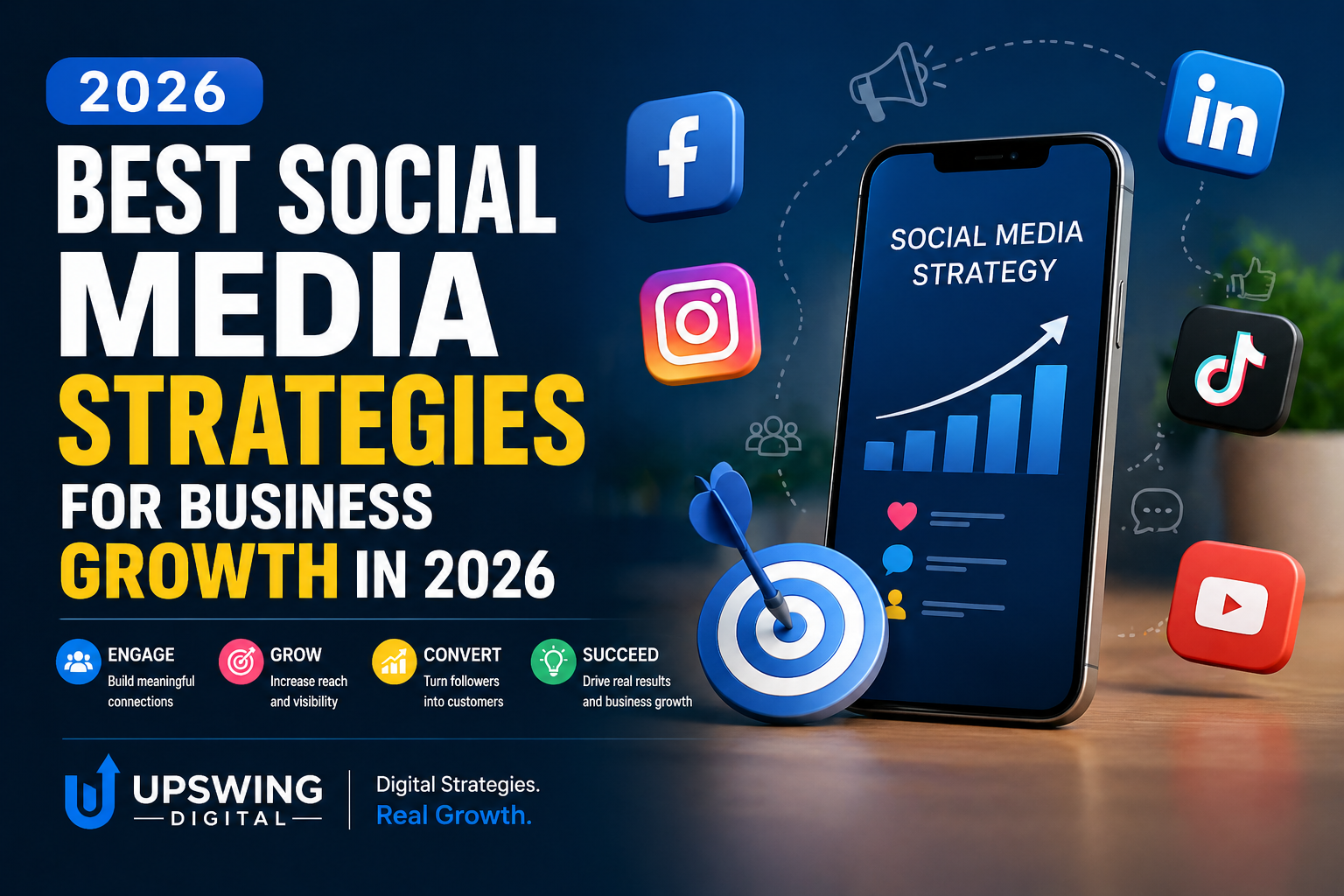
Best Social Media Strategies for Business Growth in 2026

Best Social Media Strategies for Business Growth in 2026

Social media is no longer just a branding tool—it has become one of the most powerful channels for lead generation, customer engagement, and business growth. In 2026, businesses that adapt and act on the changing trends in their industry will succeed above all else.

The focus for agencies like Upswing Digital has shifted from producing content to forming connections and achieving tangible results.

1. Focus on Value-Driven Content

In 2026, content that educates, solves problems, or entertains performs the best.

What works:

  • How-to guides
  • Short educational videos
  • Industry insights
  • Behind-the-scenes content

Instead of selling directly, focus on providing value. This builds trust and long-term engagement.

2. Short-Form Video Dominance

Platforms are prioritizing short-form videos more than ever.

Key platforms:

  • Instagram Reels
  • YouTube Shorts
  • Facebook Reels

Why it works:

  • Higher reach
  • Better engagement
  • Faster content consumption

Businesses that consistently create short videos will see stronger growth.

3. Personal Branding Matters

People connect with people, not just brands.

Strategy:

  • Show founders and team members
  • Share real experiences
  • Post authentic stories

Personal branding helps businesses build credibility and emotional connection with their audience.

4. AI-Driven Content Strategy

Artificial intelligence is transforming social media marketing.

Businesses are using AI to:

  • Analyze audience behavior
  • Generate content ideas
  • Optimize posting times

Using platforms like ChatGPT helps streamline content creation and improve efficiency.

5. Influencer & Micro-Influencer Marketing

Collaborating with influencers is still one of the most effective strategies.

Why micro-influencers work:

  • Higher engagement rates
  • Niche audiences
  • More affordable

Partnering with the right influencers can significantly boost brand awareness.

6. Data-Driven Decision Making

Tracking performance is essential.

Monitor:

  • Engagement rate
  • Reach
  • Click-through rate
  • Conversions

Use insights to refine your strategy and improve results over time.

7. Platform-Specific Strategies

Each platform requires a different approach.

  • Instagram: Visual + reels
  • LinkedIn: Professional content
  • Facebook: Community + ads
  • YouTube: Long + short videos

Avoid posting the same content everywhere without optimization.

8. Strong Call-to-Action (CTA)

Every post should guide the audience to take action.

Examples:

  • Visit website
  • Send a message
  • Book a service

A clear CTA turns engagement into real business results.

Why Social Media Strategy Matters for Business Growth

When there is no proper strategy, using social media becomes a waste of time with very minimal output being achieved.

With the right approach:

  • You attract the right audience
  • Build trust
  • Generate consistent leads

Having social media experts like Upswing Digital on board guarantees that you will achieve your business objectives.

Final Thoughts

In 2026, social media is all about having a strategy, consistency, and authenticity. By focusing on value-based posts, video marketing, and community building, your business will benefit significantly. Making adjustments in accordance with such a strategy will help you convert social media from a marketing tool into an instrument for business growth.

Do you need help growing your business through social media?

Work with specialists and implement an effective social media strategy.

What Successful Brands Do Differently With Marketing

What Makes Successful Brands? 7 Key Marketing Strategies

Ever wondered what makes successful brands tick in today’s competitive marketing world? Strategies are what separate average brands from truly successful ones in today’s competitive marketing landscape. It’s not just about big budgets or chasing trends—it’s about using the right strategies to connect with people, deliver value, and stay consistent over time. The most successful brands understand how to combine creativity, data, and customer insight to drive real results. At Upswing Digital, we’ve seen how well-planned strategies can transform marketing efforts into measurable growth. Let’s explore the key strategies that set successful brands apart and how businesses can apply them effectively.

Customer-Centric Approach

Successful brands place their customers at the heart of every decision they make. Instead of focusing only on selling, they invest time in understanding customer needs, expectations, and challenges. This approach helps create meaningful experiences, improves satisfaction, and builds long-term relationships that go beyond one-time transactions.

1. Know Your Audience

Deep dive into customer demographics, preferences, and behavior. Create buyer personas to guide your marketing efforts.

2. Personalization

Tailor messages and experiences to individual needs. Leverage data and analytics to deliver personalized content.

3. Feedback Loop

Encourage feedback and act on it. Use customer insights to refine your marketing strategy.

Storytelling That Resonates

Brands that tell compelling and authentic stories are able to create deeper emotional connections with their audience. Instead of just promoting products or services, they communicate values, purpose, and real experiences. Strong storytelling makes a brand more relatable, memorable, and trustworthy in a crowded digital space.

1. Authentic Narratives

Share brand stories that reflect values and mission. Be genuine and transparent in your messaging.

2. Emotional Connection

Create content that evokes emotions and builds loyalty. Use storytelling to highlight customer experiences.

3. Consistent Messaging

Align messaging across all channels. Ensure consistency in tone, voice, and visuals.

Innovative Marketing Strategies

To stay competitive, successful brands continuously explore new and creative ways to reach their audience. They combine traditional marketing with modern digital approaches, experiment with content formats, and adapt to changing consumer behavior. Innovation allows brands to stand out and remain relevant in a fast-moving market.

1. Omnichannel Presence

Engage customers across multiple platforms seamlessly. Leverage social media, email, and content marketing.

2. Content Marketing

Provide value through informative and entertaining content. Focus on quality over quantity.

3. Influencer Partnerships

Collaborate with influencers who align with brand values. Choose influencers who resonate with your target audience.

Data-Driven Decisions

Rather than relying on assumptions, successful brands use data to guide their marketing strategies. By analysing customer behaviour, campaign performance, and market trends, they make informed decisions that improve efficiency and results. This approach helps optimize efforts and ensures that every action contributes to business growth.

1. Analytics Tools

Use tools to track performance and understand audience behavior. Leverage data to optimize campaigns.

2. A/B Testing

Test and optimize campaigns for better results. Use data to inform creative decisions.

3. ROI Focus

Measure and optimize marketing ROI. Ensure marketing efforts drive business growth.

Adaptability and Innovation

The marketing landscape is constantly evolving, and successful brands know the importance of staying flexible. They quickly respond to changes in trends, technology, and customer expectations. By embracing innovation and being open to experimentation, they maintain a competitive edge and continue to grow.

1. Stay Ahead of Trends

Anticipate and adapt to market changes. Stay agile and responsive to customer needs.

2. Experimentation

Try new strategies and learn from failures. Encourage innovation and creativity in your team.

3. Agility

Respond quickly to market shifts. Be prepared to pivot your marketing strategy.

Building Brand Loyalty

Strong brands focus not only on acquiring customers but also on retaining them. By delivering consistent value, engaging meaningfully, and rewarding loyalty, they turn customers into long-term advocates. Loyal customers not only return but also promote the brand through word-of-mouth.

1. Loyal Customer Programs

Reward loyalty and encourage repeat business. Create programs that recognize and reward customer loyalty.

2. Community Engagement

Build communities around your brand. Engage with customers through social media and events.

3. Consistent Quality

Deliver consistent quality and service. Ensure every customer interaction is positive.

Measuring Success

Successful brands regularly track and evaluate their performance to understand what works and what doesn’t. They rely on key metrics, customer feedback, and ongoing analysis to refine their strategies. This continuous improvement mindset helps them stay efficient, relevant, and aligned with their goals.

1. KPIs

Track relevant metrics like engagement, conversions, and ROI. Use data to inform marketing decisions.

2. Customer Feedback

Regularly collect and act on feedback. Use insights to refine your marketing strategy.

3. Adjust Strategies

Be ready to pivot based on performance. Continuously optimize and improve your marketing efforts.

Conclusion

Successful brands don’t grow by chance—they grow through clear strategy, consistent execution, and a deep understanding of their audience. By focusing on customer needs, telling meaningful stories, embracing innovation, and making data-driven decisions, businesses can build stronger connections and achieve long-term success. In a fast-changing digital landscape, adaptability and authenticity are what truly set brands apart. At Upswing Digital, we work closely with brands to turn these principles into actionable strategies that deliver measurable results. With the right approach and mindset, any business can elevate its marketing and create lasting impact in its industry.