

The Evolution of Content Consumption in 2026
Content consumption in 2026 looks fundamentally different from what it did just a few years ago. The platforms have changed. The formats have changed. The attention spans, the discovery mechanisms, and the expectations audiences bring to every piece of content — all of it has shifted.
Brands that are still creating content the way they did in 2022 are not just behind — they are increasingly invisible to the audiences they are trying to reach.
In this guide, we explore exactly how content consumption in 2026 has evolved, what is driving those changes, and 7 powerful shifts your brand needs to understand and adapt to right now.
How Content Consumption in 2026 Has Changed
Content consumption in 2026 is characterised by one defining tension: audiences have access to more content than ever before, yet their willingness to give any single piece of content sustained attention has never been lower.
This is not a simple attention span problem. It is a relevance and value problem. Audiences are not consuming less content — they are consuming more. But they are doing it on their own terms, through their own preferred formats, on platforms that match their current context and mood.
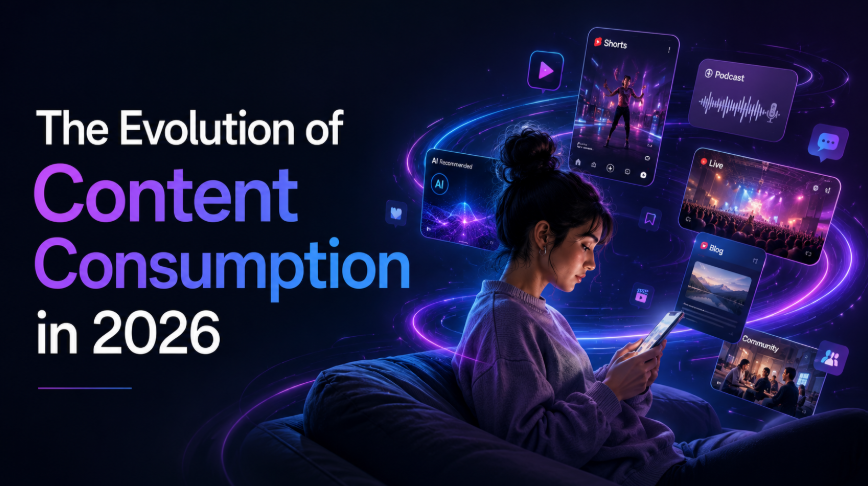
The shift is from passive content consumption — sitting down to watch or read something — to ambient, always-on, AI-curated content discovery that follows the audience across every device and platform throughout their day.
What Is Driving These Content Consumption Shifts in 2026
• AI-powered recommendation engines that personalise content feeds at an individual level
• The dominance of mobile consumption across all age groups and demographics
• The maturation of short-form video as the primary discovery format on every major platform
• Growing scepticism toward polished, corporate brand content
• The rise of niche communities and interest-based platforms over broad social networks
• Increased audio consumption through podcasts, AI-narrated articles, and voice assistants
1. Short-Form Video Has Become the Default Content Format
The Dominance of Short-Form in 2026 Content Consumption
Short-form video — content under 90 seconds — has firmly established itself as the dominant content format in 2026. Instagram Reels, YouTube Shorts, and similar formats now account for the majority of content consumed on mobile devices globally.
This shift is not just about format preference. Short-form video is the format that AI recommendation algorithms on every major platform are most aggressively distributing — meaning brands that master it have access to organic reach that no other format can currently match.
What Brands Must Understand About Short-Form Video in 2026
• The first 2 to 3 seconds determine whether a viewer stays or scrolls — hooks are everything
• Captions are essential — the majority of short-form video is consumed without sound
• Vertical format is non-negotiable for mobile-first audiences
• Authenticity and native feel outperform highly produced content in most categories
• Consistency of posting frequency matters more than individual post quality
The Algorithm Advantage:
Unlike follower-based reach, short-form video on most platforms is distributed based on content performance — not audience size. A brand with 500 followers can reach 50,000 people with a single well-crafted short-form video. This makes it one of the most democratised content formats available to brands of any size.
2. AI-Powered Discovery Has Replaced Follower-Based Reach
How Content Is Found in 2026
One of the most significant shifts in content consumption in 2026 is the replacement of follower-based reach with AI-driven content discovery. On most major platforms, what a user sees in their feed is no longer primarily determined by who they follow — it is determined by what the algorithm predicts they will find relevant and engaging.
This change fundamentally alters what it means to build an audience. Growing a large follower count is no longer the primary goal. Creating content that performs well with the algorithm — and that resonates deeply when it reaches new audiences — is far more important.
What AI-Powered Discovery Means for Brand Content Strategy
• Content quality and engagement rate matter more than follower volume
• Niche, specific content consistently outperforms broad, general content in algorithm distribution
• Watch time, saves, and shares are the metrics that signal value to most algorithms in 2026
• SEO principles are now relevant on social media platforms — not just on Google
• Topical consistency helps platforms categorise and distribute content to the right audiences
The Discovery-First Mindset:
Brands in 2026 need to create content with discovery in mind — not just content for existing followers. Every piece of content should be designed to perform well with a new audience seeing it for the first time.
3. Audiences Demand Authenticity Over Polish
The Authenticity Shift in 2026 Content Consumption
Highly produced, polished brand content is losing ground to raw, authentic, human content. In 2026, audiences are increasingly sceptical of content that feels too corporate, too scripted, or too perfect — and they are gravitating toward creators and brands that feel genuinely human.
This shift has been accelerated by the proliferation of AI-generated content. As audiences become more aware of AI-produced material, the value of genuinely human perspective, personality, and imperfection has increased significantly.
What Authenticity Looks Like in 2026 Content
• Behind-the-scenes content that shows the real process behind the brand
• Founder and team-led content that puts real human faces to the brand
• Honest storytelling that includes challenges and lessons learned — not just successes
• Conversational, unscripted video that feels like a real person talking — not a broadcast
• User-generated content that showcases real customers’ genuine experiences
The Trust Premium:
Authentic content builds trust faster than polished brand content because it bypasses the brain’s marketing filter. When content feels real, audiences lower their defences — and the brand message lands with far greater impact.
4. Audio and Podcast Content Is Growing Rapidly
The Rise of Audio in 2026 Content Consumption
Audio content consumption in 2026 has grown significantly as audiences increasingly multitask throughout their day. Podcasts, AI-narrated articles, audio newsletters, and voice-based content are being consumed during commutes, workouts, cooking, and countless other activities where screen-based content is impractical.
For brands, this represents a significant and still relatively underexploited opportunity. The podcast space — while competitive in broad categories — still has abundant room for niche, industry-specific audio content that serves specific professional and interest communities.
Audio Content Opportunities for Brands in 2026
• Branded podcasts that establish the brand as a thought leader in its niche
• Short-form audio content — 3 to 5 minute expert insights designed for quick consumption
• AI-narrated versions of existing blog content to extend reach into audio channels
• Audio newsletters that deliver value in a format audiences can consume on the go
• Guest appearances on established industry podcasts to reach existing engaged audiences
Why Audio Builds Deeper Audience Relationships:
Audio content creates an unusually intimate connection between creator and audience. Listeners experience audio content in a personal, private environment — often with headphones in — which creates a level of attention and trust that is very difficult to achieve through visual content alone.
5. Community-Led Content Is Outperforming Brand-Led Content
Why Peer Content Dominates 2026 Consumption Patterns
One of the defining characteristics of content consumption in 2026 is the growing preference for peer-created content over brand-created content. Audiences trust what other people — especially people like them — say about a brand far more than they trust what the brand says about itself.
This is driving a fundamental shift in how smart brands approach content. Rather than being the sole creator of content about their products and services, leading brands are becoming facilitators — building communities, encouraging user-generated content, and amplifying the voices of their customers.
Community Content Formats Driving Engagement in 2026
• Customer reviews and testimonials integrated directly into content strategies
• User-generated content campaigns that turn customers into brand creators
• Community challenges and participation campaigns that generate organic content at scale
• Brand-hosted communities on WhatsApp, Discord, or dedicated platforms
• Co-created content between brands and their most engaged customers or fans
The Community Content Advantage:
Community-generated content is more trusted, more diverse, and more scalable than brand-generated content. It also creates a sense of belonging among participants — turning customers into advocates who have a personal investment in the brand’s success.
6. Long-Form Depth Content Is Making a Strong Comeback
The Paradox of Long-Form in the Short-Form Era
While short-form video dominates discovery, one of the most interesting counter-trends in content consumption in 2026 is the resurgence of long-form depth content. Long-form blog posts, in-depth YouTube videos, extended podcast episodes, and comprehensive written guides are all seeing increased engagement among audiences who want genuine expertise rather than surface-level takes.
This is not a contradiction — it is a segmentation. Short-form content drives discovery and initial awareness. Long-form content builds authority, trust, and the deep audience relationships that convert into loyal customers.
Long-Form Content Formats Performing Well in 2026
• Comprehensive pillar blog posts of 2,000 words or more that cover topics in genuine depth
• Long-form YouTube videos of 15 to 30 minutes for audiences seeking expertise and instruction
• Extended podcast episodes that go deep on complex topics for specialist audiences
• In-depth newsletters that provide analysis and insight rather than news summaries
• Detailed case studies and research reports that provide original, citable data
The SEO Dimension:
Long-form content continues to dominate search engine rankings in 2026 — particularly in the AI era where depth, comprehensiveness, and topical authority are the primary signals that AI search engines use to determine which sources to cite and recommend.
7. Multi-Platform Consumption Requires Multi-Format Thinking
How Audiences Consume Content Across Multiple Touchpoints in 2026
Content consumption in 2026 is not confined to a single platform or a single format. The average consumer moves fluidly between Instagram Reels, YouTube, LinkedIn, podcasts, Google searches, email newsletters, and WhatsApp messages throughout a single day.
Brands that create content in one format for one platform are reaching only a fraction of their potential audience. The brands winning in 2026 are the ones that build multi-format content systems — taking a single core idea and expressing it across multiple formats and platforms to meet their audience wherever they are.
The Multi-Format Content System in Practice
• A blog post becomes a short-form video script, a LinkedIn carousel, an email newsletter, and a podcast episode
• A customer success story becomes a written case study, a video testimonial, and a series of social media posts
• An industry insight becomes a Twitter thread, a LinkedIn post, a Reel, and a podcast clip
• A research report becomes an infographic, a webinar, a blog series, and a downloadable lead magnet
Content Repurposing as a Strategic Discipline:
The most efficient content teams in 2026 do not create more content — they create smarter content. By building each core piece of content with multi-format distribution in mind from the start, they maximise reach and impact without proportionally increasing production costs.
How to Adapt Your Content Strategy for 2026
Understanding the shifts in content consumption in 2026 is only valuable if it informs concrete changes to your content strategy. Here is how to adapt:
Step 1 — Audit Your Current Content Mix
Review what formats and platforms you are currently investing in. Are they aligned with where your audience is actually consuming content in 2026? Identify the gaps between where you are showing up and where your audience is spending time.
Step 2 — Prioritise Short-Form Video for Discovery
If you are not consistently producing short-form video content in 2026, you are limiting your organic reach significantly. Start with one platform, build a consistent production rhythm, and measure what content styles resonate most with your audience.
Step 3 — Build for Authenticity, Not Perfection
Shift your content production mindset from broadcast quality to conversational quality. Real, human, imperfect content that communicates genuine expertise and personality will consistently outperform highly produced corporate content in 2026.
Step 4 — Invest in Long-Form Authority Content
Balance your short-form discovery content with long-form authority content that builds trust and captures organic search traffic. These two content types work together — short-form drives discovery, long-form drives conversion.
Step 5 — Build a Content Repurposing System
Design every core piece of content with multi-platform distribution in mind. A systematic repurposing process allows you to extend the reach and lifespan of every piece of content you create — without proportionally increasing your production workload.
Final Thoughts
Content consumption in 2026 is faster, more fragmented, more personalised, and more demanding than ever before. The audiences brands are trying to reach have more choices, higher expectations, and more sophisticated filters for deciding what deserves their attention.
The brands that thrive in this environment are not the ones that produce the most content. They are the ones that understand how their audience consumes content in 2026 — and build strategies that meet that audience with the right format, on the right platform, at the right moment.
Short-form video for discovery. Long-form depth for authority. Authentic human content for trust. Community-led content for scale. Audio for intimacy. Multi-platform distribution for reach.
At Upswing Digital, we help businesses stay ahead by creating content strategies that align with evolving consumer behavior, emerging digital trends, and measurable business goals. By combining creativity with data-driven insights, Upswing Digital empowers brands to create content that not only captures attention but also builds lasting connections.
These are not trends to observe from a distance. They are the new fundamentals of effective content marketing — and the brands that build around them in 2026 will be the ones audiences turn to, trust, and buy from consistently.

The Beginner’s Guide to Video Marketing Success
Video has become the most powerful way to communicate with your audience. From increasing brand awar
Why Engagement Rate Is More Important Than Follower Count?
For years, follower count was seen as the ultimate measure of success on social media. Brands chased
Why Retargeting is More Powerful than Prospecting?
In the fast-paced world of digital marketing, businesses often face a critical question: should they
Leave a Reply