

How Digital Habits Are Shaping Purchase Decisions in 2026
Digital habits are shaping purchase decisions in 2026 in ways that marketers could not have fully predicted even three years ago. The devices people use, the platforms they trust, the content formats they prefer, and the speed at which they expect to move from discovery to purchase have all shifted dramatically.
The result is a consumer who is more informed, more impatient, more sceptical, and more empowered than at any previous point in the history of commerce. For brands, this is both a challenge and an opportunity.
The challenge is that old marketing playbooks are becoming less effective with every passing year. The opportunity is that brands willing to understand and adapt to these new digital habits can build deeper, more profitable relationships with their customers than traditional marketing ever allowed.
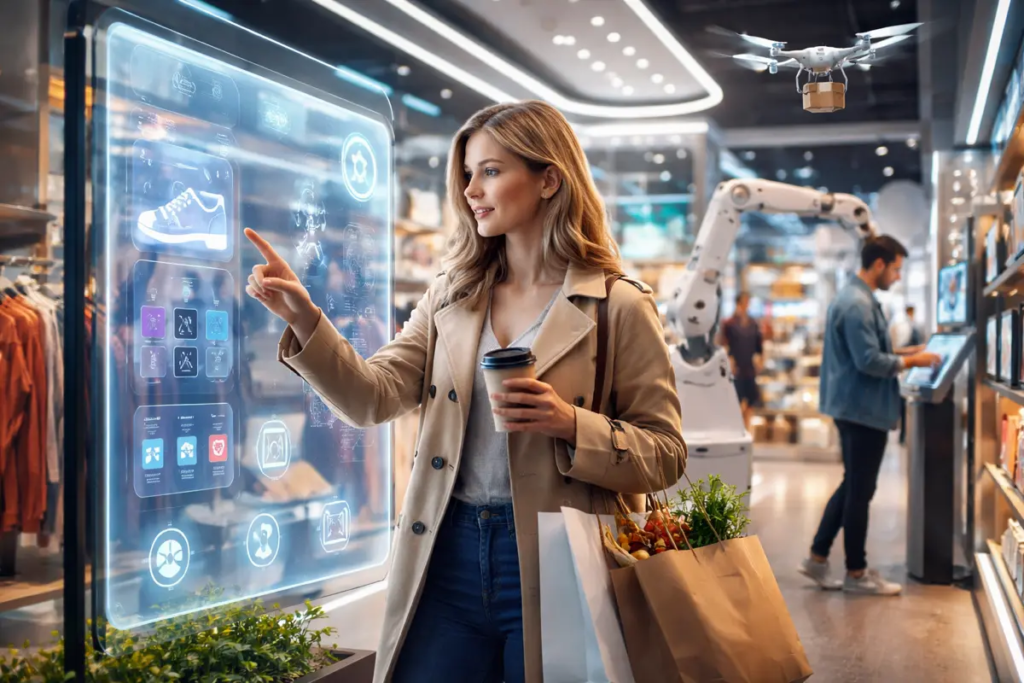
In this blog, we explore the 9 most significant ways digital habits are shaping purchase decisions in 2026 — and what each shift means for your marketing strategy.
1. Search Has Moved Beyond Google
One of the most significant digital habits shaping purchase decisions in 2026 is where consumers go to search. For years, the purchase journey began with a Google search. That is no longer universally true.
A growing number of consumers — particularly younger demographics — now begin their product research on social media platforms. Instagram, YouTube, and TikTok have become primary discovery and research tools, especially for lifestyle products, fashion, beauty, food, and consumer technology. Users search within these platforms for recommendations, reviews, tutorials, and real-world product demonstrations.
At the same time, AI-powered search tools and conversational assistants are being used as first-stop research destinations for an increasing number of queries that would previously have gone to Google. This fragmentation of search behaviour means brands must have a presence across multiple discovery channels, not just organic search.
What this means for your brand:
• Optimise your Instagram and YouTube presence for in-platform search
• Create content that answers common product questions in video and short-form formats
• Ensure your brand appears accurately in AI-generated answers by building strong online authority
• Do not abandon Google SEO — but recognise it is now one of several discovery channels, not the only one
2. The Discovery-to-Purchase Journey Has Compressed
Digital habits are shaping purchase decisions in 2026 by dramatically compressing the time between first awareness and final purchase. What once took days or weeks of research, comparison, and deliberation can now happen within a single browsing session — or even within a single video.
A consumer discovers a product through a short-form video, clicks through to the brand profile, reads a handful of recent reviews, checks the price, and completes the purchase — all within minutes. Social commerce features on Instagram and TikTok have made this seamless, removing almost every point of friction from the impulse purchase journey.
For brands, this compressed journey changes how marketing must be structured. Every piece of content needs to be capable of functioning as both a discovery moment and a conversion trigger simultaneously, because there may not be a second chance to bring a prospective customer back into the funnel.
Key Implication: Your content cannot just raise awareness and hope the customer returns later. In 2026, awareness and purchase intent must often be addressed in the same piece of content, on the same platform, at the same moment.
3. Video Content Dominates the Research Phase
Perhaps no digital habit has more profoundly shaped purchase decisions in 2026 than the shift to video as the dominant research medium. Consumers increasingly prefer to watch before they buy. Product reviews, unboxing videos, how-to demonstrations, comparison videos, and creator endorsements have replaced written reviews and spec sheets as the primary research tools for a significant portion of online shoppers.
This preference extends beyond the pre-purchase phase. Video content influences brand perception, builds trust, and creates emotional connection in ways that static images and text simply cannot match. A well-produced product demonstration video can answer every question a prospective customer has while simultaneously making them feel positively about the brand delivering the answer.
Brands that have invested in video — particularly short-form video on Instagram Reels and YouTube Shorts — are seeing the direct impact on purchase decisions. Those that have not are increasingly invisible during the research phase.
Video content that influences purchase decisions:
• Honest product demonstrations showing real-world use rather than idealised scenarios
• Customer testimonial videos featuring genuine, specific experiences
• Behind-the-scenes content that builds brand trust through transparency
• Creator and influencer reviews from voices the audience already trusts
• FAQ-format videos that address the most common objections before they arise
4. Reviews and Social Proof Are Non-Negotiable
One of the most consistent digital habits shaping purchase decisions in 2026 is the routine consultation of reviews before committing to a purchase. This behaviour has moved from being common to being almost universal across product categories.
Consumers check Google reviews, platform ratings, social media comments, Reddit threads, and independent review sites before purchasing. They look for patterns across multiple sources rather than relying on any single review. They pay particular attention to negative reviews and how brands respond to them — because a brand’s response to criticism reveals far more about its character than any marketing message ever could.
For brands, the absence of reviews — or the presence of exclusively positive, generic-sounding reviews — is itself a red flag that many consumers have learned to identify. Authentic social proof, including genuine critical feedback handled well, is now a critical component of the purchase decision journey.
Action Point: Make review generation a systematic part of your post-purchase customer experience. A consistent flow of recent, genuine reviews is one of the most powerful influences on new customer purchase decisions that most brands still underinvest in.
Building a strong social proof ecosystem:
• Send automated post-purchase review requests via email or WhatsApp
• Respond to every Google review — positive and negative — promptly and professionally
• Feature genuine customer testimonials prominently across your website and social content
• Encourage user-generated content by making it easy and rewarding for customers to share their experiences
• Monitor and engage with brand mentions across social platforms and review sites
5. Mobile Is the Primary Shopping Device
The shift to mobile as the dominant device for online research and purchasing is not new — but in 2026 it is more complete and more consequential than ever before. For a growing majority of consumers, the smartphone is the only screen that matters in the purchase journey.
Digital habits shaping purchase decisions in 2026 are overwhelmingly mobile-first habits. Consumers discover products on mobile, research on mobile, compare prices on mobile, read reviews on mobile, and increasingly complete purchases on mobile — often without ever switching to a desktop.
Brands with websites, checkout experiences, or ad creatives that are not fully optimised for mobile are creating friction at every stage of the purchase journey. In an environment where the difference between a completed purchase and an abandoned cart can be a single extra tap or a slow-loading page, mobile optimisation is not a nice-to-have — it is a commercial necessity.
Mobile optimisation essentials for 2026:
• Website load time under 3 seconds on mobile — test regularly with Google PageSpeed Insights
• Checkout process completable in 3 taps or fewer with autofill enabled
• All ad creatives designed for vertical mobile viewing first
• Product images and descriptions formatted for thumb-scrolling rather than mouse navigation
• WhatsApp and mobile messaging integrated as customer service and re-engagement channels
6. Social Commerce Has Removed Friction From Buying
Social commerce — the ability to discover and purchase products directly within social media platforms without leaving the app — is one of the most consequential digital habits shaping purchase decisions in 2026. Instagram Shopping, Facebook Shops, and TikTok Shop have transformed social platforms from awareness channels into complete purchase environments.
The significance of this cannot be overstated. Every additional step between a consumer’s first moment of interest and the completion of a purchase represents an opportunity for them to change their mind, get distracted, or find a competitor. Social commerce eliminates most of those steps, and the brands that have embraced it are seeing meaningfully higher conversion rates from their social media investment.
For brands still directing social media audiences to external websites through clunky redirect journeys, the comparison with a seamless in-app purchase experience is stark. The friction you create in the buying journey is the friction that drives customers to your competitors.
Getting social commerce right:
• Set up and fully populate your Instagram Shop and Facebook Shop with accurate product information
• Tag products directly in every relevant feed post, Reel, and Story
• Ensure product pricing, descriptions, and images are kept current across all social commerce channels
• Use TikTok Shop for product categories that perform well with demonstration-style content
• Measure in-app conversion rates separately from website conversions to understand the true value of each channel
7. AI-Assisted Research Is Changing How People Find Brands
Artificial intelligence has entered the consumer research process in a meaningful way. An increasing number of consumers now use conversational AI tools to ask product questions, compare options, seek recommendations, and validate purchase decisions — in addition to or instead of traditional search.
This shift in digital habits is shaping purchase decisions in 2026 by changing which brands get recommended and on what basis. AI tools surface brands with strong online authority, clear and accurate product information, positive review signals, and content that directly and specifically answers consumer questions.
Brands that have invested in comprehensive, accurate, and genuinely helpful online content are finding that they appear more frequently in AI-generated recommendations. Those with thin, outdated, or inaccurate online presences are being overlooked in this new discovery channel entirely.
Forward-Looking Insight: Optimising for AI discovery is the new SEO. The brands that create clear, specific, trustworthy, and helpful content today are building an advantage in AI-driven search that will compound significantly over the coming years.
8. Values Alignment Influences Purchase Intent
In 2026, what a brand stands for is increasingly as important as what it sells. Digital habits have made it easier than ever for consumers to research a brand’s values, practices, and reputation before deciding whether to buy from them. And a growing segment of consumers — particularly younger demographics — actively choose brands whose values align with their own.
This goes beyond surface-level sustainability claims. Consumers in 2026 investigate labour practices, environmental commitments, social positions, community involvement, and the personal values of founders and leadership. They use this research to make purchase decisions that feel consistent with their own identity and beliefs.
For brands, this means that brand values are no longer a marketing afterthought — they are a genuine commercial consideration. Authentic values, clearly communicated and consistently demonstrated, attract and retain customers in ways that product features and price promotions cannot match over the long term.
Communicating brand values authentically:
• Define your brand values clearly and ensure they are genuinely reflected in how your business operates
• Share specific stories and examples that demonstrate your values in action — not just statements of intent
• Be transparent about challenges and progress rather than presenting an unrealistically perfect picture
• Engage with causes and communities that align with your values in ways that are meaningful, not performative
• Ensure your team, partners, and suppliers reflect the values you communicate externally
9. Loyalty Is Earned Through Experience, Not Points
Traditional loyalty programmes — points, stamps, and discount tiers — are losing their effectiveness as the primary driver of repeat purchase behaviour. The digital habits shaping purchase decisions in 2026 have raised consumer expectations of what loyalty actually means.
Today’s consumers are loyal to brands that consistently deliver exceptional experiences — experiences that are personalised, frictionless, and that make them feel valued as individuals rather than as transaction numbers. A loyalty programme that offers a discount after ten purchases feels transactional. A brand that remembers your preferences, responds instantly when something goes wrong, and makes every interaction feel effortless earns genuine emotional loyalty.
This shift from transactional to experiential loyalty has profound implications for how brands invest in customer retention. The brands winning on loyalty in 2026 are not the ones with the most generous points schemes — they are the ones delivering the most consistently excellent customer experiences at every touchpoint.
Building experiential loyalty in 2026:
• Personalise every post-purchase communication based on what the customer actually bought and how they use it
• Create exclusive community spaces where loyal customers get early access, insider content, and genuine recognition
• Resolve problems generously and quickly — a complaint handled brilliantly creates more loyalty than a problem-free experience
• Follow up after purchase to check satisfaction and show that you care about more than just the transaction
• Surprise and delight your most loyal customers with unexpected gestures that go beyond what they paid for
What These Shifts Mean for Your Marketing Strategy
Understanding how digital habits are shaping purchase decisions in 2026 is only the beginning. The competitive advantage comes from translating these insights into concrete changes in how you market, sell, and serve your customers.
Here is a practical action framework based on the 9 shifts covered in this blog:
- Expand your discovery presence beyond Google — invest in social search, video, and AI-friendly content
- Design every piece of content to function as both an awareness and a conversion asset simultaneously
- Make video a core part of your content strategy — particularly short-form product and testimonial content
- Build a systematic review generation process and respond to every review publicly
- Audit your mobile experience ruthlessly — test your own checkout as a first-time mobile user
- Set up and activate social commerce on every relevant platform
- Create comprehensive, specific, and helpful content that performs well in AI-driven search
- Define and consistently demonstrate your brand values through actions, not just statements
- Invest in customer experience quality as your primary loyalty and retention strategy
Final Thoughts
Digital habits are shaping purchase decisions in 2026 in ways that reward brands willing to meet consumers where they actually are — not where they were five years ago. The consumer has moved. The platforms have evolved. The expectations have risen. The brands that acknowledge this reality and adapt accordingly are the ones building sustainable competitive advantages in the digital economy.
The 9 shifts covered in this blog are not speculative future trends — they are observable, measurable realities in consumer behaviour today. Each one represents both a risk for brands that ignore it and an opportunity for brands that embrace it.
The most important thing any brand can do right now is look honestly at each of these shifts and ask: are we adapting fast enough? In most cases, the answer will reveal at least two or three areas where meaningful improvement is both possible and urgent.
At Upswing Digital, we help brands understand the digital habits of their specific audiences and build marketing strategies that are genuinely aligned with how their customers discover, research, and buy in 2026. If you are ready to build a marketing approach that works with consumer behaviour rather than against it, we are ready to help.
Why Brands Are Moving Beyond Minimalism in 2026
For years, “less is more” was the golden rule of branding. Brands stripped away colour, texture,
Google My Business Reviews; How to Manage and Respond
Google My Business ( GMB) in Kochi plays a major role in online business reputation. Managing and re
Are AI Content Detection Tools Affecting Rankings?
With the rapid rise of AI-generated content, a new concern has emerged among marketers, writers, and
Leave a Reply