

Digital Marketing Strategies That Capture Attention Online
Introduction: The Battle for Attention Has Never Been Fiercer
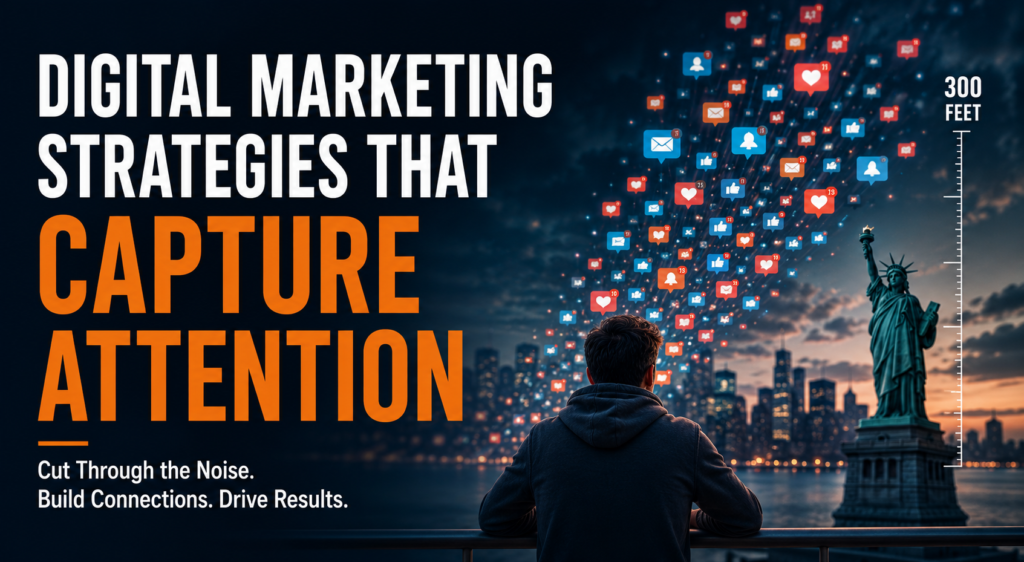
Here’s a reality check: the average person scrolls through 300 feet of content every day. That’s the height of the Statue of Liberty—twice.
Your potential customers are drowning in notifications, ads, emails, and social posts. They’re skimming, not reading. Swiping, not stopping.
So how do you make them pause? How do you earn their attention in a world designed to steal it?
That’s exactly what we’re going to cover. This guide breaks down digital marketing strategies that actually work—the ones that cut through noise, create genuine connections, and turn casual scrollers into loyal customers.
No fluff. No outdated tactics. Just practical approaches you can implement this week.
Why Capturing Attention Online Is Harder Than Ever
Let’s start with what you’re up against.
The average human attention span has dropped to around 8 seconds. For context, a goldfish clocks in at 9. We’re not just competing with other brands anymore—we’re competing with everything else demanding space in someone’s brain.
The Three Enemies of Online Attention
1. Content Overload
Over 7 million blog posts are published every single day. Add in social media posts, videos, podcasts, and emails, and the sheer volume is overwhelming.
2. Platform Algorithms
Social media platforms prioritize content that keeps users engaged longer. If your content doesn’t spark immediate interest, it gets buried.
3. Shrinking Patience
People want answers fast. If your website takes more than 3 seconds to load, 53% of mobile users will leave.
Understanding these challenges is step one. Now let’s talk solutions.
Strategy 1: Lead With Value, Not Sales Pitches
Here’s a mistake I see constantly: businesses leading with what they sell instead of what they solve.
Nobody wakes up wanting to buy a “revolutionary SaaS platform” or a “cutting-edge solution.” They wake up with problems. Your job is to position your brand as the answer.
How to Apply This
● Create content that teaches first. Answer questions your audience is already asking. Use tools like AnswerThePublic or Google’s “People Also Ask” to find these.
● Give away your best ideas. Sounds counterintuitive, but generosity builds trust.
When you help someone for free, they remember you when they’re ready to buy.
● Solve one specific problem per piece of content. Don’t try to cover everything. Depth beats breadth.
Example: A fitness brand could write “How to Build a Home Workout Routine in 20 Minutes” instead of “Why Our Fitness App Is Amazing.” One attracts. The other repels.
Strategy 2: Master the Hook
You have roughly 3 seconds to convince someone to keep reading, watching, or listening. That’s your hook—and it’s everything.
Elements of a Great Hook
● Pattern interrupt. Say something unexpected. Challenge a common belief. Start with a surprising statistic.
● Specificity. Vague promises don’t work. “Boost your sales” is forgettable. “How one email added $47,000 in revenue” is not.
● Curiosity gap. Give enough information to intrigue, but not enough to satisfy. Make them need to know more.
Hook Examples That Work
| Weak Hook | Strong Hook |
| Learn about marketing tips | The marketing tactic that tripled our traffic in 60 days |
| Social media is important | Why posting more is actually hurting your reach |
| Grow your business online | We went from 0 to 10,000 followers without spending a dime |
The strong hooks create questions in your mind. That tension is what drives engagement.
Strategy 3: Embrace Video Marketing (Seriously)
If you’re not using video content, you’re leaving massive opportunities on the table.
Here’s what the data shows:
● Video content gets 1200% more shares than text and images combined
● 84% of consumers say they’ve been convinced to buy after watching a brand’s video
● YouTube is the second-largest search engine in the world
Video Formats That Capture Attention
Short-form video (15–60 seconds)
Perfect for TikTok, Instagram Reels, and YouTube Shorts. Focus on quick tips, behind-the-scenes glimpses, or entertaining content related to your niche.
Educational long-form video (5–15 minutes)
Great for YouTube. Dive deep into topics. Establish expertise. These videos build serious trust over time.
Live video
Webinars, Q&As, product demos. Live content feels authentic and creates urgency—people don’t want to miss out.
Getting Started With Video
You don’t need fancy equipment. A smartphone, decent lighting, and a clear message are enough to begin. Perfectionism kills more content than poor production ever will.
Strategy 4: Build an Email List (And Actually Use It)
Social media reach is rented. Algorithms change. Platforms rise and fall.
Your email list is owned. It’s direct access to people who raised their hands and said, “Yes, I want to hear from you.”
Why Email Still Dominates
● Email marketing returns an average of $36 for every $1 spent
● You control the relationship—no algorithm sitting between you and your audience
● Emails feel personal in a way that social posts don’t
How to Grow Your List
Offer something valuable in exchange. This is your lead magnet—a free guide, checklist, template, or mini-course that solves a specific problem.
Make signup easy. Place forms in multiple locations: homepage, blog posts, exit-intent popups, and landing pages.
Segment from the start. Ask one simple question during signup to learn what subscribers care about most. Then tailor your content accordingly.
Email Engagement Tips
● Write subject lines like headlines. Make them impossible to ignore.
● Keep emails scannable. Short paragraphs, bullet points, one clear call to action.
● Send consistently. Whether it’s weekly or monthly, set an expectation and stick to it.
Strategy 5: Leverage Social Proof Everywhere
Humans are wired to look at what others are doing before making decisions. This is social proof, and it’s one of the most powerful psychological triggers in marketing.
Types of Social Proof
● Customer reviews and testimonials. Feature them prominently on your website, landing pages, and product pages.
● Case studies. Show the transformation. What was life like before your product? What changed after?
● User-generated content. When customers share photos or videos using your product, amplify it. It’s more believable than anything you could create.
● Numbers. “Trusted by 50,000+ businesses” or “4.8 stars from 2,000 reviews” creates instant credibility.
Where to Use Social Proof
Don’t limit it to a single testimonials page nobody visits. Sprinkle it throughout:
● Homepage above the fold
● Checkout pages (reduces cart abandonment)
● Email sequences
● Social media bios and posts
● Sales pages and landing pages
Strategy 6: Optimize for Search Intent (Not Just Keywords)
SEO has evolved. It’s not enough to stuff keywords into your content and hope for the best. Google now prioritizes content that truly answers what people are searching for.
Understanding Search Intent
Every search falls into one of four categories:
| Intent Type | What They Want | Example Search |
|---|---|---|
| Informational | Learn something | “How does content marketing work” |
| Navigational | Find a specific site | “HubSpot login” |
| Commercial | Compare options | “Best email marketing tools 2025” |
Your content should match the intent behind the keyword you’re targeting. An informational searcher doesn’t want a sales page. A transactional searcher doesn’t want a 3,000-word guide.
SEO Best Practices for Attention
● Optimize title tags and meta descriptions. These are your first impression in search results. Make them compelling.
● Use headers strategically. Structure your content so both readers and search engines can easily navigate it.
● Answer questions directly. This increases your chances of appearing in featured snippets—the coveted “position zero.”
● Focus on user experience. Fast loading, mobile-friendly design, and easy navigation all influence rankings.
Strategy 7: Create Interactive and Personalized Experiences
Static content is everywhere. Interactive content stands out because it requires participation.
Interactive Content Ideas
● Quizzes. “What’s Your Marketing Personality?” or “Which Product Is Right for You?” These generate engagement and collect valuable data.
● Calculators. ROI calculators, savings estimators, or custom quote tools. They provide immediate, personalized value.
● Polls and surveys. Ask your audience what they think. People love sharing opinions.
● Interactive infographics. Let users explore data at their own pace.
The Power of Personalization
When content feels tailored to the individual, attention increases dramatically.
● Use dynamic website content that changes based on visitor behavior or demographics.
● Send personalized email campaigns based on past purchases or browsing history.
● Implement retargeting ads that remind people of products they viewed.
Strategy 8: Be Consistent (But Not Boring)
Attention isn’t captured once—it’s earned repeatedly.
The brands that win long-term show up consistently. They become familiar. They build trust through repetition.
Building a Content System
● Create a content calendar. Plan themes, topics, and posting schedules in advance.
● Batch your content creation. Dedicate specific days to filming, writing, or designing. It’s more efficient than creating on the fly.
● Repurpose everything. One blog post can become a social carousel, an email newsletter, a YouTube video, and a podcast episode.
Consistency Without Burnout
Pick a sustainable pace. Posting twice a week forever beats posting daily for two months and then disappearing.
Quality and reliability matter more than volume.
Frequently Asked Questions
What is the most effective digital marketing strategy for small businesses?
For small businesses with limited budgets, content marketing combined with email marketing offers the best return. Creating valuable blog posts or videos attracts organic traffic over time, while email marketing nurtures those visitors into customers without ongoing ad spend.
How long does it take to see results from digital marketing?
It depends on the strategy. Paid advertising can generate traffic immediately. SEO and content marketing typically take 3–6 months to gain momentum. Email marketing shows results within weeks once you have an engaged list. Patience and consistency are essential.
Should I focus on one platform or be everywhere?
Start with one or two platforms where your target audience is most active. Master those before expanding. Spreading too thin leads to mediocre results everywhere. Depth beats breadth, especially when you’re building an audience.
How important is mobile optimization for digital marketing?
Critical. Over 60% of web traffic comes from mobile devices. If your website isn’t mobile-friendly, you’re losing the majority of potential customers before they even engage with your content.
What’s the biggest mistake brands make when trying to capture attention online?
Talking about themselves too much. The brands that win focus obsessively on their audience’s problems, desires, and questions—not on their own features and achievements.
Conclusion: Attention Is Earned, Not Demanded
The brands that capture attention online aren’t the loudest. They’re the most helpful, the most human, and the most consistent.
Every strategy in this guide comes back to one principle: put your audience first.
Lead with value. Hook them fast. Show up reliably. Make their experience personal.
Start with one strategy today. Master it. Then add another.
At Upswing, we believe that in a world where everyone is fighting for attention, the brands that earn it through genuine value will always win. That’s why Upswing focuses on creating strategies that build real engagement, not just impressions.
Your next step: Pick the strategy that resonates most with where you are right now, and commit to implementing it this week. Progress beats perfection.
Internal Linking Suggestions
● Link to related posts on content marketing tips, SEO fundamentals, or email marketing guides
● Connect to case studies showcasing successful digital campaigns
● Reference product or service pages where relevant strategies align with your offerings
External Authority Sources to Reference
● Google Search Central documentation for SEO best practices
● HubSpot State of Marketing Report for statistics
● Nielsen research on consumer behavior and attention● Pew Research Center for digital usage trends
Leave a Reply