

What Makes a Brand Memorable in a Crowded Digital World
A memorable brand is not built by accident. In a digital world where thousands of brands compete for the same audience’s attention every single day, the brands that get remembered are the ones that have made deliberate, strategic decisions about who they are, what they stand for, and how they show up consistently at every touchpoint.
Being seen is no longer enough. Every brand gets seen — briefly, passingly, forgettably. What separates the brands that grow from the brands that fade is memorability — the ability to leave a lasting impression that pulls audiences back, generates genuine preference, and turns strangers into loyal customers.
In this guide, we explore what makes a brand truly memorable in 2026, why memorability is one of the most valuable and underinvested brand assets available, and 7 powerful ways to build a memorable brand that stands out in even the most saturated digital environments.
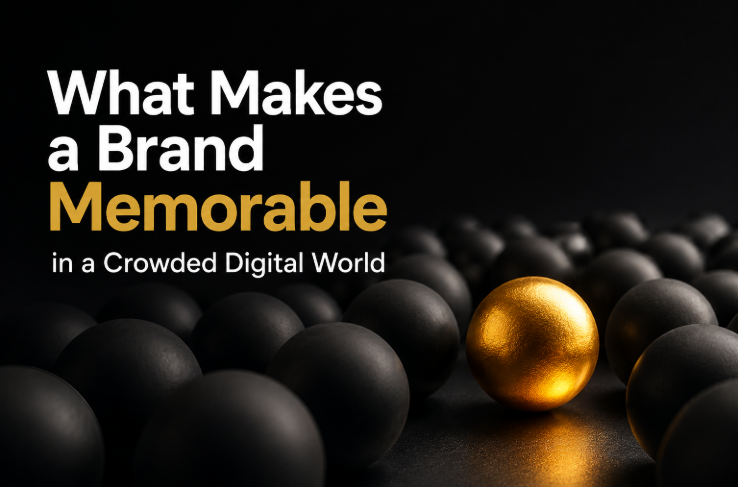
What Makes a Brand Truly Memorable?
Memorability in branding is not simply about recognition. A brand can be recognised — its logo identified, its name recalled — without being truly memorable. Truly memorable brands go further. They are brands that people feel something about. Brands that represent something specific and meaningful. Brands that audiences actively want to return to, recommend, and associate themselves with.
The neuroscience of memory tells us that we remember what we feel strongly about, what is distinctive and unexpected, what we have encountered repeatedly, and what connects to our own identity and values. Memorable brands are designed — consciously or instinctively — around these same principles.
A memorable brand is not defined by its logo or its tagline. It is defined by the sum of all the feelings, impressions, and associations that an audience carries with them after every interaction — and whether those feelings are strong enough and positive enough to bring them back.
Characteristics of Truly Memorable Brands:
• They stand for something specific and meaningful beyond their product or service
• They have a distinctive visual and verbal identity that is immediately recognisable
• They create genuine emotional connections with their audience
• They are consistently present across the channels their audience uses
• They deliver experiences that meet or exceed the expectations they set
• They own a specific space in their audience’s mind that competitors cannot easily occupy
Why Most Brands Are Forgettable
The hard truth about digital marketing in 2026 is that the vast majority of brands are forgettable — not because they are bad, but because they are generic. They look like every other brand in their category. They say what every other brand says. They offer what every other brand offers. And they disappear into the background of a digital environment that is already overwhelmingly saturated with sameness.
Forgettable brands typically share a small number of common characteristics — and understanding them is the first step toward building something genuinely different.
Why Brands Fail to Be Memorable
• They try to appeal to everyone — which results in resonating with no one specifically enough to be remembered
• They default to industry clichés — using the same language, visuals, and messaging as every competitor
• They are inconsistent — their identity changes between platforms, campaigns, and team members
• They lead with product rather than purpose — focusing on what they sell rather than why it matters
• They create no emotional response — their content is competent but leaves the audience feeling nothing
• They are invisible in the moments that matter — absent from the channels and conversations where their audience spends time
1. Define a Clear and Distinctive Brand Purpose
Why Purpose Is the Core of Every Memorable Brand
The most memorable brands in the world are not remembered primarily for what they sell — they are remembered for what they stand for. Purpose is the organising principle that gives every brand decision coherence and every brand communication meaning.
A clear brand purpose answers the most fundamental question any brand can ask: why does this brand exist beyond making money? The answer to that question — when it is genuine, specific, and consistently expressed — becomes the foundation of everything that makes a brand memorable.
How to Define a Memorable Brand Purpose
• Identify the specific problem in the world that your brand genuinely exists to solve
• Define the specific group of people whose lives are genuinely better because your brand exists
• Articulate the values that guide every decision the brand makes — and commit to living by them visibly
• Ensure the purpose is genuine and reflected in actual brand behaviour — not just a marketing statement
The Purpose Differentiation Effect:
In a market full of brands offering similar products or services, a clear and genuine purpose becomes one of the most powerful differentiators available. Audiences who share the brand’s purpose do not just buy the product — they adopt the brand as an expression of their own identity. And that is the deepest form of brand memorability.
2. Build a Distinctive and Consistent Visual Identity
Why Visual Distinctiveness Is Essential for a Memorable Brand
Visual identity is the most immediate and powerful signal a brand sends to the world. Before an audience reads a single word of copy, before they understand what a brand offers, before they have any rational basis for forming an opinion — they have already formed an impression based on visual cues.
A memorable brand has a visual identity that is both distinctive — immediately recognisable as different from competitors — and consistent — applied with the same clarity and precision across every touchpoint, every platform, and every format.
Elements of a Visually Memorable Brand Identity
• A logo that is simple enough to be recognised at any size and distinctive enough to stand apart from competitors
• A colour palette of 2 to 3 primary brand colours that are used with absolute consistency across all brand materials
• A typography system that expresses the brand’s personality clearly and is applied consistently in all communications
• A distinctive visual style for photography, illustration, and graphic design that makes every piece of content instantly recognisable
• Consistent application across every platform — from Instagram to website to business cards — without adaptation that dilutes recognition
The Recognition Test:
A useful benchmark for visual memorability: could your audience recognise a piece of your content without seeing your brand name or logo? If the honest answer is no, your visual identity is not yet distinctive enough to build the kind of recognition that makes a brand truly memorable.
3. Develop a Genuine and Recognisable Brand Voice
Why Brand Voice Is the Personality of a Memorable Brand
A brand’s voice is the verbal equivalent of its visual identity — the consistent personality, tone, and style that characterises every piece of communication it produces. And just as a distinctive visual identity makes a brand visually memorable, a distinctive brand voice makes it verbally memorable.
The most memorable brands sound like themselves — consistently, across every channel and every context. Their audience can tell a piece of content is from that brand before they see the name, because the voice is that recognisable.
How to Develop a Memorable Brand Voice
• Define 3 to 5 voice characteristics that describe how the brand communicates — for example, direct, warm, expert, witty, or bold
• Identify the words, phrases, and communication styles that are distinctly the brand’s own — and those that are explicitly off-brand
• Document the brand voice in clear guidelines that every team member can understand and apply consistently
• Apply the brand voice consistently across every format — social media, email, website copy, customer service, and advertising
Voice as Competitive Differentiation:
In a category where products and services are similar, a genuinely distinctive brand voice can be the primary differentiator that makes one brand memorable and others forgettable. Audiences form genuine attachments to brands whose voice resonates with their own personality and values — and those attachments are very difficult for competitors to replicate.
4. Create Emotionally Resonant Brand Stories
Why Storytelling Makes Brands Unforgettable
Human memory is fundamentally narrative. We remember stories far more powerfully than facts, features, or statistics — because stories engage the emotional brain, which is where memories are encoded and where brand associations are formed.
Memorable brands are almost always great storytellers. They tell the story of how they came to exist, the stories of the customers they have helped, the stories behind the values they hold, and the story of the world they are working toward. These stories create emotional resonance that mere product messaging never can.
Types of Brand Stories That Build Memorable Brand Associations
• The origin story — how the brand came to exist, including the challenges and turning points that shaped it
• Customer transformation stories — real accounts of how the brand’s product or service changed someone’s situation or life
• Values in action stories — specific examples of the brand living its values in real, observable ways
• Behind-the-scenes stories — genuine glimpses of the people, processes, and culture behind the brand
• The future story — a compelling vision of what the brand is working toward and why it matters
The Emotional Memory Principle:
Neuroscience research consistently shows that emotional experiences are encoded in memory with greater strength and durability than neutral ones. Brand stories that generate genuine emotional responses — curiosity, inspiration, empathy, or pride — create memories that outlast any amount of functional messaging.
5. Be Consistently Present Across the Right Channels
How Consistent Presence Builds a Memorable Brand Over Time
A memorable brand is not just one that creates a great first impression — it is one that shows up consistently, in the right places, over a sustained period of time. Consistency and presence are the engines that drive the mere exposure effect — the well-documented psychological phenomenon whereby repeated exposure to a brand builds familiarity, trust, and preference.
The key word is right channels. A memorable brand does not try to be everywhere — it is consistently present where its specific audience is most active, most receptive, and most likely to engage meaningfully.
How to Build Consistent Memorable Brand Presence
• Identify the 2 to 3 channels where your target audience is most active and focus your presence there
• Publish on a consistent schedule that trains both the algorithm and your audience to expect regular content
• Maintain the same brand identity — visuals, voice, and values — across every channel without adaptation that dilutes recognition
• Show up during the moments that matter to your audience — relevant events, seasonal moments, and trending conversations within your niche
The Consistency Compound:
Consistent presence compounds over time. Each piece of content reinforces every piece that came before it. Over months and years, this accumulation of consistent, recognisable presence creates the kind of deep familiarity that makes a brand feel like an established, trusted part of the audience’s world.
6. Deliver Experiences That Exceed Expectations
How Exceptional Experiences Make Brands Impossible to Forget
A memorable brand is ultimately defined not by what it says about itself but by what its customers experience when they interact with it. And the experiences most likely to be remembered — and shared — are the ones that exceed what the customer expected.
In a market where most brands meet expectations adequately and disappoint occasionally, a brand that consistently delivers more than it promised creates a remarkable competitive advantage. The emotional memory of being genuinely surprised by how good an experience was is one of the most powerful brand-building forces available.
How to Create Experiences That Build a Memorable Brand
• Set accurate expectations through honest marketing — and then consistently exceed them through delivery
• Design the post-purchase experience with as much care as the pre-purchase journey
• Respond to problems and complaints faster and more generously than the customer expects
• Create small, unexpected moments of delight — a personal note, an unexpected upgrade, a thoughtful follow-up — that leave the customer feeling valued
• Ask for feedback genuinely and demonstrate that you act on it — showing customers that their input shapes the brand
The Experience Memory Equation:
Customers remember how you made them feel far longer than they remember what you sold them. A brand that consistently makes its customers feel valued, respected, and genuinely well-served builds the kind of experiential reputation that makes it impossible to forget — and very easy to recommend.
7. Own a Specific Niche and Dominate It
Why Niche Ownership Is the Fastest Route to Becoming a Memorable Brand
In a crowded digital world, trying to be everything to everyone is the fastest route to being nothing to anyone. The most memorable brands are almost always the ones that have chosen a specific niche — a specific audience, a specific problem, a specific market position — and committed to owning it completely.
Niche ownership creates memorability because it allows a brand to go deeper than its competitors. Rather than offering a broad, shallow presence across a wide market, a niche-focused brand can develop a level of relevance, expertise, and relationship with its specific audience that a generalist brand simply cannot match.
How Niche Ownership Builds a Memorable Brand
• A focused niche audience feels specifically understood and served — which creates a much stronger brand connection than broad messaging
• Deep niche expertise is more memorable than broad competence — the brain remembers specificity more powerfully than generality
• Niche brands face less competition for the specific mental real estate they occupy — making it easier to become the first brand that comes to mind in their category
• Niche communities are highly engaged and share recommendations within their network — amplifying the brand’s memorable reputation organically
The Niche Memorability Principle:
It is far easier to be the most memorable brand for a specific group of people than to be memorable to everyone. The brands that dominate a niche become the default choice within that niche — which is a far more valuable and defensible position than being one of many options in a broad market.
How to Start Building a Memorable Brand Today
Building a memorable brand is a long-term commitment — but the journey begins with a set of clear, actionable decisions. Here is where to start:
Step 1 — Clarify Your Brand Purpose and Position
Define exactly who your brand serves, what specific problem it solves, and what makes it genuinely different from every competitor. This clarity is the foundation of everything that makes a brand memorable. Without it, no amount of great design or content can compensate for the absence of a clear identity.
Step 2 — Audit Your Current Brand Identity
Review your existing visual identity, brand voice, and messaging with honest eyes. Is it distinctive or generic? Is it consistent across every touchpoint? Does it express your brand’s genuine purpose and personality? Identify the gaps between where your brand identity is and where it needs to be to build genuine memorability.
Step 3 — Choose Consistency Over Quantity
Commit to showing up consistently with a recognisable, coherent brand identity rather than producing high volumes of inconsistent content. Memorability is built through repetition and recognition — both of which require consistency as their foundation.
Step 4 — Invest in Storytelling
Identify the most powerful stories your brand has to tell — its origin, its customer transformations, its values in action — and build a content strategy around telling those stories consistently and compellingly. Stories are the most powerful memorability tool available to any brand.
Step 5 — Measure Memorability, Not Just Metrics
Standard marketing metrics — reach, impressions, follower counts — tell you how many people saw your brand. Memorability metrics — brand recall surveys, return visit rates, word-of-mouth referral rates, customer lifetime value — tell you whether those people actually remember your brand. Track the second set, not just the first.
Final Thoughts
A memorable brand is not a luxury—it is a strategic necessity. In a digital world where audiences are bombarded with thousands of brand messages every day, the brands that do not actively invest in building memorability are the brands that fade into the background and eventually disappear from the audience’s consideration entirely. At Upswing Digital, we believe that memorable brands are built through intentional strategy, authentic storytelling, and consistent customer experiences—not by chance.
Memorability is built through clarity of purpose, consistency of identity, genuine emotional connection, distinctive storytelling, and the discipline to show up in the right places with the right message over a sustained period of time.
None of these things require a massive budget. They require intention, commitment, and the strategic discipline to prioritise depth over breadth—to be genuinely meaningful to the right audience rather than vaguely visible to everyone.
Build a brand with a clear purpose. Give it a distinctive identity. Tell its story with honesty and emotion. Show up consistently where your audience is. Deliver experiences that exceed expectations. And own your niche completely. Do all of this with patience and discipline, and you will build a memorable brand that your audience cannot forget and your competitors cannot replicate. Partner with Upswing Digital to create a brand that stands out, stays memorable, and builds lasting customer loyalty in an increasingly competitive digital world.
Leave a Reply