

Performance Marketing vs Brand Marketing: What Should You Prioritize in 2026?
Marketing in 2026 is no longer about choosing one strategy over another it’s about balance, adaptability, and aligning with evolving consumer expectations. Businesses are facing a rapidly changing digital landscape where both performance marketing vs brand marketing play critical roles. The challenge lies in knowing which approach deserves more focus depending on your goals, industry, and audience.
Understanding Performance Marketing
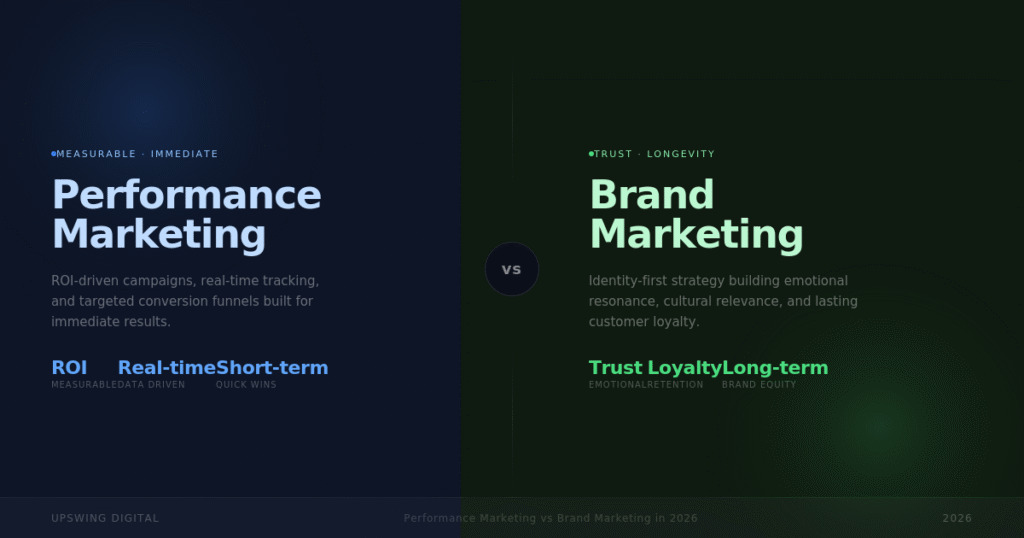
Performance marketing is a results-driven approach focused on measurable actions such as clicks, conversions, leads, and sales, where every dollar spent is tied to a specific outcome, making it highly effective for businesses seeking immediate returns. It offers measurable ROI through real-time tracking, ensures budget efficiency by optimizing spend toward high-performing channels, enables scalability based on performance data, and delivers targeted reach to audiences most likely to convert. In 2026, performance marketing continues to evolve with advanced analytics, automation, and personalized targeting, making it essential for start ups and e-commerce brands aiming for short-term growth.
Understanding Brand Marketing
Brand marketing focuses on building identity, trust, and long-term loyalty by shaping perceptions, creating emotional connections, and positioning a company as more than just a product or service. It drives emotional resonance to foster deeper relationships, builds long-term value through recognition and credibility, ensures consistency across channels for unified messaging, and maintains cultural relevance by aligning with consumer values and social trends. In 2026, brand marketing has become increasingly important as consumers prioritize authenticity, sustainability, and purpose-driven messaging, with businesses investing in brand equity benefiting from stronger customer retention and greater resilience to market changes.
Performance Marketing vs Brand Marketing: The Core Differences
Performance marketing is focused on immediate results, measured by clicks, conversions, and ROI. It thrives on short-term campaigns and transactional relationships. Brand marketing, on the other hand, is about long-term loyalty, awareness, and emotional connection. It requires consistent investment and patience but pays off with stronger recognition and customer trust.
While performance marketing is flexible and data-driven, brand marketing is strategic and consistent. One delivers quick wins, the other builds lasting value.
Why 2026 Demands a Balanced Approach?
Relying solely on one marketing approach is increasingly risky in today’s evolving advertising landscape. Data privacy regulations are limiting tracking capabilities, making performance marketing more challenging, while declining consumer trust is driving the need for stronger brand marketing. At the same time, omnichannel journeys mean customers engage with brands across multiple touchpoints, and growing emphasis on sustainability and purpose is shaping purchase decisions. Businesses that integrate both strategies—leveraging performance marketing for measurable growth and brand marketing for long-term trust—are best positioned to succeed.
When to Prioritize Performance Marketing?
Performance marketing should be prioritized when you’re launching a new product and need immediate traction, when your business model depends heavily on conversions such as in e-commerce, when you have limited budgets and require quick ROI, or when you are testing new markets or audiences. In these situations, focusing on performance marketing vs brand marketing helps ensure that resources are directed toward measurable outcomes and immediate results.
When to Prioritize Brand Marketing?
Brand marketing should take precedence when you operate in a highly competitive industry where differentiation is essential, when your audience values authenticity and purpose, when your goal is to build long-term loyalty and recognition, or when you seek resilience against market shifts and ad fatigue. For established businesses, prioritizing performance marketing vs brand marketing often means placing greater emphasis on brand building to sustain consistent growth over time.
The Ideal Strategy: Integration
The most successful companies in 2026 will not rely on a single approach but will integrate both performance and brand marketing to maximize impact. They will use performance marketing to drive immediate conversions while investing in brand marketing to build trust and recognition, ensuring both strategies are aligned under a unified vision. This integrated approach allows short-term gains to support and strengthen long-term success.
Actionable Steps for Businesses in 2026
To balance performance marketing and brand marketing effectively, regularly audit your strategy to ensure you’re not focusing too heavily on short-term gains at the cost of long-term growth. Set clear goals for both immediate sales and long-term brand loyalty, and allocate budgets deliberately across performance campaigns and brand-building efforts. Combine data analytics with strong storytelling to drive conversions while also building emotional connection with your audience. Continuously monitor market trends, consumer behaviour, and regulatory changes to keep your strategy adaptable and aligned with both current demand and future brand equity.
Conclusion
In 2026, the debate over performance marketing versus brand marketing is less about choosing one and more about effectively combining both into a unified strategy. Performance marketing remains essential for driving immediate, measurable results such as conversions, leads, and short-term revenue growth, while brand marketing builds long-term trust, recognition, and customer loyalty. Together, they create a balanced approach where performance campaigns deliver efficiency and scalability, and brand efforts strengthen emotional connection and reduce long-term acquisition costs. Businesses that align these two strategies can use data-driven insights to refine targeting while leveraging strong brand storytelling to improve engagement and conversion rates.
How Google My Business Boosts Local SEO Efforts
In today’s digital landscape, being visible online isn’t just important, it’s essential, espec

How to Rebrand Without Losing Customer Trust: A Complete Guide for Modern Businesses
Rebranding can give a company new life and help it remain relevant in a market that is constantly ch
Why Traditional Marketing Is Losing Impact
Marketing has always been about connecting brands with people. For decades, billboards, print ads, r
Leave a Reply