How Businesses Can Win Visibility Beyond Google Search

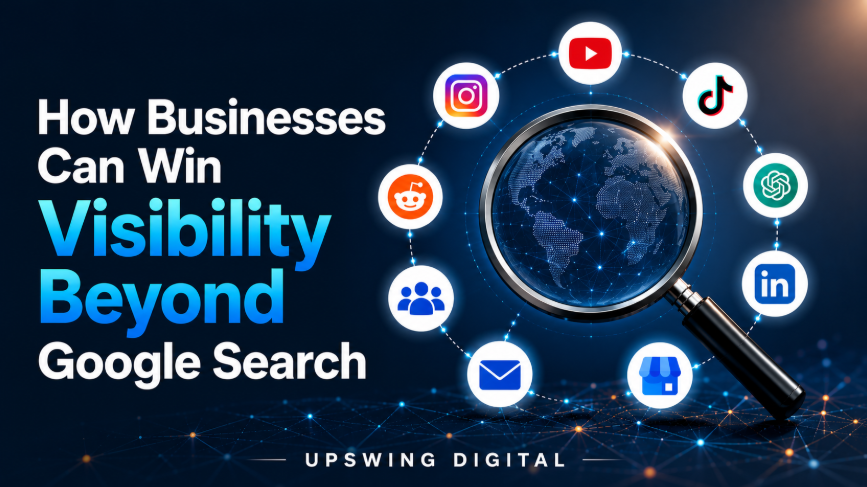
Visibility Beyond Google Search has become a crucial marketing strategy for modern businesses. While Google remains one of the most important sources of website traffic, consumer behavior is rapidly changing. Today, people discover brands through social media platforms, AI tools, video content, online communities, marketplaces, and voice search.

Businesses that focus only on traditional Google rankings risk missing a large portion of their audience. To remain competitive, brands must expand their digital presence across multiple channels and create opportunities for customers to find them wherever they spend time online.

In this article, we’ll explore practical ways businesses can improve their Visibility Beyond Google Search and build a stronger online presence.

Visibility Beyond Google Search: 7 Powerful Ways Businesses Can Boost Online Reach

Why Visibility Beyond Google Search Matters

Search engines are no longer the only place where consumers discover products and services.

Many users now search directly on:

  • Instagram
  • LinkedIn
  • YouTube
  • Facebook
  • Reddit
  • Pinterest
  • TikTok
  • AI assistants

When businesses diversify their online presence, they reduce dependency on a single traffic source and create multiple pathways for customers to find them.

Benefits include:

  • Increased brand awareness
  • More website traffic
  • Higher customer engagement
  • Improved lead generation
  • Better long-term digital growth

1. Build a Strong Social Media Presence

One of the most effective ways to achieve Visibility Beyond Google Search is through social media marketing.

Consumers spend several hours each day on social platforms. Businesses that consistently share valuable content can reach potential customers without relying entirely on search engines.

Best Practices

  • Post consistently
  • Use engaging visuals
  • Share educational content
  • Create short-form videos
  • Respond to comments and messages

Platforms like Instagram, LinkedIn, and Facebook have become search engines in their own right.


2. Optimize for AI-Powered Search

AI-driven platforms are transforming how users find information.

People increasingly ask questions through AI assistants instead of typing keywords into Google.

How to Prepare

  • Publish expert content
  • Answer common customer questions
  • Create detailed guides
  • Use clear headings and structure
  • Focus on topical authority

Brands that provide useful and trustworthy content are more likely to be referenced by AI-powered search systems.


3. Invest in Video Marketing

Video content continues to dominate digital consumption.

YouTube is the world’s second-largest search platform, making it an essential channel for Visibility Beyond Google Search.

Video Content Ideas

  • Product demonstrations
  • Customer testimonials
  • Educational tutorials
  • Behind-the-scenes content
  • Industry insights

Videos help businesses increase engagement while reaching audiences who prefer visual content.


4. Participate in Online Communities

Online communities play a major role in consumer decision-making.

People often trust recommendations from real users more than advertisements.

Valuable Communities

  • Reddit
  • Quora
  • Facebook Groups
  • LinkedIn Groups
  • Industry Forums

Businesses that contribute meaningful insights can build authority and attract highly engaged audiences.


5. Leverage Local Search Platforms

Many customers search for local businesses through platforms other than Google.

Businesses should maintain accurate profiles across multiple directories.

Important Platforms

  • Google Business Profile
  • Bing Places
  • Apple Maps
  • Justdial
  • Yelp

Consistent information across these platforms improves discoverability and customer trust.


6. Build an Email Marketing Ecosystem

Email marketing remains one of the most effective digital marketing channels.

Unlike social media algorithms, email gives businesses direct access to their audience.

Effective Email Strategies

  • Monthly newsletters
  • Product updates
  • Educational content
  • Special offers
  • Customer success stories

Email marketing strengthens customer relationships and supports long-term visibility.


7. Create Multi-Platform Content

Repurposing content allows businesses to maximize reach without constantly creating new material.

For example:

  • Convert blogs into LinkedIn posts
  • Turn webinars into YouTube videos
  • Create Instagram reels from podcasts
  • Transform case studies into social media carousels

This approach expands Visibility Beyond Google Search while improving content efficiency.


The Future of Online Visibility

The digital landscape is becoming increasingly fragmented.

Consumers now discover brands through multiple touchpoints before making purchasing decisions.

Businesses that embrace a multi-channel strategy will be better positioned to attract customers, build trust, and maintain a competitive advantage.

Success today requires visibility wherever customers search, scroll, watch, and engage.


Conclusion

Achieving Visibility Beyond Google Search is no longer optional for businesses that want to grow in today’s digital landscape. While search engine optimization remains an essential part of digital marketing, modern consumers discover brands through a wide range of platforms, including social media, AI-powered search tools, video platforms, online communities, local directories, and email. Businesses that rely solely on Google risk missing valuable opportunities to connect with potential customers across these touchpoints.

A successful digital strategy focuses on building a strong and consistent presence wherever your audience searches, scrolls, watches, and engages. By creating high-quality content, embracing emerging technologies, and maintaining visibility across multiple channels, businesses can increase brand awareness, generate qualified leads, and build lasting customer relationships.

At Upswing, we believe that sustainable growth comes from a multi-channel approach that goes beyond traditional search engine rankings. Upswing helps businesses strengthen their digital presence through SEO, content marketing, social media, AI-ready content strategies, and performance-driven campaigns that keep brands visible wherever their audience is looking.

The future of digital marketing belongs to businesses that are easy to discover—not just on Google, but across every platform that influences customer decisions. The brands that invest in broad, meaningful visibility today will be the ones that earn greater trust, stronger engagement, and long-term growth tomorrow.

Why Zero-Click Searches Are Changing SEO Strategies

Search engine optimization (SEO) has traditionally been built around one primary objective: earning clicks. Businesses invested time and resources into creating high-quality content, improving keyword rankings, and optimizing web pages with the expectation that higher visibility in search results would lead to more website traffic.

Today, that expectation is changing.

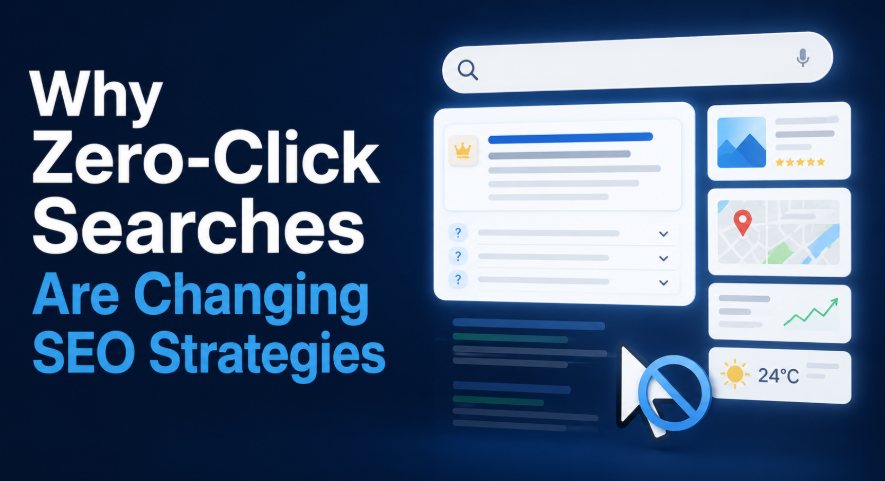
Search engines are becoming more sophisticated in the way they deliver information. Instead of simply displaying a list of links, they increasingly provide direct answers within the search results themselves. Whether through featured snippets, knowledge panels, local business listings, AI-generated summaries, or “People Also Ask” sections, users can often find the information they need without visiting another website.

These interactions are known as zero-click searches.

The rise of zero-click searches is transforming the way people consume information online and forcing businesses to rethink their SEO strategies. Success is no longer measured solely by the number of clicks a website receives. Instead, visibility, authority, and discoverability within search results have become equally important.

In this guide, we’ll explore what zero-click searches are, why they are becoming more common, how they affect SEO, and what businesses can do to remain competitive in an evolving search landscape.

Why Zero-Click Searches Are Changing SEO Strategies

What Are Zero-Click Searches?

A zero-click search occurs when a user receives the information they need directly on the search results page without clicking through to a website.

Rather than navigating to another page, the search engine presents the answer immediately, allowing users to complete their search without leaving the results.

Common examples of zero-click searches include:

  • Featured snippets
  • AI-generated search summaries
  • Knowledge panels
  • Local business listings
  • Weather forecasts
  • Sports scores
  • Currency conversions
  • Definitions
  • Flight information
  • “People Also Ask” results

In many cases, these features improve the user experience by providing quick and convenient answers.

However, they also reduce the number of opportunities for websites to receive traditional organic clicks.

Characteristics of Zero-Click Searches

Zero-click searches typically:

  • Answer simple questions immediately
  • Provide information directly within search results
  • Reduce the need to visit another website
  • Improve search convenience for users
  • Change how businesses measure SEO success

The goal of modern SEO is no longer just to rank it is to remain visible wherever users consume information.

Why Search Behavior Is Changing

The way people search online has evolved significantly over the past decade.

Users increasingly expect instant answers.

Instead of browsing multiple websites to compare information, they often want quick, accurate responses delivered immediately.

This shift has been driven by several factors.

Faster Access to Information

Search engines have become better at understanding user intent and presenting concise answers.

Whether someone wants today’s weather, the definition of a term, or the answer to a factual question, they can often find it without opening another webpage.

Growth of Mobile Search

Mobile users frequently search while commuting, shopping, traveling, or completing daily tasks.

Quick answers are often more convenient than reading a lengthy article.

Search engines have adapted by presenting essential information directly within the results page.

The Rise of AI-Powered Search

Artificial intelligence is changing how search engines interpret and summarize information.

Rather than displaying only links, AI systems increasingly organize information into comprehensive summaries that help users understand a topic before deciding whether they need additional details.

As AI-powered search continues to develop, zero-click experiences are expected to become even more common.

How Zero-Click Searches Are Changing SEO

The rise of zero-click searches does not mean SEO is becoming less important.

Instead, it means SEO is evolving.

Businesses can no longer focus exclusively on driving website traffic.

They must also optimize for visibility within search experiences themselves.

Rankings Alone Are No Longer Enough

A webpage may rank first for a keyword but still receive fewer clicks if the search engine displays the complete answer above the traditional organic results.

This means ranking highly is still valuable, but attracting attention now depends on how content appears within the search experience.

Visibility Has Become a Competitive Advantage

Even when users do not click immediately, appearing within featured snippets, knowledge panels, or AI-generated summaries helps increase brand recognition.

Repeated visibility builds familiarity.

Over time, this familiarity can influence future purchase decisions, brand recall, and customer trust.

SEO Is Expanding Beyond Website Traffic

Traditional SEO metrics focused heavily on:

  • Organic sessions
  • Click-through rates
  • Keyword rankings

Modern SEO also considers:

  • Search visibility
  • Brand mentions
  • Featured snippet appearances
  • AI citation opportunities
  • Local search presence
  • Overall discoverability

Success increasingly depends on how often a brand is seen not only how often it is clicked.

Why Brand Authority Matters More Than Ever

As zero-click searches become more common, authority becomes a major competitive advantage.

Search engines aim to present information from trustworthy and credible sources.

Businesses that consistently publish valuable, well-structured, and accurate content are more likely to become reliable sources for search features.

How Brand Authority Supports SEO

Authoritative brands often benefit from:

  • Higher content credibility
  • Better search visibility
  • Increased user trust
  • More branded searches
  • Greater long-term recognition

Authority is built gradually.

Each helpful article, guide, or resource strengthens the overall reputation of the website.

Over time, this reputation can improve visibility across many different search experiences.

Content Must Answer Questions Clearly

One of the biggest changes in modern SEO is the importance of directly answering user questions.

Many zero-click features rely on content that provides concise and well-structured answers.

Instead of writing lengthy introductions before addressing the topic, businesses should prioritize clarity.

Characteristics of Zero-Click Friendly Content

Effective content often:

  • Answers questions immediately
  • Uses descriptive headings
  • Includes concise explanations
  • Organizes information logically
  • Uses bullet points where appropriate
  • Covers topics comprehensively

Clear structure helps both users and search engines understand the content more effectively.

It also increases the likelihood of appearing in search features that summarize information.

Search Intent Is More Important Than Keywords Alone

Keyword optimization remains important.

However, understanding why someone is searching has become even more valuable.

Every search has an underlying purpose.

A user may be trying to:

  • Learn something
  • Compare products
  • Solve a problem
  • Find a business
  • Make a purchase

Content that addresses these needs directly is more likely to satisfy both users and search engines.

Understanding Search Intent

Businesses should ask:

  • What information is the user looking for?
  • What problem are they trying to solve?
  • How detailed should the answer be?
  • What additional questions might they have?

Creating content around user intent helps improve both discoverability and long-term relevance.

SEO Success Is Becoming More Than Clicks

Website traffic remains important.

However, clicks alone no longer tell the complete story.

A user may discover a brand through a featured snippet today.

Later, they may search specifically for that brand.

Eventually, they may visit the website when they are ready to make a decision.

This means visibility throughout the customer journey matters.

Modern SEO Success Includes

  • Strong search visibility
  • Brand recognition
  • Featured search appearances
  • High-quality content
  • User trust
  • Helpful information
  • Long-term discoverability

Businesses should measure SEO as part of a broader digital presence rather than focusing exclusively on immediate traffic.

How Businesses Can Adapt Their SEO Strategies

The changing search landscape requires businesses to rethink how they create and optimize content.

Rather than chasing rankings alone, they should focus on becoming the best source of information for their audience.

Create Helpful, Comprehensive Content

Content should solve real problems and answer genuine questions.

Every article should aim to provide value rather than simply target keywords.

Helpful content is more likely to earn visibility across different search experiences.

Structure Content for Search Features

Use:

  • Clear H1 and H2 headings
  • Question-based subheadings
  • Short paragraphs
  • Bullet points
  • Numbered lists where appropriate
  • Direct answers

Well-structured content is easier for both readers and search engines to interpret.

Strengthen Topical Authority

Instead of publishing unrelated articles, build clusters of content around your areas of expertise.

Cover related topics in depth.

Link related articles together.

Over time, this creates a stronger knowledge base that supports authority.

Focus on Brand Recognition

As zero-click searches increase, being recognized becomes increasingly valuable.

Maintain:

  • Consistent branding
  • Helpful content
  • Reliable information
  • Regular publishing
  • Clear messaging

Visibility today can influence customer decisions tomorrow.

Continue Monitoring SEO Performance

Traditional SEO metrics should be combined with broader indicators.

Track:

  • Organic visibility
  • Keyword performance
  • Featured snippets
  • Search impressions
  • Branded searches
  • User engagement

These metrics provide a more complete understanding of SEO performance in the era of zero-click searches.

The Future of Zero-Click Searches

Zero-click searches are likely to become an even larger part of the digital landscape.

Advances in artificial intelligence, natural language processing, and conversational search are changing how information is presented to users.

Instead of acting only as directories of websites, search engines are becoming information platforms that deliver answers immediately.

This does not eliminate the importance of websites.

Instead, it raises the importance of creating authoritative, trustworthy, and well-structured content that search engines can confidently reference.

Businesses that adapt early will be better positioned to remain visible as search continues to evolve.

Final Thoughts

The rise of zero-click searches represents one of the biggest shifts in modern SEO.

Traditional strategies focused primarily on generating clicks.

Today’s search environment requires businesses to think more broadly about visibility, authority, and discoverability.

Success is no longer defined solely by how many users visit a website.

It also depends on how often a brand appears where people are searching for information.

Businesses that create clear, trustworthy, and user-focused content will be better positioned to thrive in this new landscape.

Rather than viewing zero-click searches as a threat, marketers should see them as an opportunity to build recognition, strengthen authority, and connect with audiences at every stage of the search journey.

At Upswing, we believe that modern SEO is about more than driving clicks—it is about building visibility and authority across the entire search journey. Upswing helps businesses adapt to evolving search behaviour by creating strategies that strengthen brand recognition, trust, and long-term digital growth.

The Complete Beginner’s Guide to Google Business Profile Optimization

Guide to Google Business Profile Optimization

One of the most important digital marketing tools for local business owners is their Google Business Profile (GBP). A well-optimized profile makes it easier for customers to find your business in Google Search and Google Maps, regardless of whether you run a restaurant, clinic, retail store, or service provider. Additionally, it increases inquiries, fosters trust, and enhances local visibility.

This beginner-friendly guide explains how Google Business Profile Optimization works and why it should be part of your local SEO strategy.

A Google Business Profile: What Is It?

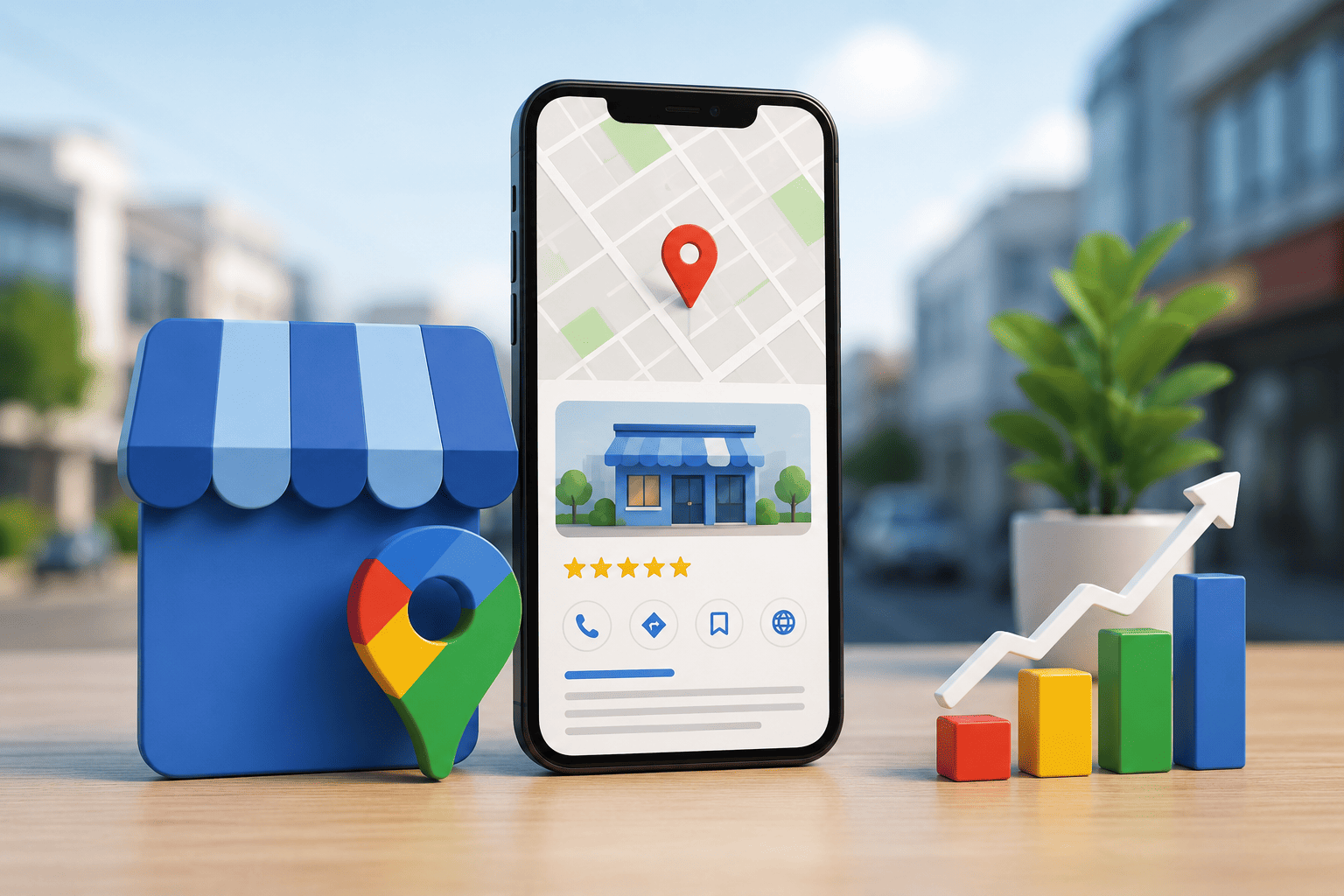
Google Business Profile is a free business listing that allows companies to manage how they appear across Google Search and Google Maps. Your profile displays essential business information, including:

  • Business name
  • Address
  • Phone number
  • Website
  • Business hours
  • Customer reviews

GBP optimization is an essential component of modern local SEO because of these advantages.

Step 1: Complete Every Section of Your Profile

Customers and Google alike tend to view companies with comprehensive profiles as more reliable.

Make sure you include:

  • Precise company name
  • The appropriate business category
  • Updated contact information
  • URL of the website
  • Description of the business
  • Hours of operation
  • Service regions
  • Products and services

Keep all information consistent across your website and online directories.

Step 2: Choose the Right Business Categories

Google is informed about your company’s offerings by your primary category.

For example:

  • Digital Marketing Agency
  • Dental Clinic
  • Restaurant
  • Real Estate Agency

If secondary categories adequately describe your services, you may also include them. Your profile will show up for more focused local searches if you choose pertinent categories.

Step 3: Include High-Quality Photos.

Images improve customer engagement and make your business appear more authentic.

Include photos of:

  • Your storefront or office
  • Products for team members
  • Services in action
  • Views from the inside and outside

Updating photos on a regular basis shows that your company is reliable and active.

Step 4: Collect and Respond to Customer Reviews

One of the most powerful local ranking signals is customer reviews.

Encourage satisfied customers to respond to all reviews, both positive and negative, and to provide sincere feedback. Professional responses help establish credibility and demonstrate your appreciation for the customer experience.

Step 5: Post on Google Business

Businesses can post updates directly on their Google profile.

Share:

  • Special offers
  • New offerings
  • Blog articles
  • News and events about the company
  • Seasonal sales

In addition to keeping your profile active, fresh content offers more chances for interaction.

Step 6: Naturally Use Relevant Keywords

Don’t stuff your profile with keywords.

Instead, naturally include terms that customers actually search for, such as:

  • Local SEO
  • Digital Marketing
  • SEO Services
  • Social Media Marketing
  • Website Design
  • Google Maps Ranking

Natural language enhances user experience and gives Google a deeper understanding of your company.

Step 7: Monitor Performance with Insights

Google Business Profile offers useful data, such as:

  • Search queries customers used
  • Received calls
  • Direction requests
  • Website clicks
  • Photo views

To better understand consumer behavior and enhance your local marketing strategy, review these insights on a regular basis.

Why Choose Upswing Digital?

With data-driven Google Business Profile optimization, Upswing Digital assists companies in optimizing their local online presence. To increase visibility in Google Search and Maps, our team concentrates on comprehensive profile management, local SEO, review strategy, keyword optimization, content updates, and performance monitoring. We follow the latest SEO best practices, semantic SEO principles, and user-focused strategies to help businesses attract qualified local customers and generate measurable growth.

Conclusion

For companies that depend on local clients, Google Business Profile optimization is now mandatory. A thorough, accurate, and frequently updated profile boosts your online visibility, raises your local rankings, and fosters customer trust.

You can boost visibility and convert more local searches into actual business opportunities by combining profile optimization with a solid website, reliable business information, high-quality content, and an efficient local SEO strategy.

FAQ

1. Is it free to create a Google Business Profile?

Yes. Google Business Profile is completely free to create, verify, and manage for eligible businesses.

2. How frequently should my Google Business Profile be updated?

It’s advisable to update your profile on a regular basis by adding fresh images, publishing content, answering reviews, and making sure your company’s information is correct.

3. How long does it take to see results from Google Business Profile optimization?

Many businesses notice improvements in visibility and customer engagement within a few weeks, while stronger local ranking improvements typically develop over several months with consistent optimization and active profile management.

The Growing Role of Experience Signals in SEO

SEO has changed dramatically over the years.

There was a time when ranking on Google was largely about keywords, backlinks, and technical optimisation. Businesses could focus on placing the right phrases on a webpage, building links, and optimising metadata to improve their visibility in search results.

Today, the search landscape is much more complex.

Search engines have become better at understanding context, intent, quality, and user behaviour. At the same time, users have become more demanding. They expect websites to load quickly, work smoothly, provide useful information, and make it easy to find what they need.

This is where experience signals in SEO are becoming increasingly important.

A website can have excellent content and strong technical foundations, but if users struggle to navigate it, abandon it quickly, or have a frustrating experience, the website may fail to achieve its full potential.

SEO is no longer just about helping search engines understand your website.

It is also about creating a website experience that satisfies the people who arrive there.

This shift has important implications for businesses.

Your website is no longer simply a digital brochure. It is a critical part of your customer’s journey—from the moment they discover your brand through search to the moment they decide whether to enquire, purchase, or leave.

In this article, we’ll explore the growing role of experience signals in SEO, why they matter, which factors businesses should focus on, and how improving the user experience can support both search visibility and business growth.

The Growing Role of Experience Signals in SEO | Complete Guide

What Are Experience Signals in SEO?

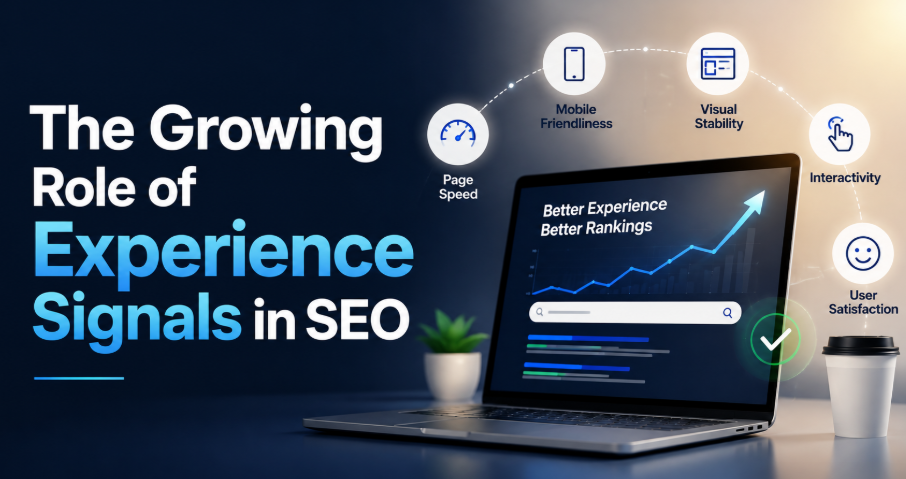
Experience signals in SEO refer to the measurable and observable indicators that help search engines understand how users experience a website or webpage.

These signals can include factors related to:

  • Page speed
  • Mobile usability
  • Website responsiveness
  • Visual stability
  • Navigation
  • Content accessibility
  • User engagement
  • Interaction quality
  • Overall page experience

Some of these factors are directly measurable through technical metrics, while others are reflected through broader user behaviour and satisfaction.

The important point is that SEO is increasingly connected to the actual experience users have after clicking on a search result.

Getting someone to your website is only the beginning.

The next question is:

What happens when they arrive?

If the page loads slowly, the visitor may leave.

If the layout is confusing, they may struggle to find information.

If intrusive pop-ups block the content, they may become frustrated.

If the website doesn’t work properly on mobile, they may abandon the session.

Every one of these problems can affect the user’s perception of your brand and the likelihood that they will continue through the customer journey.

This is why experience signals deserve a central place in modern SEO strategies.


Why User Experience and SEO Are Becoming More Connected

The relationship between SEO and user experience is becoming increasingly difficult to separate.

Search engines want to provide users with useful results.

But usefulness doesn’t end when the user clicks a search result.

If a search result leads to a slow, confusing, or frustrating webpage, the user hasn’t really received a good experience.

This creates a natural connection between search visibility and website experience.

A strong SEO strategy should therefore answer two questions:

Can search engines understand and discover this page?

And:

Will users have a good experience when they visit it?

The first question focuses on technical and content optimisation.

The second focuses on experience.

The best SEO strategies address both.


7 Key Experience Signals That Matter for SEO

1. Page Speed

Few things frustrate users more than a slow website.

People expect webpages to load quickly, especially when browsing on mobile devices.

If a user clicks on your search result and waits too long for the page to become usable, they may simply leave.

Slow-loading pages can affect more than SEO.

They can also impact:

  • Engagement
  • Conversion rates
  • Customer satisfaction
  • Brand perception
  • Lead generation
  • Sales

For businesses, this creates a clear reason to prioritise website performance.

A fast website creates a smoother experience.

It helps users access information quickly and move through the customer journey with less friction.

How to improve page speed

Businesses can consider:

  • Compressing large images
  • Using modern image formats
  • Reducing unnecessary scripts
  • Optimising code
  • Improving server response times
  • Using caching
  • Reviewing third-party tools
  • Using a reliable hosting solution

Speed optimisation shouldn’t be treated as a one-time task.

Websites evolve.

New plugins are installed.

New tracking tools are added.

Images become larger.

Over time, performance can decline.

Regular monitoring is therefore essential.


2. Core Web Vitals

Core Web Vitals are a set of metrics designed to measure important aspects of page experience.

They focus on areas such as:

  • Loading performance
  • Interactivity
  • Visual stability

These metrics help businesses identify technical issues that may affect how users experience webpages.

The broader lesson is important:

A webpage shouldn’t just contain good content.

It should also work well.

A page that shifts unexpectedly while a user is trying to click a button creates frustration.

A page that takes too long to become interactive creates friction.

A page that responds smoothly creates a better experience.

Businesses should therefore regularly monitor website performance and identify pages that need improvement.


3. Mobile Experience

Mobile has become a central part of how people search and browse online.

A significant number of users may discover your business through a smartphone.

This means your website needs to work effectively on smaller screens.

A mobile-friendly experience should include:

  • Responsive design
  • Easy-to-read text
  • Clear navigation
  • Properly sized buttons
  • Fast loading
  • Easy access to important information

Imagine someone searching for your business while travelling.

They want to find your location.

They need your phone number.

They want to check your services.

If the mobile experience makes these tasks difficult, they may simply choose another business.

This is why mobile optimisation isn’t just a technical SEO task.

It is a customer experience priority.


4. Navigation and Website Usability

A website can be visually impressive and still be difficult to use.

Visitors should be able to understand:

  • Where they are
  • What the website offers
  • Where to go next
  • How to contact the business
  • How to complete an action

Good navigation reduces friction.

Users shouldn’t have to search through multiple pages to find basic information.

Important pages should be easy to access.

Menus should be logical.

Internal links should guide users naturally through related content.

A clear website structure can benefit both users and search engines.

Users can navigate more easily.

Search engines can better understand the relationship between pages.

This makes usability an important part of a broader SEO strategy.


5. Content Experience

Good content isn’t simply about including keywords.

It is about answering the user’s question effectively.

A visitor who lands on a webpage should quickly understand:

“Is this page going to help me?”

If the answer isn’t clear, they may leave.

A strong content experience includes:

  • Clear headings
  • Shorter paragraphs
  • Useful subheadings
  • Relevant visuals
  • Easy-to-scan formatting
  • Direct answers
  • Helpful examples
  • Logical structure

Long-form content can be valuable, but length alone doesn’t create a good experience.

A 3,000-word article filled with repetition may be less useful than a concise article that answers the user’s question clearly.

The goal should always be usefulness.

Write for humans first.

Optimise for search engines without sacrificing readability.


6. Engagement and User Behaviour

User behaviour can provide valuable insights into whether a webpage is meeting visitor expectations.

Businesses can analyse metrics such as:

  • Engagement
  • Conversion rates
  • Returning visitors
  • Scroll behaviour
  • Time spent on important pages
  • Form completions
  • Product interactions

However, these metrics should be interpreted carefully.

For example, a short session isn’t automatically negative.

If someone visits a page, finds the answer they need immediately, and leaves, the experience may have been successful.

This is why businesses shouldn’t focus on individual metrics in isolation.

Instead, look at the bigger picture.

Ask:

Did the visitor find what they needed?

Did they complete the intended action?

Did they move closer to becoming a customer?

The goal isn’t to keep users on your website for as long as possible.

The goal is to help them achieve what they came to do.


7. Accessibility

A strong website experience should be accessible to as many users as possible.

Accessibility considerations can include:

  • Clear text contrast
  • Descriptive image alt text
  • Keyboard navigation
  • Proper heading structure
  • Readable typography
  • Accessible forms
  • Clear labels

Accessibility is important from both an ethical and practical perspective.

The easier your website is to use, the more people can access your content and services.

Businesses should therefore consider accessibility as part of creating a high-quality digital experience.


Why Experience Signals Matter for Business

SEO is ultimately connected to business outcomes.

A website that ranks well but provides a poor experience may struggle to convert traffic into customers.

Imagine two businesses competing for the same search query.

Both have similar content quality.

Both have strong technical SEO.

But one has a faster, clearer, easier-to-use website.

The visitor may naturally prefer that experience.

They may stay longer.

Explore more pages.

Read more content.

Submit an enquiry.

Make a purchase.

The experience becomes part of the competitive advantage.

This is why businesses should stop thinking about SEO as simply a traffic-generation activity.

The real objective is to attract the right visitors and give them a reason to stay, trust, and act.


Experience Signals and Conversion Rates

There is a direct connection between website experience and conversion potential.

Consider a customer who discovers your business through Google.

They click your result.

The page loads slowly.

The navigation is confusing.

The contact button is difficult to find.

The form has too many fields.

The customer leaves.

You may have successfully achieved an SEO goal—you generated traffic.

But you failed to achieve the business goal.

The visitor didn’t become a lead or customer.

Now consider a better experience.

The page loads quickly.

The information is clear.

The customer understands your offering.

The next step is obvious.

The enquiry process is simple.

The customer converts.

This is why SEO and conversion optimisation should work together.

Traffic without a good experience can be wasted opportunity.


How to Improve Experience Signals for SEO

Improving experience signals doesn’t require redesigning your entire website overnight.

Start with the areas that create the greatest friction.

Step 1: Test Your Website on Mobile

Open your website on multiple mobile devices.

Ask:

  • Is the text readable?
  • Can I navigate easily?
  • Are buttons easy to tap?
  • Does the page load quickly?
  • Can I find important information?

Don’t rely only on desktop testing.

Experience your website the way your customers do.


Step 2: Identify Slow Pages

Use website performance tools to identify pages that load slowly.

Focus on high-value pages first.

These might include:

  • Homepage
  • Service pages
  • Product pages
  • Landing pages
  • Contact pages

Improving the experience of these pages can have a direct impact on the customer journey.


Step 3: Simplify Navigation

Review your website menu.

Can visitors understand it immediately?

Are important pages easy to access?

Are there unnecessary steps?

Simplify wherever possible.

The fewer obstacles users encounter, the easier it becomes for them to continue exploring your website.


Step 4: Improve Content Structure

Break large blocks of text into manageable sections.

Use:

  • Headings
  • Subheadings
  • Bullet points
  • Short paragraphs
  • Images
  • Relevant internal links

Make content easy to scan.

People often don’t read webpages word by word.

They scan first.

Good structure helps them quickly identify the information they need.


Step 5: Strengthen Calls to Action

Every important page should have a clear next step.

Depending on the business, this might be:

  • Contact us
  • Book a consultation
  • Request a quote
  • Download a guide
  • Buy now
  • Schedule an appointment

Don’t force users to figure out what to do next.

Guide them.


The Relationship Between SEO, UX, and Branding

Experience signals also influence how customers perceive your brand.

A slow website can make a business appear less professional.

A confusing website can reduce trust.

A polished, easy-to-use website can create confidence.

Your website experience communicates something about your business—even when you don’t say it directly.

Customers may subconsciously think:

“If their website is this well organised, their service might be well organised too.”

The opposite can also happen.

Poor digital experiences can create doubt.

This is why SEO, UX, and branding should not operate in separate silos.

They work together.

SEO brings people in.

UX helps them navigate.

Branding shapes perception.

Content builds trust.

Conversion strategy encourages action.

Together, they create a complete digital experience.


Experience Signals Are About More Than Rankings

It is important to remember that experience optimisation shouldn’t be done solely to improve rankings.

The real benefit is bigger.

A better experience can help:

  • Reduce frustration
  • Increase trust
  • Improve engagement
  • Strengthen brand perception
  • Increase conversions
  • Encourage repeat visits
  • Improve customer satisfaction

Even if a specific experience improvement doesn’t immediately result in a ranking change, it can still create meaningful business value.

This is why businesses should view SEO as part of a larger digital strategy.

The goal is not simply to satisfy an algorithm.

The goal is to satisfy the customer.


The Future of Experience Signals in SEO

Search continues to evolve.

As search engines become more sophisticated, businesses will need to think beyond traditional optimisation tactics.

Keywords will remain relevant.

Technical SEO will remain important.

Content quality will remain essential.

But the experience surrounding that content will become increasingly important.

Users expect digital experiences to be fast, accessible, intuitive, and useful.

Businesses that meet these expectations will be better positioned to compete.

Those that ignore experience may find it increasingly difficult to turn visibility into meaningful results.

The future of SEO isn’t just about being found.

It’s about what happens after you’re found.


A Practical Experience SEO Checklist

Before considering a webpage fully optimised, ask:

Performance
  • Does the page load quickly?
  • Is the website responsive?
  • Are images optimised?
Usability
  • Is navigation clear?
  • Are important actions easy to find?
  • Is the page easy to use on mobile?
Content
  • Does the page answer the user’s intent?
  • Is the information easy to scan?
  • Are headings and sections logically organised?
Conversion
  • Is there a clear next step?
  • Is the enquiry or purchase process simple?
  • Are unnecessary barriers removed?
Accessibility
  • Is the content readable?
  • Are images properly described?
  • Can users navigate effectively?
Brand Experience
  • Does the page feel consistent with the overall brand?
  • Does the experience build trust?
  • Does the website reflect the quality of the business?

If the answer to these questions is yes, you’re not just optimising for search engines.

You’re building a better digital experience for real people.


Conclusion

The growing role of experience signals in SEO reflects a broader change in digital marketing.

SEO is no longer just about keywords, backlinks, and technical optimisation. While these elements remain important, businesses must also think about what happens after a visitor lands on their website.

A fast, accessible, mobile-friendly, easy-to-navigate, and useful website can create a stronger experience for users while supporting broader SEO and business goals.

At Upswing, we believe that effective SEO goes beyond driving traffic—it is about creating meaningful digital experiences that help visitors find what they need, trust your brand, and take action. Upswing helps businesses build stronger online experiences by bringing together SEO, content, user experience, and conversion-focused strategies.

The most successful businesses will be those that understand the connection between visibility and experience.

Getting discovered is important.

But being useful after discovery is what creates lasting value.

As search continues to evolve, businesses should focus on building websites that don’t simply attract visitors but genuinely help them.

Because the future of SEO isn’t just about ranking higher.

It’s about creating experiences that make people want to stay, trust, and take action.

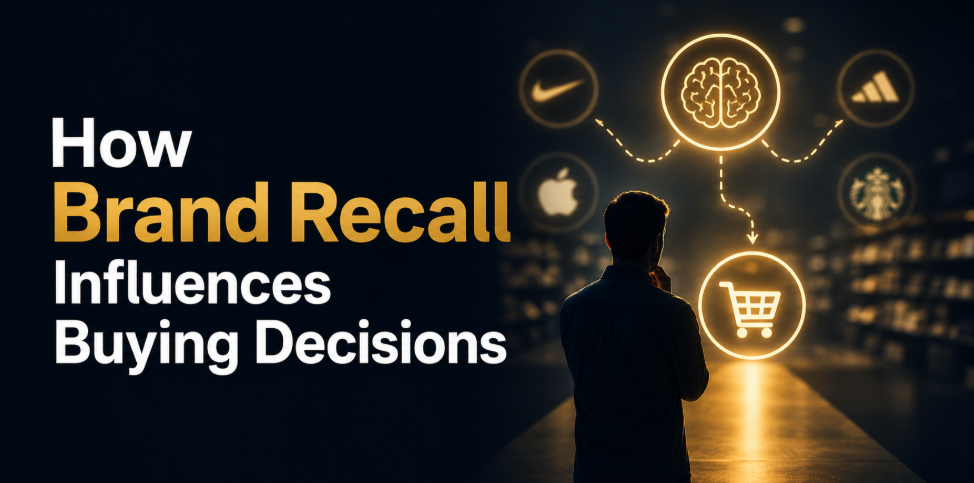
How Brand Recall Influences Buying Decisions

Think about the last time you needed to buy something.

Maybe it was a smartphone.

A pair of shoes.

A skincare product.

A restaurant for dinner.

Or even a service for your business.

How many brands did you actually consider?

In most cases, the answer is surprisingly small.

Even when dozens or hundreds of options are available, people tend to consider a limited number of brands that they already know, recognise, or remember.

This is where brand recall becomes incredibly powerful.

A customer may be exposed to hundreds of brands every week. They may see advertisements on social media, watch YouTube videos, browse websites, receive emails, and walk past countless physical stores.

But when the moment to purchase arrives, only a few brands immediately come to mind.

Those are the brands with strong recall.

Brand recall is more than simply remembering a logo or recognising a name. It influences which brands customers consider, how much trust they place in them, and whether they feel confident enough to make a purchase.

In competitive markets, businesses often focus heavily on visibility.

They want more impressions.

More reach.

More followers.

More clicks.

But visibility alone isn’t enough.

If customers see your brand but forget it immediately, your marketing efforts may have limited impact when they are finally ready to buy.

The real goal is to move from being seen to being remembered.

Because when customers remember your brand at the right moment, your business has a greater chance of entering the consideration set—and ultimately winning the purchase.

Let’s explore how brand recall influences buying decisions and why it should be a core part of your long-term marketing strategy.

How Brand Recall Influences Buying Decisions

What Is Brand Recall?

Brand recall refers to a customer’s ability to remember a brand when thinking about a particular product, service, or category.

For example, if someone asks you to name a search engine, a few brands may immediately come to mind.

If someone asks you to name a sportswear brand, certain names may appear instantly.

That immediate mental association is brand recall.

There are two important elements involved:

Memory and relevance.

Customers need to remember your brand.

But they also need to associate it with the right category, need, or problem.

A customer might remember your name but not remember what you do.

That isn’t strong brand recall.

The strongest brands occupy a clear position in the customer’s mind.

When a need arises, the brand comes to mind naturally.

This is why businesses should aim to build associations, not just awareness.

You don’t want customers to simply think:

“I’ve seen this brand before.”

You want them to think:

“This is the brand I should consider for this.”

That shift can significantly influence buying behaviour.


Brand Recognition vs Brand Recall

Brand recognition and brand recall are closely connected, but they are not the same.

Brand recognition happens when customers recognise your brand after seeing a visual or verbal cue.

For example, they may recognise your logo, packaging, colours, or tagline.

Brand recall is stronger.

It happens when customers remember your brand without needing to see a prompt.

For example, when someone asks:

“Which brand would you choose for this?”

and your brand immediately comes to mind.

Recognition helps customers identify you.

Recall helps customers remember you when you’re not directly in front of them.

For businesses, both are valuable.

But brand recall becomes particularly important during purchase decisions because customers don’t always have your advertisement in front of them when they are ready to buy.

They have to remember you themselves.


Why Brand Recall Matters in Buying Decisions

Customers rarely make purchasing decisions in a completely empty mental space.

They already have experiences, memories, preferences, and perceptions influencing their choices.

Brand recall helps your business enter that mental shortlist.

Imagine a customer needs a product or service.

They have five options.

One brand is completely unfamiliar.

Two brands they have seen occasionally.

One brand they remember clearly.

One brand they have used before.

Which ones are most likely to be considered?

Usually, the familiar and memorable brands.

This doesn’t mean brand recall guarantees a sale.

Price, quality, convenience, reviews, and other factors still matter.

But recall gives your brand an important advantage:

You are in the customer’s consideration set.

And if you aren’t considered, you can’t be chosen.


7 Ways Brand Recall Influences Buying Decisions

1. It Keeps Your Brand Top-of-Mind

One of the biggest advantages of strong brand recall is staying top-of-mind.

Customers don’t constantly think about your business.

They have jobs.

Families.

Responsibilities.

Other priorities.

They may see your content today and forget about it tomorrow.

But consistent brand exposure can help strengthen memory over time.

Then, when the need arises, your brand has a better chance of being remembered.

For example, a customer may see a digital marketing agency’s content several times over a few months.

They don’t enquire.

They don’t comment.

They don’t even follow the page.

But six months later, their business needs marketing support.

Suddenly, the agency’s name comes to mind.

That’s brand recall at work.

The customer wasn’t necessarily ready when they first encountered the brand.

But the brand remained mentally available.

What businesses can learn

Don’t assume that every marketing activity needs to generate an immediate sale.

Some campaigns are building memory.

Some are building trust.

Some are strengthening familiarity.

The customer may not act today.

But they may remember you tomorrow.


2. It Reduces Perceived Risk

Buying decisions often involve uncertainty.

Customers may wonder:

Will this product work?

Will this company deliver?

Will I get value for my money?

What if I make the wrong choice?

When customers remember a brand, that familiarity can make the decision feel less risky.

This is particularly important for expensive or high-consideration purchases.

Think about healthcare services, financial products, professional services, technology solutions, or premium products.

Customers often want to feel confident before spending their money.

A familiar brand can feel safer than an unknown alternative.

This is one reason businesses should consistently communicate their expertise and credibility.

Brand recall should not exist in isolation.

It should be connected to positive associations.

If customers remember your brand for the right reasons, recall becomes a powerful trust-building asset.


3. It Simplifies Decision-Making

Modern consumers face an overwhelming number of choices.

When customers have too many options, making a decision can become exhausting.

Brand recall simplifies the process.

Instead of evaluating every possible option, customers often begin with the brands they already know.

This creates a mental shortcut.

They may think:

“I know this brand.”

“I’ve heard good things about them.”

“I’ve seen them several times.”

“They seem reliable.”

That familiarity reduces the mental effort required to make a decision.

For businesses, this means being remembered can make the buying journey easier.

Your goal isn’t necessarily to convince customers from zero every single time.

It is to build enough familiarity that the customer already has some level of confidence when they encounter your offer.


4. It Increases the Chance of Being Considered

A customer can’t buy from a brand they don’t consider.

This sounds obvious, but it is one of the most important principles in marketing.

Imagine your business has an excellent product.

Your pricing is competitive.

Your service is outstanding.

But the customer doesn’t remember you when they are ready to buy.

Your competitors may win simply because they came to mind first.

Brand recall increases the likelihood that your business enters the customer’s shortlist.

Once you’re considered, other factors can work in your favour.

Your website can persuade them.

Your reviews can reassure them.

Your pricing can influence them.

Your sales team can convert them.

But brand recall gets you into the conversation in the first place.


5. It Strengthens Emotional Connections

People don’t remember every advertisement they see.

They remember experiences, emotions, stories, and ideas that mean something to them.

This is why emotional branding can strengthen recall.

A brand that makes customers feel something is often easier to remember than a brand that simply lists features.

Think about brands that are associated with:

  • Trust
  • Confidence
  • Adventure
  • Innovation
  • Happiness
  • Luxury
  • Security
  • Belonging

Over time, these emotional associations become part of the brand’s identity.

When customers encounter a need connected to that emotion, the brand may come to mind.

This is why businesses should think beyond product features.

Ask:

What do we want customers to feel when they think about us?

The answer can help shape your messaging, visual identity, content, and customer experience.


6. It Encourages Repeat Purchases

Brand recall doesn’t only influence first-time purchases.

It can also affect repeat buying behaviour.

When customers have a positive experience with a brand, that brand becomes easier to remember the next time the same need arises.

The customer doesn’t have to start their search from scratch.

They already know where to go.

This creates convenience.

And convenience can become loyalty.

For businesses, strong brand recall combined with a positive customer experience can create a powerful cycle:

Recognition → Purchase → Positive Experience → Memory → Repeat Purchase

Over time, the brand becomes the customer’s default choice.

That is one of the most valuable outcomes of strong brand building.


7. It Makes Marketing More Efficient

Strong brand recall can improve the efficiency of marketing over time.

When customers already know your brand, your communication doesn’t always need to start from the beginning.

You don’t have to constantly explain who you are.

The audience already has some context.

This can make your marketing more effective.

Your message may be understood faster.

Your campaigns may require fewer explanations.

Your content may perform better because customers already recognise the source.

This doesn’t mean you should stop marketing.

It means every marketing activity contributes to a larger memory structure.

The more consistently you build brand recall, the more valuable each future interaction can become.


What Happens When Customers Don’t Remember Your Brand?

The opposite of strong brand recall can be costly.

When customers don’t remember your business, you may experience:

  • Higher customer acquisition costs
  • Increased dependence on paid advertising
  • Lower conversion rates
  • Greater price sensitivity
  • Reduced customer loyalty
  • More difficulty competing with established brands
  • Lower word-of-mouth referrals

You may have to work harder to convince customers that you are trustworthy.

You may need to spend more money to get attention.

You may find yourself competing primarily on price.

And you may constantly feel like you are starting from zero.

This is why brand building should not be treated as a separate activity from performance marketing.

Strong brand recall can support performance.

It creates familiarity before the customer reaches the conversion stage.


How to Build Stronger Brand Recall

The good news is that brand recall isn’t limited to global companies with massive advertising budgets.

Businesses of all sizes can build stronger recall through consistency and strategic positioning.

1. Develop a Distinctive Brand Identity

Your brand should be recognisable.

Use consistent:

  • Colours
  • Typography
  • Visual elements
  • Tone of voice
  • Design style
  • Messaging

When customers repeatedly encounter the same visual and verbal cues, your brand becomes easier to identify and remember.

Consistency creates familiarity.

Familiarity strengthens memory.


2. Repeat Your Core Message

Many businesses change their messaging too often.

One month they focus on price.

The next month they focus on quality.

Then they talk about innovation.

Then they completely change their positioning.

This can create confusion.

Customers need repetition.

Identify the key idea you want your brand to own and communicate it consistently.

You don’t need to say the exact same sentence every time.

But your central message should remain recognisable.

The goal is to build a clear mental association.


3. Create Memorable Content

Not all content is equally memorable.

Generic content can disappear quickly.

Memorable content often contains:

  • Strong storytelling
  • Original ideas
  • Distinctive visuals
  • Useful insights
  • Emotional relevance
  • Unexpected perspectives

Instead of asking only:

“Will this content get views?”

Ask:

“Will people remember this tomorrow?”

That question can completely change your creative strategy.


4. Build Distinctive Brand Assets

A brand asset is a visual or verbal element that helps people identify your brand.

This might include:

  • A logo
  • A colour combination
  • A tagline
  • A mascot
  • A distinctive packaging style
  • A unique visual pattern
  • A recognisable sound

The stronger and more consistently these assets are used, the easier it becomes for customers to connect them with your brand.


5. Focus on Experiences, Not Just Advertising

Advertising can create awareness.

Experiences create memories.

Every customer interaction can influence recall.

Think about:

  • How quickly you respond
  • How easy your website is to use
  • How your team communicates
  • How you handle complaints
  • How you follow up
  • How you deliver the product or service

A memorable experience can strengthen the customer’s relationship with your brand.

And when the experience is positive, the memory becomes an advantage.


6. Stay Consistent Across Channels

Your brand may appear on:

  • Instagram
  • LinkedIn
  • Google
  • Your website
  • Email
  • WhatsApp
  • Offline advertising

If your brand looks and sounds completely different across each channel, customers may struggle to build a consistent mental picture.

Create a unified experience.

Your customers should feel that they are interacting with the same brand wherever they encounter you.


Brand Recall and the Role of Content Marketing

Content marketing plays a major role in strengthening brand recall.

Every useful article, video, social media post, podcast, or newsletter creates another opportunity for your audience to encounter your brand.

But the goal shouldn’t be to publish content simply for the sake of publishing.

Your content should reinforce what you want to be known for.

If your business wants to be recognised as an expert, consistently demonstrate expertise.

If you want to be known for innovation, share innovative ideas.

If you want to be associated with customer service, showcase customer experiences.

Over time, these repeated associations help shape memory.

The question isn’t simply:

“How much content are we creating?”

It is:

“What is our audience learning to remember about us?”


How Social Media Influences Brand Recall

Social media is particularly powerful for building repeated exposure.

A customer might encounter your brand multiple times without taking action.

They may:

  • Watch a Reel
  • See a carousel
  • Read a caption
  • View a Story
  • See an advertisement
  • Visit your profile

Each interaction may seem small.

But collectively, they contribute to familiarity.

This is why consistency matters more than occasional bursts of activity.

One viral post may generate attention.

But consistent, recognisable communication builds memory.

Your audience doesn’t need to engage with every post.

They simply need enough meaningful exposure to remember your brand when the need arises.


Measuring Brand Recall

Brand recall can be challenging to measure because it exists in the customer’s mind.

However, businesses can use several indicators.

Look at:

Direct Traffic

Are more people visiting your website directly?

Branded Searches

Are people searching specifically for your brand?

Repeat Customers

Are customers returning without needing heavy promotional incentives?

Direct Enquiries

Are people contacting you directly because they already know your business?

Referral Traffic

Are customers recommending your brand to others?

Customer Surveys

Ask customers how they heard about you and which brands they considered before choosing.

These signals can help you understand whether your brand is becoming more memorable.


Brand Recall Is a Long-Term Investment

One of the biggest mistakes businesses make is expecting immediate returns from brand-building activities.

Brand recall develops over time.

A customer may see your brand today.

Remember it next month.

Research it three months later.

And finally buy from you six months after the first interaction.

If you only measure the first interaction, you may conclude that the marketing failed.

But the customer’s memory may tell a different story.

This is why businesses need patience.

Strong brand recall is built through repeated exposure, consistent positioning, positive experiences, and meaningful communication.

It is not created overnight.

But once established, it can become one of your strongest competitive advantages.


Conclusion

Brand recall plays a powerful role in shaping buying decisions. When customers remember your brand at the moment they need a product or service, you have already overcome one of the biggest challenges in marketing: getting into their consideration set.

Strong brand recall can increase familiarity, reduce perceived risk, simplify decision-making, encourage repeat purchases, and improve marketing efficiency. It can help businesses compete on more than price and create stronger relationships with their audiences.

At Upswing, we believe that memorable brands are built through consistent strategy, distinctive communication, and meaningful customer experiences—not through visibility alone. Upswing helps businesses strengthen their brand presence so they can become easier to recognise, easier to remember, and ultimately easier to choose.

In a crowded marketplace, customers have countless options. They may not remember every advertisement they see or every brand they encounter.

But when they remember your brand at the exact moment a buying decision needs to be made, you have a powerful advantage.

Because ultimately, the brands that win aren’t always the ones that are seen the most.

They are the ones that are remembered when it matters most.