

Step-by-Step Guide to Planning a Content Calendar

Step-by-Step Guide to Planning a Content Calendar

A well-planned content strategy is essential for building brand authority, driving traffic, and generating leads. Businesses can stay consistent, keep organized, and align content to their marketing objectives with the use of a content calendar. This comprehensive tutorial shows you how to make a content schedule that works and yields measurable results.

Step 1: Define Your Content Goals

Clearly define your goals before you start producing any kind of content. Are you trying to raise brand awareness, create leads, increase website traffic, or improve social media engagement? Setting clear objectives guarantees that each piece of content you produce has a purpose and helps to determine the type of content you produce.

Step 2: Understand Your Target Audience

It’s important to know who your audience is. Determine their favorite platforms, browsing behavior, pain points, and interests. This enables you to produce valuable and resonant content. Content that is audience-focused performs better and fosters enduring brand trust.

Step 3: Choose Correct Content Formats

A comprehensive content schedule includes a variety of formats, including case studies, videos, infographics, blogs, social media posts, and email newsletters. By varying your formats, you may reach your audience through a variety of channels and keep them interested.

Step 4: Conduct Keyword & Topic Research

Researching keywords guarantees that search engines can find your content. Determine the most popular subjects, appropriate keywords, and frequently asked questions by clients in your industry. Planning subjects ahead of time saves time during execution and helps keep SEO consistency.

Step 5: Decide Posting Frequency & Platforms

Decide where and how frequently you will publish your content. Volume is not as important as consistency. Whether it’s weekly blogs, daily social posts, or monthly newsletters, set a realistic schedule your team can maintain.

Step 6: Create a Content Calendar Template

Use tools like Google Sheets, project management software, or content planning platforms to build your calendar. Include details such as:

  • Content title or topic
  • Format and platform
  • Publishing date
  • Assigned creator
  • Status (draft, review, published)

This structure keeps everyone aligned and accountable.

Step 7: Plan Ahead but Stay Flexible

While planning in advance is important, leave room for trending topics, seasonal campaigns, or last-minute updates.  Having a flexible content calendar enables your brand to remain responsive and relevant.

Step 8: Review and Optimize Performance

Use analytics tools to monitor the effectiveness of your content. Keep an eye on metrics like reach, traffic, engagement, and conversions. Frequent reviews enable you to improve future content initiatives by identifying what works.

Why Choose Upswing Digital for Content Planning & Creation?

We at Upswing Digital create content that converts, not simply content. We are experts in content creation that is suited to your company’s objectives by fusing creativity, data-driven strategy, and SEO expertise.

Why businesses trust us:
  • Planning strategic content in line with your brand’s goals
  • Content designed for search engines to increase visibility
  • Writing that is consistently excellent across all platforms
  • Personalized content schedules for flawless execution
  • Professionals with experience who are aware of digital trends

With smart content tactics that produce measurable results, Upswing Digital assists both new and existing brands in remaining consistent, relevant, and ahead of the competition.

Why a Professional Website Design is Your Best Marketing Investment

Professional Website Design

In a world where customers search online before making any decision, your website becomes the face of your business. It is the first place people visit to understand who you are, what you offer, and why they should trust you. A professionally designed website is not just about good looks — it is a strategic marketing asset that works round the clock to attract visitors, build credibility, and convert prospects into loyal customers.

Investing in professional website design and development is one of the smartest marketing moves any business can make today.

Your Website Is the Heart of Your Digital Presence

Every digital activity you do — social media marketing, SEO, Google Ads, or email campaigns — ultimately drives traffic to your website. If your website is not engaging, fast, and user-friendly, all your marketing efforts can go to waste. A professionally developed website ensures that visitors stay longer, explore your services, and take meaningful action.

This is where expert agencies like Upswing Digital help businesses build powerful websites that support and strengthen their complete digital marketing strategy.

First Impressions Create Lasting Impact

Visitors form an opinion about your business within seconds of landing on your website. An outdated design or cluttered layout can immediately reduce trust. Professional website design focuses on clean structure, appealing visuals, and consistent branding that create a strong first impression and encourage visitors to explore further.

A modern and attractive website tells your audience that your business is reliable and professional.

Better User Experience Means Better Conversions

A successful website is one that guides visitors smoothly from one section to another. Easy navigation, clear information, and strong call-to-action buttons make it simple for users to contact you or purchase your services. Professional website development ensures your visitors have a seamless browsing experience across all pages.

Upswing Digital specializes in building websites that are not only visually appealing but also optimized for user experience and conversions.

SEO-Friendly Websites Bring Organic Traffic

Your website structure plays a major role in how search engines rank your pages. Clean coding, proper headings, optimized images, and fast loading speeds help improve your visibility on Google. A professionally designed website gives your business the technical foundation required for effective SEO.

With the right website design approach, you can attract consistent organic traffic without depending entirely on paid ads.

Mobile Responsiveness Is Essential

Most users browse websites through their smartphones. A professional website adapts perfectly to all screen sizes, providing a smooth experience on mobile, tablet, and desktop. Google also prioritizes mobile-friendly websites, making responsiveness a key ranking factor.

Security and Reliability Build Trust

Online users are cautious about sharing their information. Professional website development includes SSL security, data protection, and reliable hosting to ensure your website is safe and trustworthy. This increases customer confidence and encourages them to interact with your business.

A Scalable Platform for Business Growth

As your business grows, your website should grow with it. Whether you want to add new services, integrate booking systems, or start an e-commerce section, a professionally built website allows easy scalability without major redesign.

Strengthening Your Brand Identity

Your website is the digital representation of your brand. Consistent colors, fonts, visuals, and messaging create a memorable brand identity. A professional design ensures your brand stands out from competitors and leaves a lasting impression.

With the expertise of Upswing Digital, businesses can create websites that perfectly align with their branding and marketing goals.

Conclusion

A professional website is not just an online presence — it is your most powerful marketing tool. It builds trust, enhances user experience, supports SEO, and drives conversions. Investing in expert website design and development ensures that your business is equipped with a strong digital foundation for long-term success.

If you want a website that truly represents your brand and delivers real marketing results, partnering with professionals like Upswing Digital can make all the difference.

Website Speed Optimisation: How It Affects Your SEO & Conversions

In the quick-paced online scene, site speed isn’t only about tech it shapes profits. If you’re running a shop, service page, or showcasing work, load times shape user opinions. Over at Upswing Digital, speedy sites beat sluggish ones across the board better rankings, more sales, stronger leads, plus greater confidence from customers thanks to effective website speed optimization.

Website visitors demand fast loading. Pages should snap open right away, pictures need sharp display while browsing clicks, scrolling or buying must flow without hiccups. When a site feels sluggish, people bounce off quickly; worse, Google picks up on it, which directly impacts SEO and conversion.
This blog explains why fast websites count, since slow loading hurts your search ranking  also messes with sales numbers straight away.

Why Website Speed Optimisation Matters

A sluggish site won’t only annoy users drives them off instead. Research suggests this: A one-second wait might drop sales by nearly 7%, since speed matters when people browse. Over half folks bounce when pages need more than three seconds to show up. Google ranks sites based on how fast they load this matters for phones and computers alike and ties directly into website speed optimization.

Put simply, quick loading is now tied to how people see your brand. Because when pages open fast, users think of you as up-to-date, trustworthy, so competent all of which support better SEO and conversion.

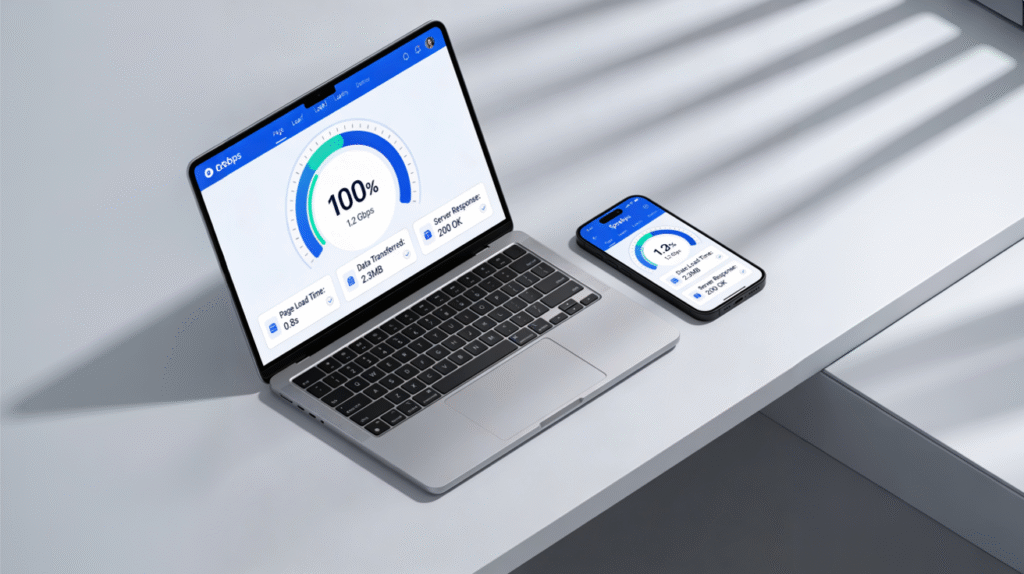
Website speed optimisation dashboard showing fast page load time, Core Web Vitals performance, and improved SEO and conversion metrics on desktop and mobile devices.

How Website Speed Affects Your SEO

Google’s ranking setup now focuses on how users feel when visiting a site so fast loading matters a lot. Slow sites hurt your search rankings because people leave quickly, which tells Google your page isn’t helpful and weakens overall SEO and conversion performance.

1. Higher Bounce Rates

If a webpage loads slowly, visitors leave right away. Since users exit fast, Google thinks the content isn’t helpful so your position drops.

2. Lower Crawl Efficiency

Search engines set limits on how much they crawl. When pages load slowly, they eat up server power so less gets scanned or stored online, hurting your reach.

3. Poor Core Web Vitals Scores

Google’s main website speed checks like how fast a page loads, reacts to clicks, or jumps around are now key for rankings. Folks tend to leave slow sites fast so they don’t show up well in searches, making website speed optimization even more essential.

4. Reduced Mobile Usability

Since lots of people use phones to surf, Google cares more about how quick sites are on mobile. When your pages take ages to open on a phone, your rank drops no matter how snappy they run on computers.

The Link Between Speed & Conversion Rates

Even when your SEO works well, a sluggish website might kill your sales. The reason? Slow loading pushes visitors away before they act, reducing overall SEO and conversion results.

1. Users Expect Instant Results

When folks pick a service, check details, or toss an item into their basket, everything should just flow. Clunky sites create hassle hassle kills sales.

2. Trust Drops When Websites Lag

Quick sites seem trustworthy because they respond right away. A snappy experience makes users relax, while delays cause second thoughts particularly when entering details or paying online.

3. Better Speed = Better Engagement

Faster sites keep people scrolling further, checking extra pages while doing more stuff. So you get way more chances for sales, sign-ups or messages popping up.

4. Faster Checkout = Higher Sales

Online stores need quick checkouts otherwise shoppers might leave without buying anything.

How Upswing Digital Optimises Website Speed

Over at Upswing Digital, our method’s built on real numbers that boost how well your site runs. This is what turns sluggish pages into speedier ones through focused website speed optimization:

1. Full Speed Audit

We check your Core Web Vitals along with hosting to spot issues dragging performance looking at code size, plugins, scripts, or slow images that might be causing delays.

2. Image & Media Optimisation

Big pictures? They’re why sites crawl. Swap them out squish size, shift formats, delay loading all while keeping things sharp.

3. Code Optimisation

Shrinking CSS, plus JS, along with HTML helps pages load way faster. Also, we ditch leftover code, old scripts, or clunky animations slowing things down.

4. Caching & CDN Setup

Browser caching works better when paired with CDNs both speed up content by using the visitor’s location, which is key for fast-loading sites.

5. Server & Hosting Improvements

We make sure your hosting runs fast faster replies, stronger connections, smoother server setups — all working together seamlessly.

6. Mobile Speed Enhancements

Most people show up on phones, so we tweak designs to fit screens better — also making taps easier while speeding up how pages load from the start.

Conclusion: Speed = Trust, Growth, and SEO Success

A speedy site isn’t just about tech it’s a real edge. Because it earns trust, makes browsing smoother, lifts visibility online, so sales go up.
When tons of companies compete online, a sluggish site can kill your chances at sales. Want higher search spots along with more customers? Then speeding up your pages isn’t just nice it’s necessary for stronger SEO and conversion.

With Upswing Digital, brands boost results while growing their reach. We make sites work harder so they start pulling in more sales. Visibility climbs as online impact expands through consistent website speed optimization.

If your site’s quick, things run smoother.

Google Ads vs Facebook Ads: Which Is Best for Your Business?

Google Ads vs Facebook Ads

Businesses of all sizes are investing money in paid advertisements in the competitive digital marketplace of today in order to expand the number of their clients, increase brand recognition, and increase sales. Google Ads and Facebook Ads are the two platforms that dominate the online advertising space. Although both can produce outstanding outcomes, they perform in entirely different ways, and the best choice for your company will rely on your goals, your target audience’s behavior, and your marketing plan.

What Are Facebook and Google Ads?

When users search for keywords on Google Search, YouTube, Gmail, and other platforms under the Google Display Network, ads are displayed by Google Ads, a pay-per-click (PPC) platform. Because ads show up at the top of search results or on partner websites, this platform is highly effective at drawing in individuals who are definitely looking to buy, inquire, or take action.

Facebook Ads, including Instagram placements, allow you to show adverts to users based on demographic data, interests, behavior, and engagement patterns. This kind of advertising targets interest, awareness, and engagement more so than active search when people are browsing their social media feeds.

Key Differences Between Facebook and Google Ads

Audience Intent

Google Ads targets high-intent users. Google users are actively looking for particular goods, services, or content. These searchers are already one step closer to making a purchasing decision when your ad shows up.

Facebook Ads target users based on their interests. Users are scrolling through their feeds, not necessarily searching for your product. The objective is to capture their interest, increase brand awareness, and encourage them to follow your narrative.

Reach and Ad Formats

Google reaches customers throughout the broad search ecosystem with its text ads on search results, shopping ads, display banners on websites, and YouTube video ads.

For creative storytelling and interaction, Facebook offers engaging formats such as photo advertisements, video ads, carousel campaigns, stories, and reels.

When to Use Each Platform

When you want quick conversions, like getting leads, sales, or sign-ups from people who are actively looking for what you have to offer, use Google Ads.

Utilize Facebook Ads to present your business to new people, raise awareness, and gradually grab their attention with captivating photos and tailored messages.

Performance and Cost

Because it targets high-intent queries, Google Ads frequently displays greater cost per click (CPC), but conversions are typically higher.

For broad reach and engagement, Facebook Ads may be more affordable, particularly if your campaign’s goal is to raise awareness or retarget existing audiences.

Which One Should You Choose?

There’s no one-size-fits-all answer. The right platform depends on your business goals:

  • Looking for quick sales or inquiries? Google Ads is often the stronger choice.
  •  Do you want to visually engage people or increase brand awareness? Facebook Ads performs exceptionally well in social and creative settings.
  •  In a well-rounded digital marketing approach, use Facebook for brand building and Google for demand capture for the best outcomes.

Why Choose Upswing Digital for Your Paid Advertising?

Working with professionals might be crucial when navigating the complicated world of online marketing. Upswing Digital is a full-service digital marketing agency with deep experience in PPC, SEM, social media ads, analytics, and strategic campaign execution.

1. Data-Driven Strategy

Upswing Digital uses analytics and data to create campaigns that produce more than simply clicks; they also produce actual business results. Every approach, from audience insights to keyword research, is supported by measurable data.

2. Cross-Platform Expertise

The team is proficient at customizing ads for optimal impact across channels, whether it’s Meta’s social media platforms (Facebook and Instagram) or Google’s search network.

3. Customized Solutions

Every company is different. Upswing Digital creates custom advertising plans that fit your budget, industry, and goals to guarantee that your advertising investment yields a profitable return on investment.

4. Proactive Optimisation

Digital marketing is ever-changing. To ensure that your growth doesn’t stall, the team continuously improves campaigns in reaction to platform modifications and performance data.

5. Strategic Partnership

With a focus on long-term success, Upswing Digital doesn’t just manage your ads—they become your strategic partner in scaling your brand online.

 conclusion

Your business’s objectives, audience demographics, and campaign goals will all influence your decision between Google Ads and Facebook Ads. Strategic use of both platforms, usually in combination, can increase visibility, drive growth, and produce quantifiable outcomes. You get professional advice, customized tactics, and campaigns designed to thrive in a competitive digital environment when Upswing Digital is on your side.

How to Boost Online Sales With SEO & Paid Advertising

SEO & Paid Advertising

Driving traffic to your website is only half the battle. The real goal for any business is turning that traffic into consistent online sales. Many brands invest in either SEO or paid ads, but the most successful businesses understand that the real growth happens when both work together.

A strategic combination of Search Engine Optimization (SEO) and Paid Advertising (PPC/Social Ads) creates a powerful system that attracts high-intent visitors, nurtures them, and converts them into paying customers.

Why SEO & Paid Advertising Work Best Together

SEO builds long-term visibility and trust, while paid advertising delivers immediate traffic and targeted reach. When used together:

  • SEO brings organic, sustainable traffic
  • Paid ads bring instant, high-intent visitors
  • Brand visibility increases across search results
  • Conversion opportunities multiply
  • Marketing ROI improves significantly

This dual strategy ensures your business is visible at every stage of the buyer journey.

Step 1: Use SEO to Attract High-Intent Traffic

SEO helps your website appear when users search for products or services you offer.

Focus Areas:

  • Keyword research based on buyer intent
  • Optimizing product and service pages
  • Creating helpful blog content around customer queries
  • Improving website speed and mobile experience
  • Building quality backlinks for authority

When users find you organically, they already have a need — making them more likely to purchase.

Step 2: Capture Immediate Buyers With Paid Advertising

Paid ads allow you to appear at the top of search engines and social platforms instantly.

Effective Paid Channels:

  • Google Search Ads for high-intent keywords
  • Google Shopping Ads for e-commerce products
  • Facebook & Instagram Ads for audience targeting
  • Retargeting ads for previous visitors
  • Display ads for brand awareness

Paid advertising ensures you don’t miss customers who are ready to buy now.

Step 3: Align Keywords Between SEO and Ads

One of the smartest strategies is using the same high-performing keywords for both SEO and paid campaigns. This creates:

  • Higher brand recall
  • Multiple touchpoints in search results
  • Better click-through rates
  • Improved conversion chances

If a user sees your brand in ads and organic results, trust increases.

Step 4: Optimize Landing Pages for Conversions

Traffic without conversion is wasted effort. Whether visitors come from SEO or ads, your landing pages must:

  • Load fast
  • Clearly explain the offer
  • Have strong CTAs
  • Include trust signals (reviews, testimonials)
  • Be mobile-friendly

Conversion Rate Optimization (CRO) is essential to turn visitors into customers.

Step 5: Use Retargeting to Recover Lost Sales

Most users don’t buy on their first visit. Retargeting ads remind them about your brand and bring them back to complete the purchase.

This works exceptionally well when combined with SEO traffic, as organic visitors can later be retargeted through ads.

Step 6: Track Data and Optimize Continuously

Monitor performance from both channels:

  • Which keywords convert best
  • Which ads bring the highest ROAS
  • Where users drop off
  • Which pages convert the most

Use this data to refine campaigns and improve results month after month.

Benefits of Combining SEO & Paid Advertising

SEOPaid Advertising
Long-term trafficImmediate visibility
Builds credibilityPrecise audience targeting
Cost-effective over timeFast results
Improves website authorityScalable campaigns

Together, they create a full-funnel marketing strategy.

Common Mistakes to Avoid

  • Relying only on ads without SEO support
  • Driving ad traffic to poorly optimized pages
  • Not tracking conversions properly
  • Ignoring mobile optimization
  • Using different messaging for SEO and ads

Consistency is key to maximizing online sales.

Conclusion

Boosting online sales isn’t about choosing between SEO & Paid Advertising. It’s about combining their strengths into one cohesive strategy. SEO builds the foundation, while paid ads accelerate results.

Businesses that integrate both approaches see better visibility, higher-quality traffic, and increased conversions. With the right strategy, expert execution, and continuous optimization from Upswing Digital, your website can become a reliable engine for revenue and long-term growth.

The Power of Micro influencers: Why Small is the New Big

Micro influencers

Influencer marketing has undergone significant evolution over the past few years. While big-name celebrities and mega influencers once dominated brand collaborations, the spotlight has now shifted toward a different, more effective group of micro-influencers. These creators may have smaller followings, but they deliver stronger engagement, deeper trust, and more authentic connections with their audiences.

Brands around the world are discovering that in digital marketing, “small” has never been more powerful. Today, micro-influencers are rewriting the rules of online influence and proving that reach isn’t everything, relevance is.

Who Exactly Are Micro Influencers?

Micro influencers are social media creators who typically have followers between 10,000 and 100,000. While their audience size may be modest compared to mega influencers, what sets them apart is the strength of their community. Their followers are loyal, interactive, and genuinely interested in their opinions.

Unlike celebrities who appeal to broad audiences, micro-influencers focus on specific niches like beauty, food, travel, fitness, fashion, home decor, technology, or personal finance. Their content feels personal and relatable, making their endorsements far more trustworthy.

Why Micro Influencers Are More Effective

The rise of micro influencers isn’t just a trend, it’s a shift driven by real marketing performance. Brands have realized that micro influencers deliver results that outperform larger creators in many ways.

One of the biggest advantages is their authenticity. Micro influencers engage with their followers daily, respond to comments, share personal stories, and create content that feels real rather than scripted. This authenticity builds trust, and trust directly impacts purchasing decisions.

Another reason micro influencers work so well is their impressive engagement rate. Studies consistently show that as follower count increases, engagement drops. Micro influencers, however, benefit from smaller, close-knit communities where followers actually care about their recommendations.

Brands also appreciate the affordability of collaborating with micro influencers. Instead of allocating huge budgets to one celebrity, they can partner with multiple micro creators, reaching different niche audiences while staying within budget.

Authenticity: The Secret to Stronger Influence

Audiences today are smart. They can easily spot forced promotions, overly polished ads, and paid endorsements that lack genuine connection. Micro influencers break through that barrier because their content shows real experiences, honest opinions, and relatable everyday moments.

When a micro influencer shares a skincare routine, reviews a cafe, or recommends a product, it feels like advice from a friend not an ad. This authenticity leads to higher trust and stronger influence, making followers more likely to buy based on their recommendations.

High Engagement, High Impact

Engagement matters more than follower count. Brands are finally understanding that 20,000 highly engaged followers can be more valuable than 2 million passive ones.

Micro influencers often generate more likes, comments, shares, and saves than larger influencers. Their audience interacts with them regularly, and this interaction strengthens the impact of every collaboration.

Because their communities are smaller and more focused, their opinions carry weight. Followers feel seen and heard, making them more receptive to promoted content.

Perfect for Niche Marketing

In today’s saturated digital world, niche marketing is the key to cutting through the noise. Micro-influencers succeed here.

Whether it’s vegan recipes, tech gadgets, pet care, minimalist home decor, or sustainable fashion, micro influencers dominate niche categories. Their followers trust their expertise within that specific niche, making their recommendations highly influential.

For brands targeting niche markets, micro influencers offer unmatched precision. Instead of reaching a broad audience with mixed interests, brands can speak directly to people who are already interested in what they offer.

Cost-Effective and Scalable for Brands

Influencer marketing doesn’t have to drain budgets. Collaborating with micro influencers is significantly more affordable than working with macro or celebrity influencers. This allows brands to run multiple partnerships at once, test different markets, diversify content styles, and reach various audience segments.

Many brands now prefer working with “clusters” of micro influencers instead of a single big name. This strategy increases reach, boosts engagement, and produces more authentic content without overspending.

Better Campaign Performance and Conversions

Because micro influencers build trust through genuine relationships, their recommendations often lead to higher conversions. Their followers act on advice because they believe in the influencer’s credibility. Whether it’s trying a restaurant, buying a product, or downloading an app, micro influencer-driven campaigns frequently outperform those backed by larger creators.

The combination of trust, relatability, and engagement makes micro influencers highly effective at driving real results not just impressions.

The Future of Influencer Marketing Belongs to Micro Creators

The influencer industry is evolving, and brands are prioritising impact over reach. Micro influencers are becoming the backbone of creator-led marketing strategies because they offer the perfect balance of authenticity, affordability, and measurable performance.

As more consumers seek real stories and genuine recommendations, the role of micro-influencers will continue to grow. They represent the kind of community-driven influence that aligns perfectly with modern digital behaviour.

Conclusion

The rise of micro-influencers proves that real influence stems from authenticity, connection, and community, not just follower count. Their ability to build trust, inspire action, and speak directly to niche audiences makes them one of the most powerful tools in modern marketing. As brands shift toward transparent and relatable storytelling, micro-influencers will continue to lead the way.

At Upswing Digital, we help brands maximize the true potential of micro influencer marketing through strategic partnerships, niche-focused campaigns, and data-driven execution. By combining influencer authenticity with smart digital strategies, Upswing Digital ensures brands achieve deeper engagement, stronger credibility, and measurable growth.

Micro-influencers aren’t just the future, they’re the new foundation of impactful digital marketing, and with Upswing Digital guiding the strategy, the possibilities are bigger than ever.